Irresistible Irish Soda Bread Recipe for Cozy Meals
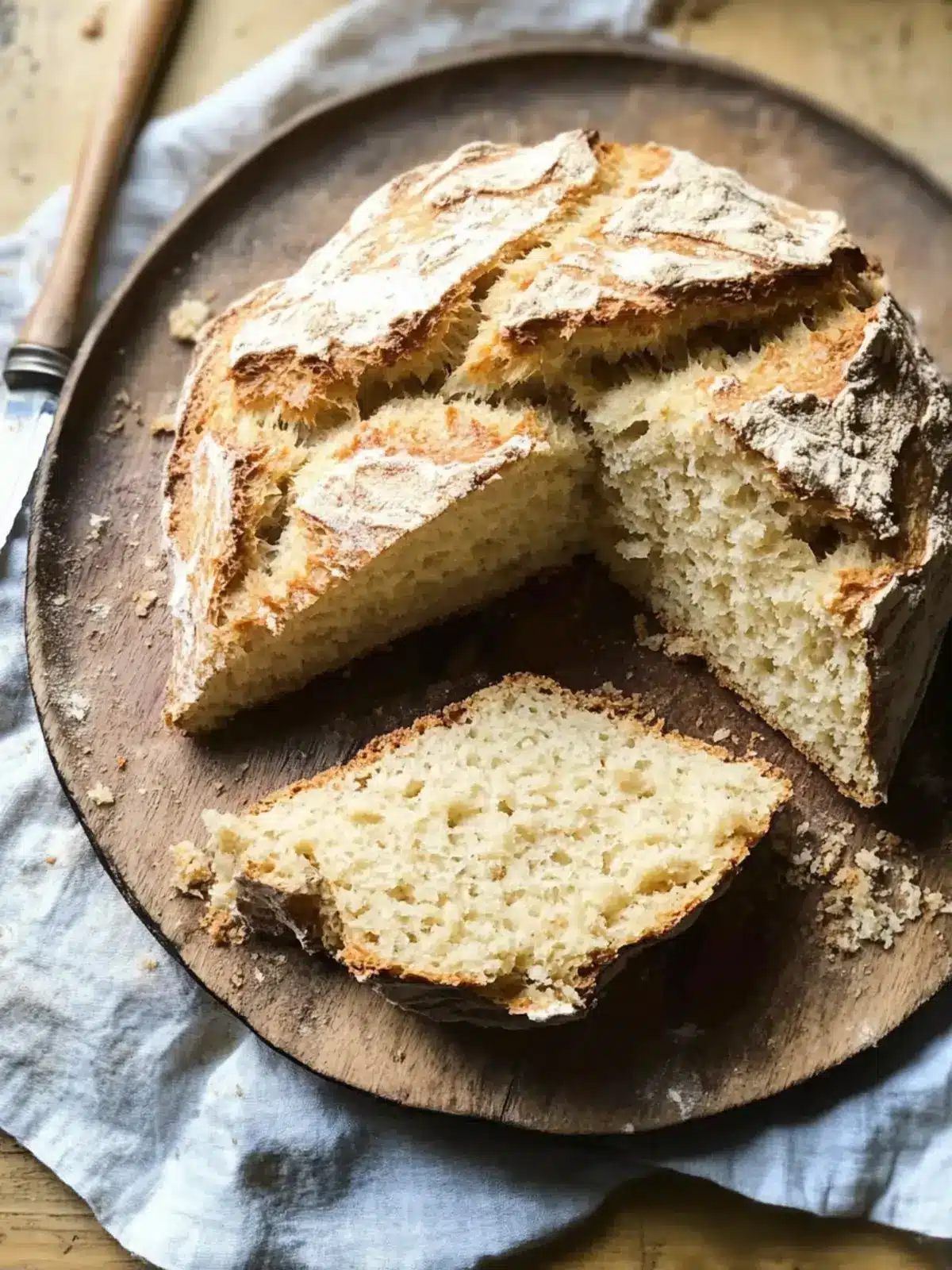
There’s a certain comfort that comes from a warm loaf of bread emerging from the oven, especially when it’s as delightful as Irish Soda Bread. I discovered this simple yet satisfying recipe on a chilly afternoon, craving something homemade to complement my soup.
With just a handful of pantry staples and no yeast in sight, I was eager to dive into this traditional Irish recipe. This bread boasts a crispy crust and a soft, tender interior that’s ideal for slathering with butter or using as the perfect side to your favorite meals.
Why You Will Love This Recipe
- Irresistible Warmth: This homemade Irish Soda Bread brings a cozy feeling, making it perfect for any meal, infusing your kitchen with a comforting aroma.
- Quick and Easy Preparation: With no yeast required and minimal hands-on time, you can whip this up in no time— the perfect solution for sudden cravings or when you need a delicious treat fast.
- Versatile Flavor Options: Experiment with herbs like chives or thyme, or even add a sprinkle of oats for a unique twist that perfectly suits your taste buds and complements any dish.
- Guaranteed Crowd-Pleaser: This bread appeals to everyone with its simple yet satisfying taste and texture, making it a must-have for casual family dinners or more festive gatherings.
- Ultimate Freshness: Enjoy the unparalleled delight of warm, freshly baked bread straight from the oven for a truly comforting and buttery experience that’s hard to resist.
Ingredients You Need
Crafting this authentic Irish Soda Bread is a testament to the beauty of simple, wholesome ingredients. The magic lies in their quality and how they interact to create that signature crust and crumb. Using the freshest ingredients will ensure the best possible outcome for your loaf, making it a joy to bake and to eat.
Crispy Irish Soda Bread
Enjoy the warm, comforting taste of Irish Soda Bread, a quick and easy recipe perfect for any meal. This bread boasts a crispy crust and a soft, tender interior that's ideal for slathering with butter.
- 0.5 cups Unsalted Butter (Cold, grated)
- 3 cups All-Purpose Flour
- 1 cup Whole-Wheat Flour
- 1 teaspoon Baking Soda
- 1 teaspoon Kosher Salt
- 1.5 cups Buttermilk
- 0.25 cups Chopped Fresh Thyme or Chives (Optional)
- 0.25 cups Rolled Oats (Optional)
- 1Preheat the oven to 425°F (220°C) and line a baking sheet with parchment paper.
- 2Grate cold unsalted butter into a bowl and place it in the freezer.
- 3Whisk together 3 cups of all-purpose flour, 1 cup of whole-wheat flour, 1 teaspoon of baking soda, and 1 teaspoon of kosher salt in a large bowl.
- 4Mix in the cold grated butter until evenly distributed.
- 5Stir in 1 ½ cups of buttermilk and optional herbs until a sticky dough forms.
- 6Transfer the dough to a lightly floured surface, shape into a mound, and score a cross on top.
- 7Brush the top with buttermilk and sprinkle with oats if desired.
- 8Bake for 30 to 45 minutes, or until golden brown and hollow-sounding.
- 9Cool on a wire rack for at least 15 minutes before slicing.
Keywords: Irish Soda Bread, Soda Bread, Quick Bread, Baking, Homemade Bread, Comfort Food
- unsalted butter: cold, grated, this adds richness and a tender crumb, with cold butter crucial for flakiness.
- all-purpose flour: the foundation for structure, it can be combined with whole wheat for added depth.
- whole-wheat flour: introduces a heartier texture and a richer, nuttier flavor profile to the bread.
- baking soda: the essential leavening agent that provides the characteristic rise without yeast.
- kosher salt: enhances all the other flavors and balances the sweetness, use slightly less if using table salt.
- buttermilk: its acidity reacts with the baking soda for lift and adds a lovely tang, a staple in traditional soda bread.
- chopped fresh thyme or chives: optional, these herbs add a delightful savory note that elevates the bread.
- rolled oats: optional, sprinkled on top for an extra layer of texture and a rustic appearance.
Exact quantities for each ingredient are clearly detailed in the recipe card for your convenience.
Variations
This basic Irish Soda Bread recipe is wonderfully adaptable, allowing you to create unique flavor profiles that cater to any preference or occasion. Consider it a canvas for your culinary creativity, inviting you to experiment with exciting additions.
For a delightful vegan twist, simply swap out the butter for a good quality coconut oil or a plant-based margarine. The buttermilk can be substituted with a mixture of your favorite non-dairy milk and a tablespoon of apple cider vinegar or lemon juice, letting it curdle for about five minutes before use. This ensures you still achieve that essential leavening reaction without any animal products, resulting in a wonderfully tender vegan loaf.
If you’re looking to reduce carbohydrates, you can experiment with almond flour or coconut flour blends. While the texture might vary slightly from traditional soda bread, this modification can cater to lower-carb diets effectively. You might need to adjust the liquid content slightly, adding a touch more buttermilk or milk substitute, as these flours absorb moisture differently than wheat-based varieties.
Introducing savory elements can transform this bread into a perfect accompaniment for soups and stews. Consider adding finely chopped fresh rosemary, a pinch of garlic powder, or even a generous amount of grated sharp cheddar cheese directly into the dough. These additions create a wonderfully aromatic and flavorful bread that stands on its own or complements hearty main courses beautifully.
For a sweeter rendition, consider folding in dried fruits like cranberries, raisins, or currants. A touch of honey or a hint of orange zest can also impart a lovely sweetness and brightness. This sweet variation makes for a fantastic breakfast treat or a delightful afternoon snack, perfect for enjoying with a cup of tea.
How to Prepare Irish Soda Bread Recipe
Step 1: Preheat Oven and Prepare Baking Surface
Begin by preheating your oven to a robust 425°F (220°C). This high initial temperature is key to achieving that signature crisp crust that defines a perfect Irish Soda Bread. Ensuring the oven reaches this temperature before you place the bread inside is crucial for an even bake and proper oven spring.
Next, line a sturdy baking sheet with parchment paper. This not only prevents the bread from sticking but also makes for an easier cleanup process after baking. The parchment paper provides a smooth, non-stick surface that helps the bottom of the loaf bake to a beautiful golden-brown hue without scorching.
Having your baking sheet and oven ready before you start mixing the dough ensures a seamless transition from preparation to baking, maintaining the temperature and the integrity of the dough.
Step 2: Grate and Chill the Butter
Take your cold, unsalted butter and grate it directly into a bowl. Using cold butter is absolutely paramount for creating the flaky layers that make this bread so delightful. As the butter melts during baking, it creates steam pockets within the dough, which contribute to a lighter, more tender texture.
Once grated, place the bowl of butter into the freezer. It needs to remain as chilled as possible while you gather and combine the dry ingredients. The colder the butter, the more distinct its pieces will remain in the flour mixture, leading to a superior flaky outcome.
This step might seem simple, but it’s one of the most critical for achieving the desired texture in your Irish Soda Bread. Don’t let the butter soften at room temperature; keep it frosty until the very last moment it’s incorporated into the dry ingredients.
Step 3: Combine Dry Ingredients
In a large mixing bowl, meticulously whisk together the all-purpose flour and the whole-wheat flour. The combination of flours provides both structure and a pleasant rustic flavor. Ensure they are thoroughly combined to distribute the different types of flour evenly throughout the mixture.
To this flour blend, add the baking soda and kosher salt. Whisk these dry leavening and seasoning agents into the flour until they are completely incorporated. Proper distribution of baking soda is essential for an even rise, and salt is vital for flavor enhancement.
Take your time with this step, ensuring there are no pockets of baking soda or salt. A well-combined dry mixture forms the foundation for your soda bread, contributing to its consistent texture and taste. You want every spoonful of flour to have the right balance of components.
Step 4: Incorporate the Cold Butter
Now, retrieve the grated, frozen butter from the freezer. Add this chilled butter directly into the bowl with your dry ingredients. Using your fingertips or a pastry blender, work the butter into the flour mixture until it resembles coarse crumbs. Some small pea-sized pieces of butter should remain visible; these are the key to achieving flakiness.
The goal here is to coat the flour particles with the butter without melting it. This process of “cutting in” the butter creates pockets that will later expand during baking. Avoid overworking the mixture, as this can warm the butter and reduce the bread’s intended texture, potentially leading to a denser loaf.
Continue this process until the butter is evenly distributed in small pieces throughout the flour mixture. It should feel like slightly lumpy sand. This stage is critical for developing the signature texture of traditional Irish Soda Bread, so pay close attention to maintaining the cold temperature of the butter.
Step 5: Add Buttermilk and Form Dough
Pour in the buttermilk and any optional herbs you’ve chosen to include, such as fresh thyme or chives. Begin to gently stir the ingredients together with a wooden spoon or a spatula until a shaggy, sticky dough begins to form. You are aiming for a cohesive mass, but it should still be quite moist and slightly wet to the touch.
If the mixture appears too dry and crumbly, don’t hesitate to add a little more buttermilk, a tablespoon at a time, until it comes together. Conversely, if it seems excessively wet, you can add a tiny bit more flour, but be very cautious not to add too much, as this can lead to a tough bread. The dough should feel sticky, not overly wet or dry.
Once the dough has just come together, stop mixing. Overworking the dough at this stage will develop the gluten too much, resulting in a tough, dense loaf. The beauty of soda bread lies in its minimal handling, so stop as soon as the ingredients are incorporated.
Step 6: Shape and Score the Loaf
Transfer the sticky dough onto a lightly floured work surface. Gently shape it into a round mound with your hands; avoid extensive kneading. The less you handle the dough, the more tender your bread will be. The surface of the dough should be smooth but not overworked.
Using a sharp knife or a bench scraper, carefully score a deep cross shape into the top of the dough. This traditional marking serves a practical purpose: it helps the heat penetrate the center of the loaf, ensuring it bakes evenly all the way through. It also adds to the iconic visual appeal of Irish Soda Bread.
Once scored, brush the top of the dough with a little extra buttermilk. This will help create a beautiful, glossy, and golden-brown crust. If you are using rolled oats for added texture and visual appeal, sprinkle them generously over the buttermilk-washed surface at this point.
Step 7: Bake to Golden Perfection
Carefully transfer the shaped and scored loaf onto the prepared baking sheet. Place it in the preheated oven. Bake for approximately 30 to 45 minutes. The exact baking time can vary depending on your oven and the size of your loaf.
You’ll know the bread is ready when it’s a deep golden brown color all over and sounds hollow when you tap the bottom of the loaf. This hollow sound indicates that the interior has cooked through and the moisture has evaporated appropriately, leaving a tender crumb.
During the baking process, resist the urge to open the oven door too frequently, as this can cause the temperature to drop and negatively impact the bread’s rise. Trust the visual and auditory cues to tell you when your delicious Irish Soda Bread is perfectly baked and ready to be enjoyed.
Step 8: Cool and Serve
Once baked to perfection, carefully remove the Irish Soda Bread from the oven. Transfer the hot loaf from the baking sheet to a wire rack. Allowing the bread to cool on a wire rack is essential; it permits air to circulate all around the loaf, preventing the bottom crust from becoming soggy.
Let the bread cool for at least 15 minutes before slicing. While the temptation to slice into it immediately might be strong, allowing it to cool slightly helps the crumb set properly. Cutting too soon can result in a gummy texture and can cause the loaf to collapse slightly.
Serve warm slices with a generous pat of good quality butter for a truly comforting and classic experience. The contrast between the warm, crusty bread and the melting butter is pure simple pleasure.
Pro Tips for Irish Soda Bread Recipe
- Always Use Cold Butter: The secret to a flaky, tender crumb in Irish Soda Bread lies in using very cold, even frozen, grated butter. This ensures that pockets of butter remain throughout the dough, creating steam during baking that results in those delightful layers.
- Minimal Handling is Key: Unlike yeast breads, soda bread requires very little kneading or overworking of the dough. Over-manipulating the dough will develop the gluten too much, leading to a tough and dense loaf rather than a light, airy one. Mix until just combined.
- Dough Consistency Matters: The dough for Irish Soda Bread should be sticky, almost wet, not dry and stiff. If your dough feels too dry, don’t hesitate to add an extra tablespoon or two of buttermilk until it forms a cohesive, albeit sticky, mass.
- Don’t Skip the Cross: Scoring a deep cross on top of the loaf is more than just decorative; it allows the bread to expand evenly during baking and ensures that the heat penetrates to the center, guaranteeing a fully cooked interior.
- Cooling is Crucial: Always allow your Irish Soda Bread to cool on a wire rack for at least 15-20 minutes before slicing. This period allows the interior to finish setting and prevents a gummy texture that can occur if cut too soon.
Serving Suggestions for Irish Soda Bread Recipe
Decoration
The rustic charm of Irish Soda Bread is often its own decoration, but a few thoughtful additions can elevate its presentation. A light dusting of all-purpose flour after baking can highlight the golden crust and create a beautiful matte finish. Alternatively, for a slightly sweeter note, a drizzle of honey or a sprinkle of toasted oats can add both visual appeal and a delightful textural contrast.
Side Dishes
Irish Soda Bread is incredibly versatile and pairs wonderfully with a wide array of dishes. Its hearty texture makes it an ideal companion for rich, savory stews and hearty soups, such as a classic Irish stew or a creamy white chowder. It’s also fantastic served alongside a cheese platter, where its slight tanginess complements the sharp flavors of aged cheeses.
Creative Serving Ideas
Beyond simply slicing and buttering, get creative with how you serve this delightful bread. Consider toasting thicker slices and topping them with avocado and a sprinkle of chili flakes for a modern breakfast or brunch option. For a sweeter treat, serve warm slices with homemade berry compote or a dollop of clotted cream.
A truly indulgent idea is to use slices of slightly toasted Irish Soda Bread as the base for mini open-faced sandwiches. Think smoked salmon with cream cheese and dill, or sliced ham with a Dijon mustard spread. The bread’s robust structure holds up well to various toppings, making it perfect for an elegant appetizer or a satisfying light lunch.
Pairing it with a warming beverage, like a traditional Irish Breakfast Tea, enhances the overall comforting experience. This classic combination is perfect for a cozy afternoon treat that transports you straight to the Emerald Isle.
Preparation & Storage
Storing Leftovers
To keep your freshly baked Irish Soda Bread at its best, store it properly. Once completely cooled, wrap the loaf tightly in plastic wrap or place it in an airtight container. If it’s sliced, arrange the slices cut-side down on a plate or cutting board, then cover them with a clean kitchen towel to help retain moisture and prevent the cut surfaces from drying out.
Stored this way at room temperature, Irish Soda Bread will typically remain fresh and enjoyable for up to 3 to 4 days. The key is to minimize exposure to air, which is the primary culprit behind staleness. Enjoying it within this timeframe ensures the best texture and flavor.
Freezing
If you find yourself with more delicious soda bread than you can consume within a few days, freezing is an excellent option. For best results, slice the bread before freezing. This allows you to thaw and reheat individual portions as needed, preventing the need to thaw the entire loaf.
Wrap each slice very tightly in plastic wrap, ensuring there are no air pockets. Follow this with a layer of heavy-duty aluminum foil for an extra barrier against freezer burn. Properly wrapped, Irish Soda Bread can be stored in the freezer for up to 1 to 2 months, retaining much of its original quality.
Reheating
Reviving frozen or day-old Irish Soda Bread is simple and yields wonderful results. Preheat your oven to a moderate 350°F (175°C). Wrap the slices or the loaf loosely in aluminum foil; this helps to trap steam and gently reheat the bread without drying it out.
Place the foil-wrapped bread directly on the oven rack or on a baking sheet and heat for about 10-15 minutes, or until the bread is warmed through and the crust has regained some of its crispness. For an even crispier crust, you can briefly unwrap the bread for the last few minutes of heating.
Frequently Asked Questions
- What is the best way to ensure my Irish Soda Bread is light and not dense?
Achieving a light and airy texture in Irish Soda Bread primarily relies on a few key techniques. Firstly, ensure you are using cold, grated butter and incorporating it into the dry ingredients until the mixture resembles coarse crumbs, with some pea-sized pieces remaining. This creates steam pockets during baking, leading to flakiness. Secondly, it’s crucial to avoid overworking the dough; mix the wet and dry ingredients until just combined. The dough should be sticky, not stiff. If it seems too dry, add buttermilk a tablespoon at a time, but do not add too much flour, as this can toughen the bread. Lastly, make sure your baking soda is fresh, as old baking soda loses its leavening power, resulting in a dense loaf.
- Can I make Irish Soda Bread without buttermilk, and if so, what are the best substitutes?
Yes, you can absolutely make Irish Soda Bread without buttermilk, and there are several effective substitutes. The primary role of buttermilk is its acidity, which reacts with the baking soda to provide the characteristic lift. A simple and common substitute is to mix 1 ½ cups of regular milk with 1 ½ tablespoons of white vinegar or lemon juice. Let this mixture stand for about 5-10 minutes until it thickens slightly and curdles, mimicking buttermilk. Another option is to use plain yogurt or sour cream thinned with a little milk or water. If you are aiming for a dairy-free version, unsweetened plant-based milk, such as almond or soy milk, mixed with vinegar or lemon juice also works wonderfully.
- Why is the cross scored on top of traditional Irish Soda Bread, and what happens if I skip this step?
The traditional cross scored on the top of Irish Soda Bread serves both a symbolic and a practical purpose. Symbolically, it’s believed to ward off evil spirits or bring good luck, a tradition rooted in ancient Irish folklore. Practically, however, the cross allows the heat to penetrate more evenly into the center of the dense dough, ensuring that the bread bakes through completely without the edges and crust burning. Skipping this step might lead to a bread that is undercooked in the center, resulting in a gummy texture. While the bread might still be edible, it won’t bake as evenly or have the same rustic appeal that the score provides. Therefore, it’s a small step that significantly contributes to the success of your soda bread.