Air Fryer Hamburgers – Perfect Burgers in 15 Minutes!
When the craving for a perfectly juicy hamburger strikes, the thought of firing up the grill or dealing with a greasy oven can be a deterrent, especially on a busy weeknight. Fortunately, the humble air fryer has emerged as a game-changer for home cooks, offering a way to achieve that desirable seared exterior and tender, moist interior without the fuss.
This recipe for air fryer hamburgers is designed to deliver maximum flavor and satisfaction with minimal effort, proving that you don’t need a backyard barbecue to enjoy a truly exceptional burger experience. Get ready to impress yourself and your loved ones with these incredibly simple yet remarkably delicious burgers, cooked to perfection right in your kitchen.
Why You Will Love This Recipe
- Speedy Preparation: Enjoy delicious, homemade hamburgers in less time than it takes to order takeout, perfect for busy evenings.
- Juicy Perfection: The air fryer circulates hot air efficiently, ensuring each burger is cooked evenly, locking in moisture for an incredibly juicy bite.
- Minimal Mess: Say goodbye to grill flare-ups and oven splatters; cooking burgers in the air fryer keeps your kitchen clean and the cleanup a breeze.
- Versatile Toppings: This recipe serves as a fantastic canvas for your favorite burger accoutrements, from classic lettuce and tomato to more adventurous spicy sauces and caramelized onions.
- Grill-Free Alternative: Indulge in the taste of a perfectly cooked burger year-round, regardless of the weather or your access to outdoor cooking equipment.
Ingredients You Need
The beauty of a great hamburger lies in its simplicity, and this recipe embraces that philosophy wholeheartedly. We focus on high-quality, fresh ingredients that allow the natural flavors of the beef to shine through, enhanced by a carefully selected blend of seasonings. Each component plays a crucial role in creating a burger that is both satisfying and delightfully flavorful, proving that sometimes, less is truly more when it comes to culinary excellence.
Air Fryer Hamburgers

Learn how to cook hamburgers in the air fryer! This recipe makes perfectly seared, juicy burgers in minutes without the grill or oven. It's great for weeknight dinners.
- 1 pound lean ground beef
- ¾ teaspoon salt
- ¼ teaspoon freshly ground black pepper
- ½ teaspoon onion powder
- ½ teaspoon paprika
- ¼ teaspoon garlic powder
- ¼ cup BBQ sauce
- 4 burger buns, with sesame seeds
- Tomato slices
- 4 slices cheddar cheese
- Lettuce
- 4 tablespoons sriracha mayonnaise, or regular mayo
- 1Preheat your air fryer to 370ºF. Line your air fryer basket with parchment paper.
- 2Add ground beef, salt, pepper, onion powder, paprika, and garlic powder to a bowl. Stir well to combine. Divide the mixture into four equal pieces and shape into ½-inch thick patties. Press an indent into the middle of each patty with your thumb to prevent shrinking.
- 3Transfer the beef patties to the air fryer basket in a single layer, ensuring they don't touch. Brush the patties with BBQ sauce.
- 4Air-fry for 6 minutes. Gently flip them over, brush with any remaining BBQ sauce, and cook for another 3-5 minutes, or until the inner temperature reaches 160 to 165ºF. If adding cheese, place slices on top during the last minute of cooking.
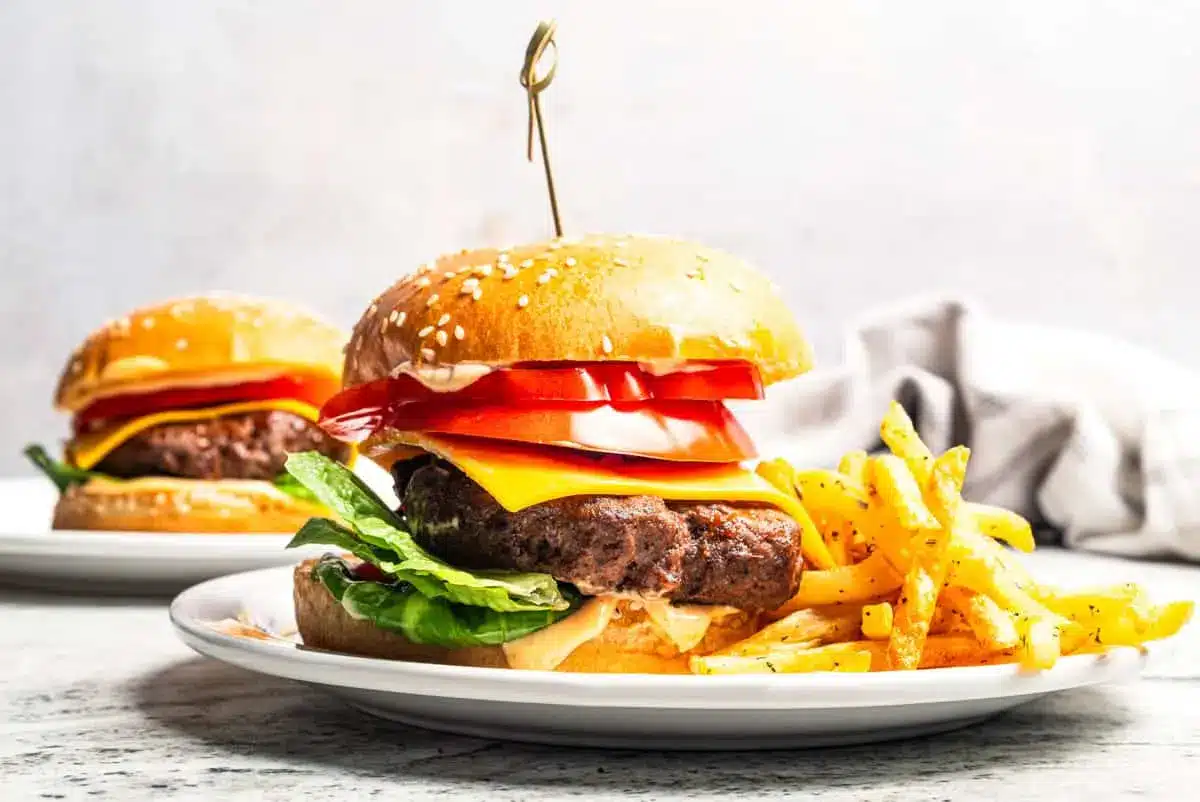
- 5Spread spicy mayo over the burger buns. Layer the bottom half of the buns with lettuce, a cooked patty, cheddar cheese, and tomato slices. Add the top buns and serve warm.
Keywords: hamburger, air fryer, beef, dinner, quick meal, weeknight
The exact quantities for each ingredient are detailed within the recipe card provided, ensuring you have all the necessary measurements for a successful culinary endeavor. Understanding these precise amounts is key to achieving the perfect balance of flavors and textures in every bite.
Variations
For those seeking a plant-based alternative, transforming these air fryer hamburgers into a delicious vegan option is wonderfully achievable. Simply substitute the ground beef with a high-quality vegan ground made from pea protein or mushrooms, ensuring it has a similar texture and binds well. Adjust the seasonings as needed, as vegan alternatives can sometimes require a touch more umami or spice to replicate the richness of beef.
Embracing a low-carb lifestyle doesn’t mean sacrificing burger night. Skip the traditional buns altogether and opt for large lettuce leaves, such as iceberg or romaine, as your vessel for these savory patties. Alternatively, a portobello mushroom cap, grilled or roasted until tender, can serve as a fantastic, flavorful bun substitute, adding an earthy depth to your low-carb creation.
To introduce a different flavor profile, consider incorporating a tablespoon of finely chopped fresh herbs like parsley, chives, or cilantro directly into the meat mixture before forming the patties. Another exciting twist involves adding a pinch of smoked paprika or a dash of Worcestershire sauce (ensure it’s vegan if going that route) to the beef for an extra layer of smoky complexity and savory depth. These simple additions can elevate your air fryer hamburger experience to new heights.
How to Prepare air fryer hamburgers
Step 1: Prepare the Air Fryer and Meat Mixture
Begin by preheating your air fryer to a consistent temperature of 370°F (188°C). This crucial step ensures that the air fryer basket is hot and ready to cook the burgers evenly from the moment they’re placed inside, promoting a beautiful sear. For easier cleanup and to prevent any sticking, consider lining your air fryer basket with a piece of perforated parchment paper specifically designed for air fryers; ensure the paper does not cover the air vents.
In a medium-sized mixing bowl, combine the lean ground beef with the salt, freshly ground black pepper, onion powder, paprika, and garlic powder. It’s important to use lean ground beef, typically 90% lean or higher, as fattier meats tend to shrink considerably during cooking, potentially altering the final burger size and texture. Gently mix these ingredients together using your hands until they are just combined; overmixing can result in tough burgers, so aim for a light touch.
Once the seasonings are incorporated, divide the meat mixture into four equal portions. This even division is key to ensuring that all four patties cook at the same rate, leading to consistent results. Take each portion and gently shape it into a patty that is approximately ½ inch thick. As you form each patty, press down lightly in the center with your thumb to create a small indentation. This technique is a chef’s secret to preventing the burgers from puffing up excessively in the middle during cooking, ensuring they remain relatively flat and uniformly shaped.
Step 2: Shape and Season the Patties
With the meat mixture prepared and divided, the next critical phase is to expertly shape each portion into the perfect hamburger patty. Each portion should be carefully molded into a disc, aiming for a thickness of about half an inch. Consistency in thickness is vital for even cooking; if some patties are significantly thicker than others, they will cook at different rates, potentially leading to undercooked centers in thicker ones and overcooked edges in thinner ones.
As you shape each patty, remember the important step of creating that subtle indentation in the center. This isn’t just for aesthetics; it’s a functional technique. When beef heats up, it naturally contracts and can swell in the middle, creating a domed shape that makes for a less stable burger and can cause toppings to slide off. The thumbprint prevents this, keeping the patty flatter and more amenable to being stacked with your favorite condiments.
Before they head into the air fryer, it’s time to apply a flavorful coating. Take your chosen BBQ sauce (or ketchup, if that’s your preference) and lightly brush one side of each formed patty. This sauce will caramelize slightly during the cooking process, adding a wonderful sticky sweetness and a hint of smoky flavor that complements the beef beautifully. Don’t drench the patties; a light, even coating is sufficient to impart the desired taste and appearance.
Step 3: Air Fry the Hamburgers – First Cook
Carefully arrange the seasoned hamburger patties in a single layer within your preheated air fryer basket. It is absolutely crucial that the patties do not overlap or touch each other. Overcrowding the air fryer basket will hinder the circulation of hot air, preventing the burgers from searing properly and resulting in a steamed rather than fried texture. If you’re cooking more than four burgers, you will likely need to cook them in batches to achieve the best results.
Once the patties are arranged, it’s time to initiate the cooking process. Close the air fryer and set the timer for 6 minutes. During this initial cooking period, the air fryer will work its magic, circulating hot air around the patties to begin the searing process and cook them through. The precise time may vary slightly depending on the specific model of your air fryer and the thickness of your patties, so keep an eye on them, especially during your first few attempts with this recipe.
The goal of this first 6-minute interval is to develop a nice browned crust on the underside of the burgers and to start cooking them internally. When the timer goes off, you’ll be ready to move on to the next stage of flipping and finishing the cooking, ensuring each side of the burger gets the attention it deserves for optimal flavor and texture development. This systematic approach guarantees a consistently delicious outcome.
Step 4: Flip and Finish Cooking
After the initial 6 minutes of cooking, it’s time to flip the burgers to ensure they cook evenly on both sides. Carefully remove the air fryer basket and, using tongs or a spatula, gently flip each hamburger patty over. Be sure to handle them with care to maintain their shape and prevent any juices from escaping prematurely.
Once flipped, take the opportunity to brush the newly exposed side of each patty with any remaining BBQ sauce. This second application of sauce will enhance the caramelization and add another layer of flavor to the exterior of the burgers. Now, return the basket to the air fryer and continue cooking for an additional 3 to 5 minutes. This second cooking phase is critical for bringing the burgers to your desired level of doneness.
The internal temperature is the most reliable indicator of doneness. For medium-rare to medium burgers, aim for an internal temperature of 160°F to 165°F (71°C to 74°C). Using an instant-read meat thermometer inserted into the thickest part of the patty is highly recommended for accuracy. This ensures your burgers are cooked safely and to your exact preference, avoiding any guesswork. Once they reach the target temperature, remove them from the air fryer immediately to prevent overcooking.
Step 5: Melt Cheese and Rest
If you’re a fan of cheesy burgers, this is the moment to add that glorious melted topping. Once the burgers have reached their target internal temperature and are cooked through, you can place a slice of cheddar cheese (or your cheese of choice) directly on top of each hot patty. The residual heat from the burger and the air fryer is often enough to melt the cheese beautifully.
To expedite the melting process and ensure a perfect, gooey finish, you can place the air fryer basket back into the air fryer for just the last minute of cooking, or simply cover the burgers loosely with foil for a few minutes. This allows the cheese to soften and melt into a smooth, delicious blanket, enveloping the juicy patty. Do not, however, continue cooking the burgers with the cheese on for too long, as this can lead to the cheese burning or the burger becoming overcooked.
After the cheese has melted to perfection, it’s essential to let the burgers rest for a few minutes before assembling them. Transfer the cooked patties to a clean plate and loosely tent them with foil. This resting period is crucial; it allows the juices within the meat to redistribute evenly throughout the patty. Skipping this step can result in all those wonderful juices running out onto the bun, leaving you with a drier burger.
Step 6: Assemble and Serve
While your burgers are resting, prepare your burger buns and any other toppings. Slice your buns in half horizontally, and if desired, you can lightly toast the cut sides in the air fryer for a minute or two, or under a broiler, for added texture and warmth. This step is optional but highly recommended for a more refined burger experience.
Begin the assembly process by spreading a generous amount of spicy mayonnaise (or regular mayonnaise) onto the cut side of the bottom bun. This provides a creamy, flavorful base for your burger. Layer on fresh lettuce leaves, providing a crisp contrast to the rich patty, followed by the perfectly cooked and juicy hamburger patty itself. If you’ve melted cheese onto your patty, ensure it’s placed on top of the beef.
Add your other chosen toppings, such as ripe tomato slices, caramelized onions, or crispy air fryer bacon. Finally, place the top half of the bun onto your creation. Serve your air fryer hamburgers immediately while they are warm, juicy, and at their absolute best. This final assembly is where all the elements come together for a truly satisfying meal that rivals any restaurant or backyard barbecue offering.
Pro Tips for air fryer hamburgers
Use the Right Ground Beef: Opt for 85% to 90% lean ground beef for the best balance of flavor and fat content. Too lean, and your burgers might be dry; too fatty, and they’ll shrink excessively and can make the air fryer basket greasy. The fat is crucial for juiciness and flavor development during cooking.
Don’t Overwork the Meat: Handle the ground beef mixture as little as possible when forming the patties. Overworking the meat develops the gluten, which can result in tough, dense burgers instead of tender, juicy ones. Mix just until the ingredients are combined, and shape gently.
Create a Dimple: As mentioned in the preparation steps, pressing a slight indentation into the center of each patty with your thumb before cooking is a vital trick. This prevents the burgers from puffing up into a ball shape during cooking, ensuring they stay flatter and more evenly cooked, making them easier to eat and preventing toppings from sliding off.
Monitor Cooking Times Closely: Air fryers can vary in their heating power and efficiency. The suggested cooking times are a guideline, but it’s essential to check the internal temperature of your burgers with an instant-read thermometer to ensure they are cooked to your preferred level of doneness, typically 160-165°F for well-done, safe ground beef. Adjust the time as needed based on your specific appliance.
Don’t Overcrowd the Basket: For perfectly seared and evenly cooked burgers, ensure there is adequate space between each patty in the air fryer basket. Overcrowding prevents hot air circulation, leading to steaming rather than frying, and will compromise the texture and browning of your burgers. Cook in batches if necessary to achieve optimal results.
Serving Suggestions for air fryer hamburgers
Decoration
Elevate the visual appeal of your air fryer hamburgers with thoughtful garnishes. A vibrant sprinkle of fresh, finely chopped parsley or chives over the melted cheese adds a pop of color and a hint of freshness. You can also artfully arrange a sprig of rosemary or a basil leaf on top for an extra touch of elegance, making your homemade burgers look like they came straight from a gourmet restaurant.
Consider drizzling a complementary sauce in a decorative pattern over the top bun or directly onto the patty itself. A swirl of sriracha mayonnaise, a zigzag of BBQ sauce, or even a balsamic glaze can add both visual interest and an additional layer of flavor. Thinly sliced red onion rings, fanned out elegantly, also contribute to a visually appealing burger presentation.
For a truly show-stopping presentation, consider a sprinkle of toasted sesame seeds on the bun, mimicking a classic bakery bun. You might also add a small decorative skewer through the burger, perhaps adorned with a cherry tomato or a pickled onion, which adds height and a playful touch. Remember, presentation is key to enhancing the overall dining experience, turning a simple meal into something special.
Side Dishes
No hamburger is complete without the perfect accompaniment, and classic French fries are an undeniable favorite. For a healthier twist, try making your own air fryer sweet potato fries or a batch of crispy oven-baked potato wedges seasoned with paprika and garlic powder. These offer a satisfying crunch and a familiar comfort food pairing that complements the rich flavors of the burger beautifully.
If you’re looking for lighter, fresher options, a vibrant side salad is an excellent choice. Consider a simple mixed green salad with a light vinaigrette, or a more substantial creamy coleslaw that provides a cool, tangy contrast to the warm burger. An avocado salad with tomatoes and red onion also brings a creamy, refreshing element that pairs wonderfully with the savory beef.
For those who love a bit of variety, consider serving your air fryer hamburgers with a side of crispy air fryer onion rings, offering a delightful sweet and savory crunch. Alternatively, a classic macaroni salad or a zesty pasta salad can provide a hearty and flavorful starch option. These sides ensure that every element of your meal is thoughtfully considered and contributes to a complete and enjoyable dining experience.
Creative Serving Ideas
Transform your air fryer hamburgers into sliders by using smaller buns or even cutting larger patties in half. This is perfect for parties or when you want to offer a variety of flavors without committing to a full-sized burger. Serve them family-style on a large platter, allowing guests to easily grab their desired bite.
Consider a “burger bar” setup where guests can customize their own burgers. Provide a selection of toppings like different cheeses, various sauces, pickled vegetables, avocado slices, and even a specialty relish. This interactive approach adds a fun element to any gathering and caters to individual preferences, ensuring everyone leaves satisfied and happy.
For a unique twist, serve your air fryer hamburgers open-faced on a bed of lightly dressed greens or even atop a grilled slice of sourdough bread. This presentation elevates the burger from a casual meal to something a bit more refined. You could also serve them alongside a comforting bowl of chili or a hearty soup, creating a delightful surf-and-turf style meal without the seafood.
Preparation & Storage
Storing Leftovers
Leftover air fryer hamburgers can be stored safely in the refrigerator for up to 3 to 4 days. It’s best to store the patties separately from the buns and any wet toppings like lettuce and tomatoes, as these can become soggy. Place the cooked hamburger patties in an airtight container or wrap them tightly in plastic wrap or aluminum foil.
If you stored them with cheese, the cheese might stick together a bit upon refrigeration, but it will still be perfectly edible. Ensure the patties have cooled down to room temperature before storing them to prevent condensation from forming inside the container, which can lead to spoilage. Properly stored, they retain good quality for a few days, making them convenient for future meals.
When it comes to buns, it’s generally advisable to store them separately and toast them fresh when you’re ready to reheat the patties. This helps maintain their texture and prevents them from becoming stale or mushy. Keep any leftover condiments in their original containers or in separate small, airtight containers in the refrigerator.
Freezing
Hamburger patties, both cooked and uncooked, can be frozen for longer storage. For uncooked patties, shape them as usual, then place a piece of parchment paper between each patty to prevent them from sticking together. Stack the parchment-lined patties and wrap them tightly in a double layer of plastic wrap or place them inside a heavy-duty freezer bag, removing as much air as possible.
Cooked hamburger patties can also be frozen. Ensure they are completely cooled before wrapping them individually in plastic wrap or parchment paper. Then, place the wrapped patties into a freezer-safe airtight container or a heavy-duty freezer bag. Label the container with the date and contents for easy identification and to track freshness. Uncooked patties can generally be frozen for up to 2 months, while cooked patties can last for up to 3 months in the freezer.
When you’re ready to use frozen patties, it’s best to thaw them in the refrigerator overnight before cooking or reheating. This ensures more even cooking and prevents the outside from overcooking while the inside remains frozen. For uncooked patties, you can cook them directly from frozen in the air fryer, but you’ll need to significantly increase the cooking time, and they might not achieve the same level of sear.
Reheating
Reheating cooked hamburger patties is straightforward and can be done using several methods. The air fryer is an excellent option, as it helps to restore some of the original crispness. Place the thawed patties in the air fryer basket and reheat at around 350°F (175°C) for 3-5 minutes, or until heated through. You may need to adjust the time based on the thickness of the patty.
The oven is another reliable method for reheating. Place the patties on a baking sheet and warm them in a preheated oven at 350°F (175°C) for about 5-10 minutes, or until they are heated through. This method is particularly good for reheating multiple patties at once. For a quicker reheat, the microwave can be used, though this may result in a slightly softer texture. Place the patty on a microwave-safe plate and heat in 30-second intervals until warm.
If you are reheating uncooked frozen patties, it’s best to thaw them completely in the refrigerator first. Then, cook them as per the original recipe instructions in the air fryer. If cooking directly from frozen, you will need to extend the cooking time considerably, likely by an additional 5-8 minutes, and check the internal temperature frequently to ensure they reach a safe temperature of 160-165°F. Avoid reheating patties more than once.
Frequently Asked Questions
- Can I use different types of ground meat for air fryer hamburgers?
- How do I prevent my air fryer hamburgers from drying out?
- Can I cook frozen hamburger patties in the air fryer?
Absolutely! While lean ground beef is recommended for its ideal fat-to-lean ratio, you can certainly use other ground meats. Ground turkey or chicken can be used, but they are leaner, so you might want to add a tablespoon of oil or some finely chopped onion to the mixture to enhance moisture and flavor. Ground lamb offers a distinct, rich flavor and works wonderfully in air fryer hamburgers, though it tends to be fattier and may require draining excess fat.
When using leaner meats like turkey or chicken, it’s especially important to monitor the internal temperature closely to avoid drying them out. Aim for an internal temperature of 165°F (74°C) for poultry, which is slightly higher than for beef to ensure safety. For lamb, a temperature of 160°F (71°C) is generally recommended for medium doneness.
Regardless of the meat you choose, the principle of not overworking the mixture and creating an indentation in the patty still applies to ensure a tender and well-shaped burger. The cooking times may also vary slightly depending on the fat content and thickness of the patties, so an instant-read thermometer is your best friend.
Several key techniques will help ensure your air fryer hamburgers remain incredibly juicy and moist. Firstly, as previously mentioned, using the correct ground beef (around 85-90% lean) provides essential fat for flavor and moisture. Overworking the meat mixture when forming patties is a common mistake that can lead to toughness and dryness, so handle the meat gently and just until combined.
Creating that slight indentation in the center of each patty before cooking is crucial; it prevents the burger from puffing up into a ball, which can force out its internal juices. Don’t overcook the burgers; use an instant-read thermometer to check for an internal temperature of 160-165°F (71-74°C) for beef. Remove them from the air fryer as soon as they reach this temperature, as residual heat will continue to cook them slightly.
Allowing the cooked burgers to rest for a few minutes after cooking, loosely tented with foil, enables the juices to redistribute throughout the patty, resulting in a more succulent bite. Finally, consider brushing your burgers with a flavorful sauce like BBQ sauce or even a little olive oil before cooking, as this can help seal in moisture and add flavor.
Yes, you can cook frozen hamburger patties in the air fryer, although the results might be slightly different than when cooking from thawed. It’s generally recommended to thaw patties first for the best texture and juiciness. However, if you’re in a pinch, frozen patties can be cooked, but you will need to adjust the cooking time significantly.
When cooking frozen patties, preheat your air fryer as usual. Place the frozen patties in a single layer in the air fryer basket, ensuring they don’t overlap. You will likely need to increase the cooking time by approximately 50-70% compared to cooking thawed patties. For example, if thawed patties take 9-11 minutes total, frozen ones might take 12-16 minutes or even longer.
It’s essential to check the internal temperature of the frozen patties frequently during the extended cooking time. They need to reach a safe internal temperature of 160-165°F (71-74°C) for ground beef. Seasoning the patties after they’ve begun to cook rather than before may also yield better results, as salt can draw out moisture from frozen meat. Keep in mind that frozen patties may not achieve as good a sear and might be slightly less juicy than their thawed counterparts.