Homemade Jambalaya – Easy one-pot recipe!
Embarking on a culinary journey to create a truly memorable Jambalaya is an experience that tantalizes the senses and warms the soul. This iconic dish, a vibrant tapestry of flavors and textures, originates from the heart of Louisiana, bringing with it a rich history and a delightful fusion of cultures. It’s more than just a meal; it’s a celebration of communal dining, perfect for gathering loved ones around the table for a taste of Southern hospitality.
The beauty of Jambalaya lies in its versatility and its inherent comfort. Whether you’re seeking a hearty dinner to combat a chilly evening or a flavorful centerpiece for a festive occasion, this one-pot wonder delivers with every spoonful. Its preparation is a dance of aromatic vegetables, savory meats, and perfectly cooked rice, creating a symphony of tastes that are both bold and deeply satisfying. Prepare yourself for a truly authentic and delightful dining adventure.
Why You Will Love This Recipe
- Flavor Explosion: Each bite is a complex layering of smoky sausage, tender chicken, succulent shrimp, and the aromatic “holy trinity” of Cajun cooking, all infused with a signature blend of spices that sings with warmth and depth.
- One-Pot Wonder: Say goodbye to extensive cleanup. This recipe streamlines the cooking process, consolidating all the delicious ingredients into a single pot for maximum flavor and minimal fuss.
- Customizable Heat: While authentic Jambalaya has a kick, this recipe allows you to tailor the spice level to your preference, ensuring everyone at the table can enjoy its delightful character.
- Impressive Presentation: The colorful medley of ingredients, from the vibrant bell peppers to the pink shrimp and golden rice, makes for a visually stunning dish that is as pleasing to the eye as it is to the palate.
- Hearty and Filling: Packed with protein and carbohydrates, this Jambalaya is a substantial meal that will leave everyone feeling satisfied and content, making it ideal for a main course.
Ingredients You Need
The foundation of an exceptional Jambalaya is built upon the quality and freshness of its ingredients. Selecting vibrant vegetables, tender meats, and aromatic spices will elevate this dish from good to absolutely unforgettable. Each component plays a crucial role in building the complex layers of flavor that define this beloved Creole classic. Ensuring you have the right elements on hand will set you up for success in creating a truly authentic and delicious experience for everyone to savor.
Jambalaya
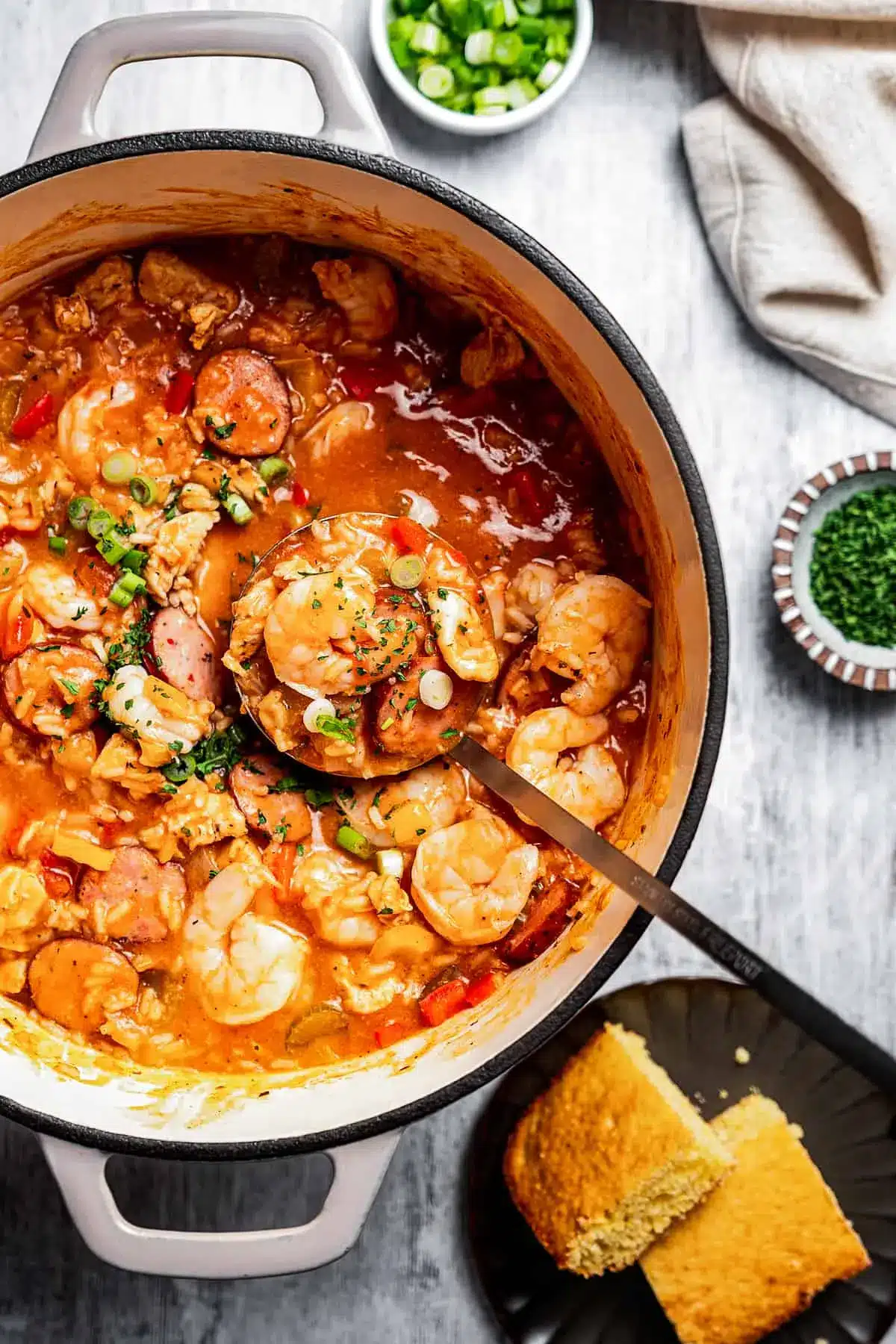
Enjoy the vibrant flavors of this delicious one-pot Jambalaya packed with juicy chicken, zesty shrimp, tender rice, and fiery andouille sausage.
- 1 tablespoon olive oil
- 1 yellow onion, diced
- 2 celery ribs, diced
- 2 bell peppers, diced (you can use red, green, yellow, orange, etc.)
- salt and fresh ground black pepper, to taste
- 3 cloves garlic, minced
- 1 pound boneless skinless chicken breasts, cubed
- ¼ teaspoon sweet paprika
- 1 teaspoon dried oregano
- 6 ounces andouille sausage, sliced into ¼-inch rounds
- 2 tablespoons tomato paste
- 2 cups chicken broth
- 14.5 ounces canned diced tomatoes
- 1 cup long grain rice
- 1 teaspoon cajun seasoning, or to taste
- 1 pound raw shrimp, peeled and deveined
- 2 green onions, thinly sliced, for garnish
- chopped fresh parsley, for garnish
- 1In a large Dutch oven, heat the olive oil over medium heat.
- 2Add onions, celery, and bell peppers, and season with salt and pepper. Cook for 4 minutes or until just tender. Stir in garlic and cook for 1 minute.
- 3Stir in chicken and add sweet paprika and oregano. Cook for 5 minutes, or until chicken is browned on all sides.
- 4Stir in the sliced sausage and tomato paste; cook for 1 minute.
- 5Add chicken broth, diced tomatoes, rice, and cajun seasoning. Bring mixture to a boil; reduce heat to medium-low and cover the pot with a lid. Cook for 20 minutes or until rice is tender and most of the liquid is absorbed.
- 6Add the shrimp and cook for 3 to 4 minutes or until the shrimp is pink and cooked through.
- 7Remove from heat and garnish with sliced green onions and parsley. Serve.
Keywords: Jambalaya, Cajun, Creole, One-Pot, Chicken, Shrimp, Sausage, Rice, Dinner, Comfort Food
Quantities for each ingredient are detailed within the accompanying recipe card, guiding you precisely through the creation of this delightful dish. Having these items prepared will make the cooking process smooth and enjoyable.
Variations
The traditional Jambalaya is a magnificent dish, but its inherent adaptability allows for exciting modifications to suit various dietary preferences and flavor profiles. Exploring these variations can open up new dimensions of taste and texture, making the dish even more accessible and enjoyable for a wider audience.
For those following a plant-based lifestyle, a Vegan Jambalaya is a wonderfully satisfying option. You can substitute the chicken and sausage with firm tofu, tempeh, or a medley of hearty vegetables like mushrooms, sweet potatoes, and cauliflower. The rich, spiced broth can be enhanced with vegetable broth and a touch of smoked paprika to mimic the savory depth of the original. The “holy trinity” of onions, celery, and bell peppers remains crucial, providing the aromatic base for this delightful vegan rendition.
A Low-Carb version can be achieved by swapping the traditional long-grain rice for cauliflower rice. This ingenious substitution maintains the dish’s hearty texture and ability to absorb flavors without the carbohydrate load. Continue with the flavorful chicken, shrimp, and andouille sausage, ensuring your broth is low in sugar. The key is to build the flavor profile with the spices and aromatics, making the cauliflower rice a perfect vehicle for those vibrant tastes.
Consider a Seafood-Focused Jambalaya for an extra touch of elegance and oceanic delight. While this recipe already includes shrimp, you could amplify the seafood presence with the addition of crawfish tails, crab meat, or even mussels. Ensure the seafood is added towards the end of the cooking process to prevent overcooking and maintain its delicate texture. A rich seafood stock can also be used as the liquid base to further enhance the marine flavors of this variation.
How to Prepare Jambalaya recipe
Step 1: Sautéing the Aromatic Foundation
Begin by heating a generous tablespoon of olive oil in a large Dutch oven or a heavy-bottomed pot over medium heat. This initial step is crucial for awakening the vibrant flavors of the essential “holy trinity” of Cajun cuisine: the diced yellow onion, celery ribs, and bell peppers. These vegetables will form the aromatic backbone of your Jambalaya, infusing the entire dish with their unique sweetness and depth.
As the vegetables begin to soften, which should take approximately four minutes, season them generously with salt and freshly ground black pepper. This not only enhances their natural flavors but also helps them to release their moisture and become tender. Following the vegetables, introduce three minced cloves of garlic to the pot. Cook for just one minute more, stirring constantly, until the garlic is fragrant but not browned, as burnt garlic can impart a bitter taste to the dish.
The skillful sautéing of these foundational ingredients sets the stage for the complex flavor profile that defines a truly exceptional Jambalaya. This initial aromatic base is the secret to creating a dish that is both comforting and incredibly vibrant. Take your time with this step; it’s the cornerstone of a delicious outcome.
Step 2: Browning the Meats and Spices
Once your aromatic vegetables are perfectly tender and fragrant, it’s time to introduce the proteins. Add one pound of cubed boneless, skinless chicken breasts to the pot. Stir well to ensure the chicken is coated in the flavorful oil and vegetable mixture. Allow the chicken to cook for about five minutes, stirring occasionally, until it is nicely browned on all sides. This browning process not only adds a beautiful color but also develops a richer, deeper flavor through the Maillard reaction.
Now, it’s time to layer in the spices that will bring warmth and character to your Jambalaya. Sprinkle in a quarter teaspoon of sweet paprika and one teaspoon of dried oregano. Stir these spices into the chicken and vegetable mixture, allowing their aromas to bloom in the heat for about a minute. The paprika will lend a subtle sweetness and vibrant color, while the oregano adds an earthy, herbaceous note that is characteristic of Creole cooking. This step ensures the spices are toasted and their flavors are fully integrated.
Following the chicken and spices, add six ounces of sliced andouille sausage. This flavorful, smoked pork sausage is a quintessential ingredient in Jambalaya, bringing a unique spicy and savory element. Stir the sausage into the pot and cook for another minute, allowing its rendered fat to mingle with the other ingredients. Finally, stir in two tablespoons of tomato paste. Cook for an additional minute, stirring constantly, until the tomato paste darkens slightly and becomes fragrant. This brief cooking of the tomato paste deepens its flavor and adds a rich, concentrated tomato base to the dish.
Step 3: Building the Flavorful Liquid Base
With the meats and aromatics beautifully browned and fragrant, it’s time to introduce the liquid elements that will transform the mixture into a rich, cohesive stew. Pour in two cups of low-sodium chicken broth. This broth will form the base of your Jambalaya, carrying the flavors of all the ingredients and providing the necessary moisture for cooking the rice.
Next, add one 14.5-ounce can of diced tomatoes, undrained. The diced tomatoes will contribute a pleasant tanginess and a subtle sweetness, while their juices will add further depth to the broth. Stir everything together, scraping the bottom of the pot to loosen any flavorful browned bits that may have adhered. These bits, known as fond, are packed with concentrated flavor and are essential for achieving a truly delicious Jambalaya.
Now, incorporate one cup of long-grain rice. It’s important to use long-grain rice, such as basmati or jasmine, as it tends to cook up fluffy and separate, preventing a clumpy or mushy final dish. Stir the rice thoroughly into the liquid mixture, ensuring each grain is well-coated. Finally, add one teaspoon of Cajun seasoning, or more to taste, to impart that signature spicy and savory kick characteristic of this Louisiana favorite. Bring this entire mixture to a rolling boil over medium-high heat.
Step 4: Simmering and Infusing Flavors
Once the mixture has reached a rolling boil, it’s time to reduce the heat and allow the magic of slow cooking to work its wonders. Immediately reduce the heat to medium-low, ensuring the liquid is gently simmering. This lower heat is crucial for preventing the rice from burning on the bottom and for allowing the flavors to meld together harmoniously. A vigorous boil could result in uneven cooking and potentially scorch the ingredients.
Carefully cover the pot with a tight-fitting lid. This trapping of steam is essential for cooking the rice evenly and ensuring it absorbs the flavorful liquid. Allow the Jambalaya to cook, undisturbed, for approximately twenty minutes. During this time, the rice will absorb most of the liquid, becoming tender and infused with the rich flavors of the broth, tomatoes, meats, and spices. Resist the urge to lift the lid too frequently, as this will release valuable steam and prolong the cooking process.
After twenty minutes, check the rice. It should be tender, and most of the liquid should be absorbed. However, the dish should not be completely dry; a slight moisture is desirable. If the rice is still too firm or the liquid is not sufficiently absorbed, cover and continue to simmer for a few more minutes, checking periodically. The goal is perfectly cooked, fluffy rice that has soaked up all the deliciousness.
Step 5: The Grand Finale with Shrimp
As the rice reaches its perfect tenderness and the liquid has been largely absorbed, it’s time to introduce the final, star protein: the shrimp. Add one pound of peeled and deveined raw shrimp directly to the pot, scattering them evenly over the surface of the Jambalaya. The residual heat of the dish will cook the shrimp beautifully. You want them to turn pink and opaque, which signifies they are perfectly cooked and tender.
Gently stir the shrimp into the rice mixture, ensuring they are submerged and can cook through. Allow the Jambalaya to cook for an additional three to four minutes, or just until the shrimp are fully cooked. Overcooking the shrimp will make them tough and rubbery, so keep a close eye on them during this final stage. The goal is succulent, plump shrimp that add a delightful seafood element to the dish.
Once the shrimp are perfectly pink and cooked through, remove the pot from the heat. Let it rest for a couple of minutes to allow the flavors to settle. This brief rest period is essential for the dish to come together fully. Finally, garnish the Jambalaya generously with thinly sliced green onions and chopped fresh parsley. These fresh garnishes add a burst of color and a bright, herbaceous counterpoint to the rich, savory flavors of the dish. Serve immediately and enjoy this spectacular one-pot meal.
Step 6: Resting and Garnishing
After the shrimp have cooked to perfection and the heat has been turned off, the Jambalaya enters a crucial resting phase. Allowing the dish to sit, covered, for about 5-10 minutes is essential. This resting period allows the flavors to further meld and harmonize, creating a more cohesive and delicious final product. It also gives the rice any remaining moisture an opportunity to be fully absorbed, resulting in the ideal texture.
During this resting time, prepare your garnishes. Thinly slice fresh green onions and chop fresh parsley. These vibrant additions not only enhance the visual appeal of the Jambalaya but also provide a refreshing counterpoint to the rich, savory flavors. The bright green of the parsley and the sharp, fresh bite of the green onions cut through the heartiness of the dish, adding another layer of complexity.
Once rested, give the Jambalaya a gentle stir. The goal is to ensure everything is evenly distributed before serving. Then, ladle generous portions into bowls. Sprinkle the top of each serving with the prepared fresh green onions and chopped parsley. For those who enjoy an extra kick, offer hot sauce or additional Cajun seasoning on the side. This final flourish transforms the cooked dish into a visually stunning and incredibly appetizing meal, ready to be savored.
Pro Tips for Jambalaya recipe
Ingredient Quality Matters: For the most authentic and delicious Jambalaya, opt for high-quality ingredients. Use fresh, firm shrimp and good quality andouille sausage. The “holy trinity” of onions, celery, and bell peppers should be fresh and vibrant for optimal flavor. Using good quality chicken broth will also make a noticeable difference in the depth of flavor.
Don’t Rush the Sauté: Take your time when sautéing the onions, celery, and bell peppers. Allowing them to soften and become slightly translucent helps to develop their sweetness and create a robust aromatic base. This foundational step is key to a flavorful outcome.
Taste and Adjust Seasoning: Cajun seasoning can vary in saltiness and spice level. Taste your Jambalaya as you go, especially after adding the Cajun seasoning and broth. Adjust the salt, pepper, and Cajun seasoning to your personal preference. You can always add more heat, but you can’t easily take it away.
Rice Selection is Key: Using the correct type of rice is vital for the texture of your Jambalaya. Long-grain white rice, such as basmati or Carolina rice, is the preferred choice because it cooks up fluffy and separate, preventing a sticky or mushy consistency. Avoid using instant or parboiled rice, as they will not yield the desired texture.
Control the Heat: While Jambalaya is known for its warmth, you can control the spice level. If you prefer a milder dish, use less Cajun seasoning or opt for a milder version. You can always add a dash of hot sauce to individual servings for those who desire more heat. Conversely, if you love spicy food, feel free to increase the amount of Cajun seasoning or add a pinch of cayenne pepper.
Serving Suggestions for Jambalaya recipe
Decoration
Elevate the visual appeal of your Jambalaya with thoughtful garnishes. The vibrant green of freshly sliced green onions adds a pop of color and a fresh, mild onion flavor that complements the richness of the dish. Finely chopped fresh parsley provides another layer of color and a delicate herbaceous note, cutting through the savory intensity of the Jambalaya. A few extra pinches of the Cajun seasoning sprinkled over the top can enhance the visual texture and hint at the bold flavors within.
Side Dishes
While Jambalaya is a hearty, complete meal on its own, certain side dishes can further enhance the dining experience. A classic accompaniment is crusty bread or cornbread, perfect for soaking up any remaining flavorful sauce. A simple, crisp coleslaw offers a refreshing, cool contrast to the warm, spiced Jambalaya. For a lighter option, a fresh tomato and cucumber salad dressed with a vinaigrette can provide a bright, acidic counterpoint.
Creative Serving Ideas
For an impressive presentation, consider serving Jambalaya family-style directly from the Dutch oven it was cooked in, allowing diners to serve themselves. Alternatively, individual portions can be plated with a central mound of Jambalaya, artfully arranged with the garnishes. For a more casual gathering, individual servings can be placed in hollowed-out bell pepper halves, creating edible bowls that add an extra touch of creativity and fun. You can also serve it alongside some delicious seafood appetizers for a complete Cajun-inspired feast.
Preparation & Storage
Storing Leftovers
Leftover Jambalaya is a culinary treasure that often tastes even better the next day as the flavors continue to meld. Once the dish has cooled to room temperature, transfer any remaining portions into an airtight container. Storing it in the refrigerator will keep it fresh and safe to consume for up to three days. Ensure the container is well-sealed to prevent any loss of moisture or absorption of other refrigerator odors.
Freezing
If you’ve made a larger batch and anticipate not finishing it within a few days, Jambalaya freezes exceptionally well. Allow the cooked Jambalaya to cool completely before portioning it into freezer-safe containers or heavy-duty freezer bags. Removing as much air as possible from the packaging will help prevent freezer burn. Properly frozen Jambalaya can maintain its quality for up to three months, providing a convenient and flavorful meal solution for future cravings.
Reheating
Reheating Jambalaya is straightforward and ensures you can enjoy its deliciousness again. The best method for reheating is on the stovetop. Transfer the leftover Jambalaya to a saucepan over medium-low heat. Add a splash of chicken broth or water if the mixture appears too thick, and stir gently until heated through. Alternatively, you can reheat individual portions in the microwave. Cover the bowl loosely with a microwave-safe lid or plastic wrap, and heat on medium power, stirring occasionally, until hot. Avoid overheating, as this can dry out the rice and meats.
Frequently Asked Questions
-
What is the authentic way to make Jambalaya?
Authentic Jambalaya, particularly Creole-style, typically features the “holy trinity” of diced onion, celery, and bell pepper, sautéed with garlic. It includes meats like chicken and andouille sausage, often seafood like shrimp or crawfish, and is simmered with long-grain rice, tomatoes, and a blend of Cajun or Creole seasonings. The cooking method involves building layers of flavor in a single pot, culminating in a rich, flavorful rice dish. While regional variations exist, the core elements of aromatics, rice, and a spiced broth remain consistent.
-
Can I substitute the andouille sausage in Jambalaya?
Absolutely. While andouille sausage is traditional for its smoky, spicy flavor profile, there are several excellent substitutes. Smoked kielbasa or chorizo can offer a similar smoky and savory taste, though their spice levels may differ. Chicken sausage or even a good quality Italian sausage (if you don’t mind a slight departure from traditional flavor) can also be used. When substituting, consider the fat content and smokiness of the sausage to best replicate the original flavor. You may need to adjust the seasonings slightly based on the chosen substitute.
-
How do I prevent my Jambalaya from becoming mushy or dry?
Achieving the perfect rice texture in Jambalaya is crucial. To prevent a mushy outcome, use long-grain rice varieties like basmati or Carolina rice, as they are less likely to clump. Measure your liquid and rice accurately; a common ratio is 2 cups of liquid to 1 cup of rice, but this can vary slightly based on the rice type and how vigorously the mixture simmers. Avoid over-stirring the rice once it’s added, as this can release starches and lead to a sticky texture. To prevent dryness, ensure the pot is covered tightly during the simmering process to retain steam. If the liquid absorbs too quickly and the rice is still undercooked, add a little more hot broth or water, a quarter cup at a time, to finish cooking. Don’t overcook the rice past the tender stage; the goal is fluffy, distinct grains.