Griechischer Wassermelonen Salat Rezept einfach – Muma’s Kitchen
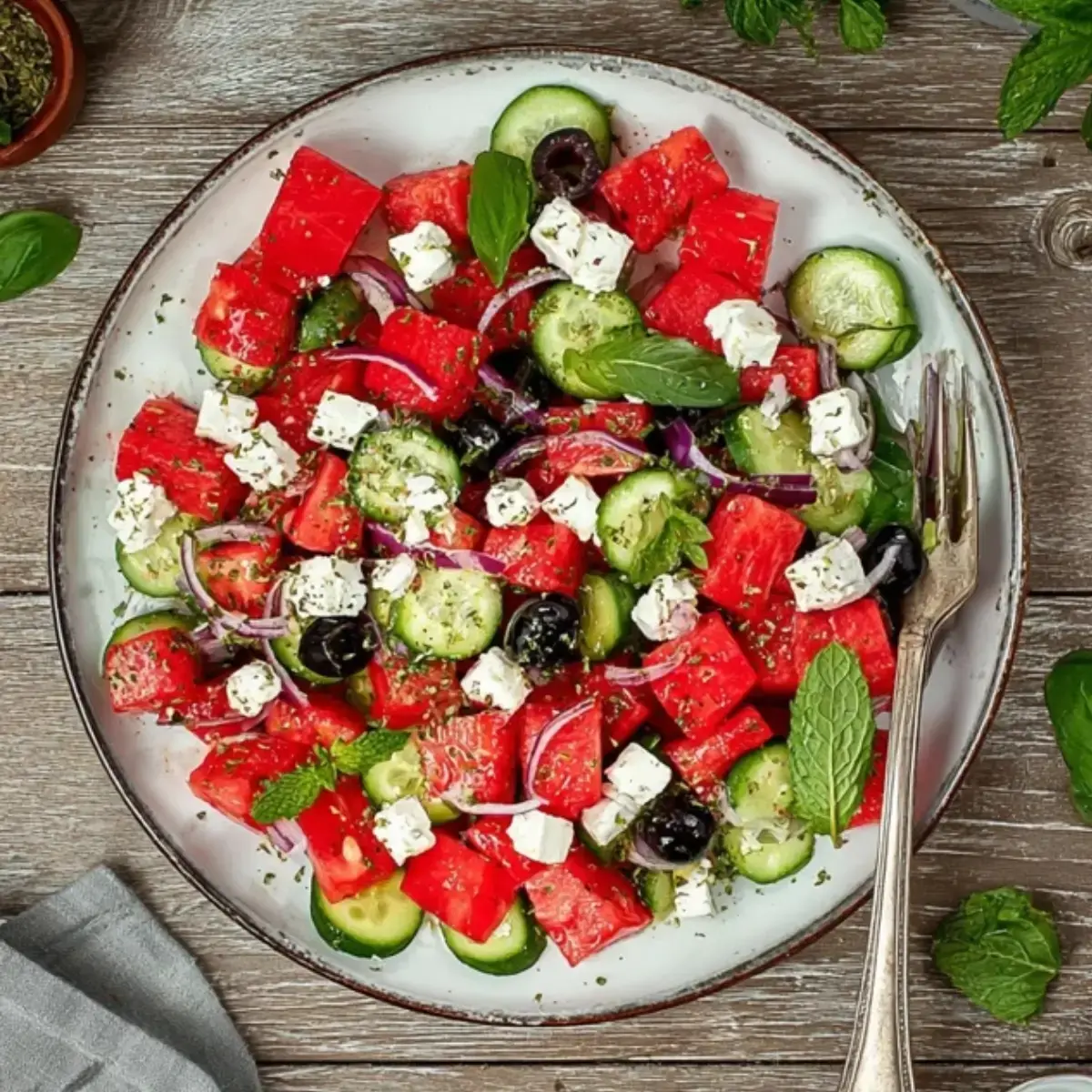
Embark on a culinary journey that captures the essence of Mediterranean sunshine and refreshing flavors. This Griechischer Wassermelonen Salat, or Greek Watermelon Salad, is more than just a dish; it’s an experience designed to invigorate your senses and bring a taste of summer to your table.
Prepare yourself for a symphony of sweet, salty, and tangy notes, all harmoniously balanced with a delightful crispness. It’s the perfect antidote to a warm day, offering a light yet satisfying escape into vibrant tastes and textures.
Why You Will Love This Recipe
- Effortless Preparation: This salad comes together in a flash, making it an ideal choice for busy weeknights or impromptu gatherings, ensuring you spend less time in the kitchen and more time enjoying your company.
- Incredibly Refreshing: The star ingredient, watermelon, provides a cooling and hydrating base, making this salad a true palate cleanser and a perfect accompaniment to grilled dishes or as a standalone light meal.
- Vibrant Flavor Profile: A delightful interplay of sweet watermelon, briny feta, juicy tomatoes, and crisp cucumbers, enhanced by a zesty lime and balsamic dressing, creates a complex and utterly delicious taste.
- Visually Appealing: The striking contrast of colors – the deep red of the watermelon, the vibrant green of the cucumber and basil, and the creamy white of the feta – makes this salad a feast for the eyes as well as the palate.
- Versatile Enjoyment: Whether served as a light lunch, a sophisticated starter, or a refreshing side dish at a dinner party, this Griechischer Wassermelonen Salat effortlessly elevates any occasion.
Ingredients You Need
The magic of this Griechischer Wassermelonen Salat lies in its simplicity and the quality of its fresh components. Choosing ripe, flavorful ingredients is key to unlocking the full potential of this dish, ensuring a vibrant and authentic taste of the Mediterranean.
Greek Watermelon Salad
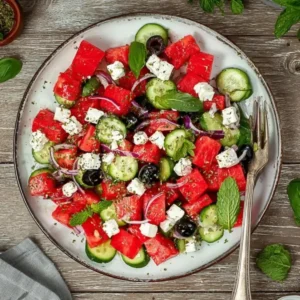
A refreshing and flavorful Mediterranean summer salad featuring juicy watermelon, creamy feta, crisp cucumber, tomatoes, and aromatic herbs. Perfect as a light meal or a side dish.
- 500 g watermelon
- 300 g cherry tomatoes
- 2 small cucumbers
- 15 black olives (pitted)
- 200 g feta cheese
- 1 spring onion
- 10 g fresh basil
- 1-2 sprigs of thyme
- Juice of 1/2 lime
- 1 tbsp maple syrup or honey
- 1-2 tbsp balsamic vinegar
- 3 tbsp olive oil
- Salt and pepper to taste
- 1Finely chop the basil and thyme. In a jar, combine the herbs with olive oil, lime juice, balsamic vinegar, and maple syrup (or honey). Shake well until the ingredients are combined.
- 2Cut the watermelon into bite-sized cubes. Wash the cherry tomatoes and halve them. Slice the cucumbers thinly. Halve the olives and dice the feta cheese. Finely chop the spring onion.
- 3Add all prepared ingredients to a large bowl and gently mix, taking care not to break the watermelon.
- 4Pour the dressing over the salad and mix lightly.
- 5Season the Greek Watermelon Salad with salt and pepper to taste and serve chilled.
Keywords: watermelon salad, feta, cucumber, tomato, greek salad, mediterranean salad, summer salad, vegetarian, light meal, side dish
- watermelon: a ripe, sweet base that provides hydration and a delicate sweetness.
- cherry tomatoes: adding bursts of juicy, slightly acidic flavor and a beautiful pop of color.
- cucumber: contributing a refreshing crunch and a clean, watery essence.
- Kalamata olives: offering a distinct salty, briny, and slightly fruity counterpoint.
- feta cheese: lending a creamy, tangy, and salty dimension that is quintessentially Greek.
- spring onion: providing a mild, fresh oniony bite without overpowering the delicate flavors.
- fresh basil: infusing the salad with its signature sweet, peppery, and slightly anise-like aroma.
- fresh thyme: adding a subtle earthy and floral note that complements the other Mediterranean herbs.
- lime juice: delivering a bright, zesty acidity that cuts through richness and enhances freshness.
- maple syrup or honey: a touch of sweetness to balance the tartness of the lime and balsamic.
- balsamic vinegar: providing a deeper, slightly fruity acidity that rounds out the dressing.
- olive oil: the foundation of the dressing, binding the flavors and adding a smooth richness.
- salt and freshly ground black pepper: essential for seasoning and bringing out the best in every ingredient.
The precise quantities for these ingredients are detailed within the accompanying recipe card for your convenience.
Variations
One of the most delightful aspects of this Griechischer Wassermelonen Salat is its adaptability, allowing you to tailor it to various dietary needs and personal preferences. This makes it a truly inclusive dish for any gathering.
For those seeking a plant-based option, transforming this salad into a vegan delight is remarkably simple. Replace the traditional feta cheese with a high-quality vegan feta alternative that mimics the creamy texture and tangy flavor. Consider adding toasted pine nuts or sunflower seeds for an extra layer of crunch and nutty depth, enhancing the overall sensory experience.
If you’re mindful of carbohydrate intake, this salad can be easily adapted for a low-carb lifestyle. While watermelon itself contains natural sugars, its water content is high, making it a relatively lower-carb fruit in moderation. Focus on increasing the proportion of cucumbers and swapping out the maple syrup for a sugar-free alternative or omitting it altogether if the sweetness of the watermelon is sufficient.
For an added layer of complexity and a richer Mediterranean flair, consider incorporating other complementary ingredients. Thinly sliced red onion can provide a sharper, more pungent bite, while fresh mint leaves can introduce an invigorating cooling sensation that pairs beautifully with watermelon. A scattering of toasted almonds or pistachios can introduce a delightful textural contrast.
How to Prepare Griechischer Wassermelonen Salat
Step 1: Crafting the Harmonious Dressing
Begin by meticulously preparing the dressing, the liquid heart of our Griechischer Wassermelonen Salat. Finely chop the fresh basil leaves, releasing their fragrant oils, and strip the leaves from the fresh thyme sprigs, discarding the woody stems. Combine these aromatic herbs in a small, clean glass jar with a tight-fitting lid.
To this herbal foundation, add the vibrant lime juice, which will provide a zesty, awakening acidity. Pour in the balsamic vinegar, its deep color hinting at its rich, complex flavor. Introduce the maple syrup or honey, a touch of sweetness to harmonize the tangy elements, and then generously drizzle in the good quality olive oil. Secure the lid tightly and shake the jar vigorously until all the components are emulsified into a smooth, well-combined dressing. This initial step ensures the flavors have a chance to meld beautifully before being introduced to the salad itself.
Step 2: Preparing the Star – The Watermelon
The star of our Griechischer Wassermelonen Salat is, of course, the watermelon, and its preparation is paramount to the salad’s success. Select a ripe watermelon, one that feels heavy for its size and emits a deep, hollow sound when tapped. Carefully cut the watermelon in half, then into manageable quarters. Remove all seeds meticulously; this step is crucial to avoid an unpleasant texture in the final dish. Using a sharp knife, cut the flesh into uniform, bite-sized cubes, aiming for pieces that are roughly 1-inch in size.
It’s essential to use watermelon that is well-chilled, straight from the refrigerator. This ensures maximum refreshment and prevents the salad from becoming too watery, especially as the ingredients mingle. The cool temperature of the watermelon will be the foundation of the salad’s invigorating quality, setting the stage for a truly delightful summer dish. Overripe watermelon can become mushy, so aiming for firm, juicy cubes is ideal for maintaining the salad’s integrity.
Step 3: Adding the Crisp and Juicy Elements
Next, we introduce the supporting cast of fresh, crisp ingredients that will add texture and complementary flavors to our Griechischer Wassermelonen Salat. Thoroughly wash the cherry tomatoes under cool running water and pat them dry with a clean kitchen towel. Halve each cherry tomato, ensuring that the cut sides are facing upwards for even distribution of their sweet juices. Prepare the cucumbers by washing them and then slicing them thinly, either into delicate rounds or elegant half-moons, depending on your aesthetic preference.
The goal here is to create a visual and textural mosaic that enhances the eating experience. Uniformity in the size of these components ensures that each spoonful offers a balanced blend of flavors. The crispness of the cucumber, combined with the burst of the tomatoes, adds a vital refreshing element that contrasts beautifully with the softer watermelon.
Step 4: Incorporating Salty and Savory Accents
Now, it’s time to introduce the distinctive savory elements that provide the characteristic salty counterpoint to the sweet watermelon in our Griechischer Wassermelonen Salat. If your Kalamata olives are not already pitted, carefully remove the pits. Halve each olive to expose its rich, dark flesh, distributing their intense, briny flavor throughout the salad. Cube the feta cheese into similarly sized pieces as the watermelon, ensuring a delightful creamy and salty bite in every forkful.
Prepare the spring onion by removing the roots and the tough outer layers, then finely chopping the tender green and white parts. This ingredient adds a subtle sharpness and freshness, a gentle oniony note that complements rather than overwhelms the other delicate flavors. These components are crucial for building the complex and addictive flavor profile that defines this classic Mediterranean salad.
Step 5: The Grand Assembly – Bringing it All Together
With all our components meticulously prepared, it’s time to bring them together for the grand assembly of our Griechischer Wassermelonen Salat. Select a large, wide serving bowl, one that allows for easy mixing without crushing the delicate ingredients. Gently add the cubed watermelon, the halved cherry tomatoes, the sliced cucumber, the halved Kalamata olives, and the crumbled feta cheese into the bowl. Finally, sprinkle the finely chopped spring onion over the top.
The key at this stage is to handle the ingredients with utmost care. Use a large spoon or your hands to gently toss everything together. The aim is to distribute the ingredients evenly without bruising the watermelon or breaking down the feta cheese too much. A light, airy toss is all that’s needed to create a visually appealing and texturally inviting base for the dressing.
Step 6: Dressing and Final Seasoning
The penultimate step in creating our spectacular Griechischer Wassermelonen Salat is to introduce the expertly crafted dressing and provide the final touch of seasoning. Retrieve the jar containing your emulsified dressing. Pour the dressing evenly over the combined ingredients in the large serving bowl. Take your large spoon and very gently fold the dressing into the salad. Ensure that every piece of watermelon, tomato, and cucumber is lightly coated with the flavorful vinaigrette.
Once the dressing is incorporated, it’s time for the final seasoning. Taste a small piece of the salad, focusing on the balance of flavors. Add salt and freshly ground black pepper as needed, remembering that the feta and olives already contribute significant saltiness. Stir gently once more to ensure the seasoning is distributed evenly. The salad is now ready to be chilled for maximum refreshment or served immediately for an immediate burst of Mediterranean delight.
Pro Tips for Griechischer Wassermelonen Salat
To elevate your Griechischer Wassermelonen Salat from delicious to absolutely divine, consider these expert tips. The foundation of a truly exceptional salad lies in the freshness and quality of its components, so always opt for the ripest watermelon and the most vibrant produce you can find. Chilling the watermelon thoroughly before preparation is not just a suggestion; it’s a critical step that ensures the salad delivers that unparalleled refreshing sensation, making it a perfect antidote to the summer heat.
Precision in your cutting technique can significantly impact the overall aesthetic and eating experience. Aim for uniform, bite-sized pieces for all your salad ingredients – the watermelon, tomatoes, and cucumbers. This consistency in size ensures that each mouthful offers a balanced blend of all the flavors and textures, creating a harmonious culinary experience that is both pleasing to the eye and delightful to the palate. Uniformity also means that the dressing coats everything evenly.
Timing is crucial when it comes to dressing a salad, especially one featuring delicate ingredients like watermelon. For the Griechischer Wassermelonen Salat, it is highly recommended to add the dressing just before serving. This prevents the watermelon from releasing too much of its natural juice, which can dilute the dressing and make the salad watery. Dressing the salad right before it hits the table ensures maximum crispness and optimal flavor distribution, maintaining the integrity of each ingredient.
The feta cheese, a key player in this Mediterranean masterpiece, deserves special attention during the assembly process. To preserve its delightful creamy texture and prevent it from breaking down into a mush, it’s best to gently fold it into the salad at the very last moment. This careful handling ensures that the feta remains in distinct, bite-sized pieces, providing those wonderful pockets of tangy, salty goodness with every forkful.
If you plan to prepare the Griechischer Wassermelonen Salat in advance, a smart strategy can save your salad from succumbing to sogginess. Store the prepared salad components (watermelon, tomatoes, cucumbers, olives, spring onions) and the dressing separately in airtight containers in the refrigerator. Combine them and add the feta only when you are ready to serve. This foresight guarantees that your salad remains fresh, vibrant, and perfectly textured, even when made ahead of time, which is a lifesaver for lunch prep or party planning.
Serving Suggestions for Griechischer Wassermelonen Salat
Decoration
To make your Griechischer Wassermelonen Salat truly a feast for the eyes, pay attention to its presentation. A scattering of fresh microgreens or edible flowers can add a touch of elegance and sophistication, providing a delicate visual contrast. A final drizzle of high-quality olive oil or a few extra basil leaves can enhance both the visual appeal and the aromatic profile of the salad, inviting your guests to savor its beauty before diving into its exquisite flavors.
Side Dishes
This vibrant Griechischer Wassermelonen Salat shines as a refreshing accompaniment to a variety of main courses. It pairs exceptionally well with grilled meats, such as lamb skewers or chicken souvlaki, offering a cooling counterpoint to the richness of the protein. For seafood lovers, it’s a perfect match for grilled fish or shrimp, its sweetness complementing the delicate flavors of the ocean. Vegetarian and vegan guests will also appreciate its vibrant taste alongside dishes like grilled halloumi or lentil patties.
Creative Serving Ideas
Beyond the traditional bowl, consider more innovative ways to present this delightful salad. Serve individual portions in martini glasses or small mason jars for an elegant appetizer or a chic picnic option. You could also use it as a vibrant filling for hollowed-out mini watermelons for a whimsical presentation at outdoor gatherings. Another creative approach is to layer the ingredients, starting with watermelon cubes, then adding tomatoes and cucumbers, and finishing with feta and dressing, creating a visually stunning parfait-style salad.
Preparation & Storage
Storing Leftovers
Should you find yourself with any delightful Griechischer Wassermelonen Salat leftovers, proper storage is key to preserving its fresh flavors and textures. It’s important to note that the salad is best enjoyed fresh, but leftovers can still be a treat if handled correctly. If you have any remaining, transfer it to an airtight container.
For optimal quality, it’s highly recommended to store the dressing separately from the salad ingredients. If the dressing has already been mixed in, the salad may become slightly softer over time due to the watermelon’s high water content. Nevertheless, it will still retain much of its appealing flavor profile for a day or two.
When storing, ensure the container is sealed tightly to prevent the salad from absorbing other odors in the refrigerator. The goal is to maintain as much of its crispness and vibrant flavor as possible, ensuring that any subsequent serving is still a pleasant culinary experience.
Freezing
Freezing Griechischer Wassermelonen Salat is generally not recommended, as the high water content of the watermelon will cause it to become mushy and unappealing once thawed. Freezing fundamentally alters the texture of fruits and vegetables by forming ice crystals that damage cell walls. This process would result in a watery and less pleasant salad.
The vibrant freshness and crisp texture are central to the appeal of this salad. Freezing would destroy these qualities, leading to a disappointing outcome. It’s best to prepare only the amount of salad you anticipate consuming in a short period to avoid the need for freezing. Enjoying this salad at its peak freshness is part of its charm.
If you absolutely must freeze some components, it would be limited to elements like the dressing (which might separate and require re-emulsifying) or perhaps whole, unpitted olives. However, freezing the assembled salad or its primary components like watermelon and cucumber is not advised for the best culinary results.
Reheating
There is no need to reheat Griechischer Wassermelonen Salat, as it is designed to be served chilled, offering a cool and refreshing experience, particularly during warmer months. The beauty of this salad lies in its crisp, fresh ingredients and the invigorating contrast of temperatures and flavors. Heating it would completely alter its intended character and diminish its refreshing qualities.
The salad should be enjoyed as is, straight from the refrigerator. The chilling process is integral to its flavor profile and its ability to provide a cooling sensation. If the salad has been stored in the refrigerator and is too cold, a brief period at room temperature (around 10-15 minutes) can help it reach an ideal serving temperature, allowing the flavors to meld slightly without losing its refreshing chill.
Therefore, any instructions regarding reheating are not applicable to this particular dish. Its essence is captured in its chilled, vibrant state, making it a perfect, no-cook option for any occasion seeking a taste of summer.
Frequently Asked Questions
-
How long does Griechischer Wassermelonen Salat typically stay fresh in the refrigerator?
Griechischer Wassermelonen Salat is best enjoyed on the day it’s prepared, as the watermelon and cucumber can release moisture over time, potentially making the salad watery. However, if stored properly, it can remain palatable for up to 1 to 2 days. The key to prolonging its freshness lies in keeping the dressing separate from the salad ingredients until just before serving. If the dressing has already been mixed in, the salad will likely be best consumed within 24 hours to retain some of its original crispness and vibrant texture. Always store leftovers in an airtight container in the coldest part of your refrigerator.
-
Can I prepare the ingredients for Griechischer Wassermelonen Salat in advance, and if so, how should I do it?
Absolutely, preparing the components in advance is a fantastic way to save time, especially if you’re hosting a gathering or planning for easy lunches. You can chop the watermelon, halve the tomatoes, slice the cucumbers, pit and halve the olives, and chop the spring onions ahead of time. Store each of these components in separate airtight containers in the refrigerator. The fresh basil and thyme can also be washed and gently patted dry, stored in a loosely sealed container or bag with a paper towel to absorb excess moisture. The dressing can also be prepared in advance and stored in a jar. Crucially, do not combine these elements, add the feta, or toss with the dressing until you are ready to serve the salad to maintain maximum freshness and texture.
-
Beyond its refreshing taste, are there significant health benefits associated with the ingredients in Griechischer Wassermelonen Salat?
Yes, Griechischer Wassermelonen Salat is not only a delight for the taste buds but also offers several health advantages. Watermelon itself is primarily water, making it excellent for hydration, and it’s a good source of vitamins A and C, as well as antioxidants like lycopene. Feta cheese provides protein and calcium, though it should be consumed in moderation due to its sodium content. Cucumbers are also highly hydrating and contribute vitamins K and C. Olives are a source of healthy monounsaturated fats and antioxidants, while olive oil, the base of the dressing, is rich in beneficial monounsaturated fats and anti-inflammatory compounds. The fresh herbs like basil and thyme add vital micronutrients and beneficial plant compounds, making this salad a wholesome choice, especially during warmer months when lighter fare is preferred. Its low-calorie count and high water content also make it a great option for weight management.