Irresistible Ube Mochi Donuts: A Deliciously Chewy Treat
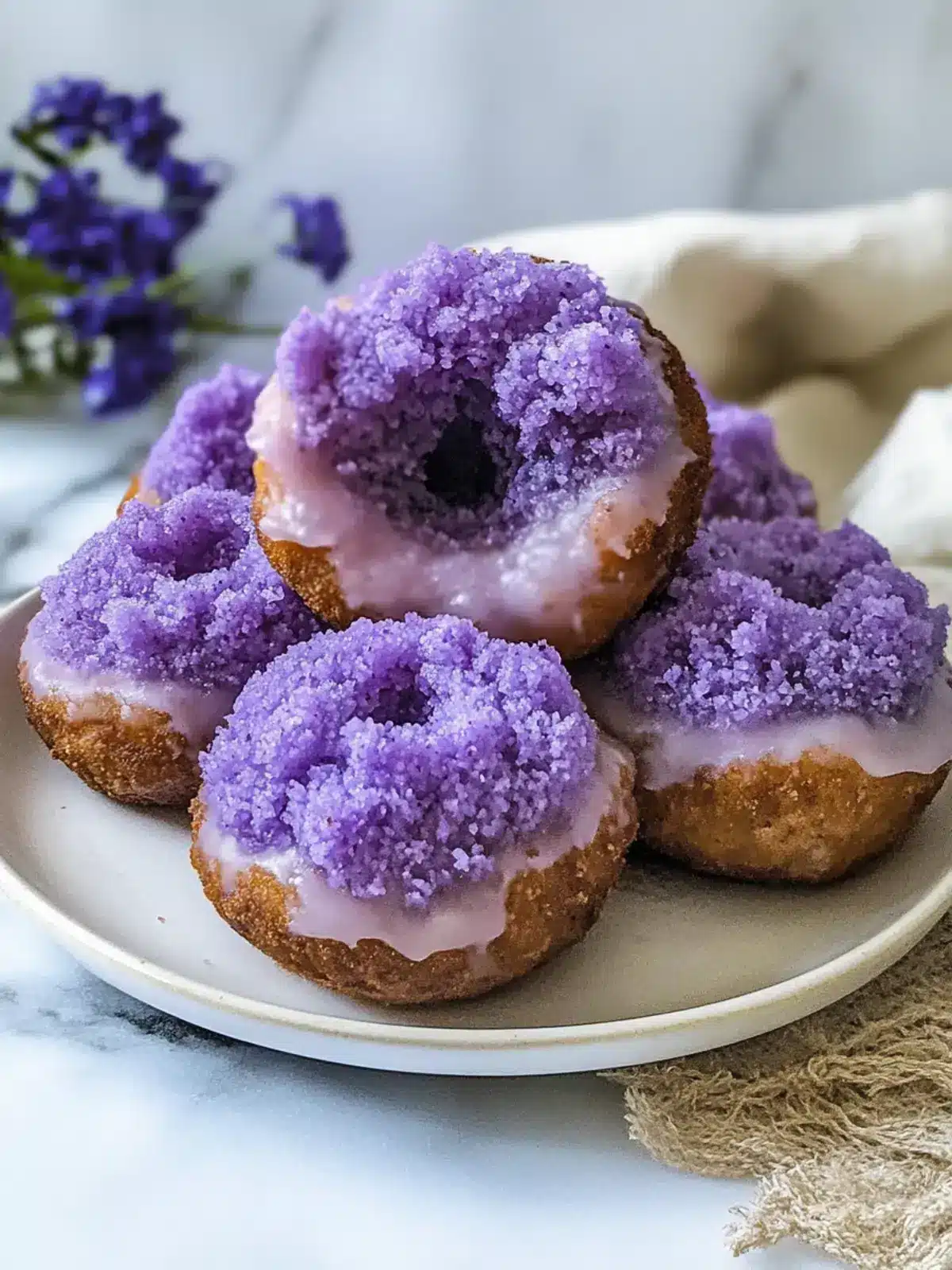
Who knew that something so delightful could be so simple? The first time I took a bite of Ube Mochi Donuts, I was transported to a world where comfort food meets culinary innovation.
Just picture it: the golden, crisp exterior giving way to a soft and chewy interior, all wrapped up in the sweet, nutty essence of ube. As I prepared this recipe in my kitchen, the candy-like aroma of coconut milk mingling with the subtle warmth of sugar filled the room, instantly lifting my spirits.
Why You Will Love This Recipe
- Irresistible Texture: These donuts deliver a unique combination of chewy and satisfying, a hallmark of perfectly made mochi.
- Easy to Make: With just a few minutes of active preparation, you’ll have delicious, homemade donuts ready to enjoy.
- Flavor Explosion: The sweet, nutty essence of ube blended with the rich creaminess of coconut milk creates a taste sensation that’s simply delightful and addictive.
- Perfect for Sharing: Impress friends and family with this colorful treat that is both eye-catching and incredibly delicious.
- Versatile Enjoyment: Enjoy them simply as a snack or dessert, plain or with your favorite dip; explore creative topping ideas in our variations section for an extra special touch.
Ingredients You Need
Elevating your baking experience starts with selecting the finest components for your Ube Mochi Donuts. The star of the show is undoubtedly mochiko, a unique glutinous rice flour that is essential for achieving that signature chewy texture characteristic of authentic mochi.
Sugar enhances the overall sweetness, and while you can add a sprinkle of cinnamon for a touch of warmth, the base sweetness is key to their appeal. Full-fat coconut milk provides an unparalleled richness and creaminess, ensuring a luscious and moist interior that perfectly complements the chewiness.
Finally, ube extract is non-negotiable; it imparts that beautiful, vibrant purple hue and the distinct, delightful flavor of ube, which is crucial for an authentic Ube Mochi Donut experience. For a deeper dive into the specific amounts needed, please refer to the comprehensive recipe card below.
Deliciously Chewy Ube Mochi Donuts
These Ube Mochi Donuts offer a perfect escape with their golden, crisp exterior and a soft, chewy interior infused with the sweet, nutty essence of ube and coconut milk.
- 1 cup mochiko (glutinous rice flour)
- 1/2 cup sugar
- 1 cup full-fat coconut milk
- 1 teaspoon ube extract
- 1Pour enough oil into a pot and heat it to 350°F.
- 2In a large bowl, whisk together the mochiko, sugar, coconut milk, and ube extract until well combined.
- 3Using a spoon, drop balls of the batter, about 2 tablespoons each, into the hot oil. Do not overcrowd the pot.
- 4Fry for 4-5 minutes, gently turning the donuts to ensure they are evenly browned.
- 5Remove and drain the donuts on a rack or a sheet pan lined with paper towels to absorb excess oil.
Keywords: ube, mochi donuts, dessert, glutinous rice flour, coconut, filipino
- mochiko: a finely milled glutinous rice flour that forms the chewy base
- sugar: provides sweetness and aids in browning during frying
- full-fat coconut milk: adds richness, moisture, and a tropical undertone
- ube extract: imparts the iconic purple color and distinctive ube flavor
Variations
For those seeking a different dietary approach, a vegan version is wonderfully simple to achieve. By ensuring your sugar is certified vegan and using a plant-based milk, such as almond or soy milk, in place of the coconut milk, you can maintain the delightful chewiness while adhering to vegan principles. The resulting donuts are just as satisfying, offering a lighter yet equally delicious treat.
If you’re looking to reduce carbohydrates without sacrificing flavor, a low-carb adaptation is also possible. Experiment with a sugar substitute like erythritol or stevia to achieve sweetness, and consider incorporating almond flour or coconut flour as a partial substitute for mochiko, though this may alter the texture slightly.
Another exciting avenue for variation lies in flavor infusion and toppings. Consider adding a teaspoon of matcha powder to the batter for an earthy, sophisticated twist, or perhaps a hint of cardamom for an aromatic warmth. These simple additions can transform the classic Ube Mochi Donut into a truly unique culinary creation.
How to Prepare Ube Mochi Donuts
Step 1: Preparing the Frying Oil
The foundation of a perfectly fried mochi donut lies in correctly heating your oil. It’s crucial to use a pot that is deep enough to accommodate the oil and the donuts without overflow. You’ll want to pour enough neutral-flavored cooking oil, such as vegetable or canola oil, to allow the donuts to float freely during frying.
The target temperature for frying these delights is precisely 350°F (175°C). This specific temperature is key to achieving a beautiful golden-brown exterior without burning the delicate dough, and it also ensures the inside cooks through evenly. Using a kitchen thermometer is highly recommended to maintain this precise temperature throughout the frying process; fluctuating temperatures can lead to greasy or unevenly cooked donuts.
Maintaining the correct oil temperature is paramount; if the oil is too hot, the outside of the donuts will brown too quickly while the inside remains raw and doughy. Conversely, if the oil is too cool, the donuts will absorb excessive amounts of oil, resulting in a greasy and heavy texture. Patience here pays off immensely for the final texture and appearance of your Ube Mochi Donuts.
Step 2: Mixing the Donut Batter
In a spacious mixing bowl, begin by combining your dry ingredients: the finely milled mochiko flour and the sugar. Whisk these together thoroughly to ensure they are evenly distributed; this prevents pockets of unmixed flour or sugar in your final batter.
Next, gradually incorporate the wet ingredients: the rich full-fat coconut milk and the vibrant ube extract. Continue whisking until you achieve a smooth, albeit sticky, batter. It’s perfectly normal for this dough to be quite thick and sticky; this is the characteristic texture that gives mochi its delightful chew.
Resist the urge to add more flour to “stiffen” the batter if it feels too sticky, as this could compromise the final texture. A slightly sticky batter is exactly what you want for that signature mochi chew. You can use a spoon or a small ice cream scoop to manage the batter when dropping it into the hot oil, and having a small bowl of water nearby can help keep your hands or utensils from sticking too much.
Step 3: Dropping Batter into Hot Oil
Once your oil has reached the optimal 350°F (175°C), it’s time to introduce the batter. Using a spoon or a small cookie scoop, carefully drop portions of the batter into the hot oil. Aim for roughly 2-tablespoon-sized portions; consistency in size will ensure they all cook evenly.
It is absolutely vital not to overcrowd the pot. Fry the donuts in small batches, allowing ample space between each piece. Overcrowding will cause the oil temperature to drop significantly, leading to greasy donuts and hindering their ability to puff up and fry evenly. Give them room to swim and develop that beautiful, crispy exterior.
As the batter hits the hot oil, you’ll notice it immediately begin to puff and expand. Some pieces might bob and float immediately, while others may take a moment. Gently guide them into the oil, ensuring they don’t clump together. This initial stage is where the magic of the mochi texture starts to form under the heat.
Step 4: Frying to Golden Perfection
Once the donuts are gently placed in the hot oil, allow them to fry for a couple of minutes without disturbing them. This initial period allows a crust to form, which is essential for their structure. You’ll see them begin to turn a lovely light golden brown on the bottom.
Using a slotted spoon or a spider strainer, gently turn the donuts over. Continue to fry them, turning them periodically to ensure they cook evenly and achieve a beautiful, uniform golden-brown color on all sides. This constant, gentle turning is key to preventing any one side from becoming too dark or undercooked.
The entire frying process for each batch should take approximately 4 to 5 minutes. Keep a close eye on them; they cook relatively quickly. They should be puffed up and feel firm to the touch when done, indicating that they are cooked through to the center. The aroma that fills your kitchen at this stage is truly intoxicating.
Step 5: Draining Excess Oil
As soon as the Ube Mochi Donuts reach that perfect golden-brown hue and are cooked through, it’s time to remove them from the hot oil. Carefully lift them out using a slotted spoon or a spider strainer, allowing as much excess oil to drip back into the pot as possible.
Transfer the freshly fried donuts to a wire rack set over a baking sheet or to a plate lined with several layers of paper towels. This step is critical for absorbing any residual oil, ensuring your donuts are delightfully crisp and not greasy. The paper towels will do the hard work of wicking away the excess fat.
Allow the donuts to cool on the rack or paper towels for a few minutes before handling them further, especially if you plan to add any toppings. While still warm, they are at their most tender and chewy, so enjoy them at their peak! The satisfying crunch as you bite into them, followed by the chewy interior, is pure bliss.
Step 6: Finishing Touches (Optional)
While these Ube Mochi Donuts are absolutely delicious served plain, a few finishing touches can elevate them even further. A light dusting of powdered sugar is a classic and simple way to add a touch more sweetness and a beautiful aesthetic. Use a fine-mesh sieve to ensure an even, delicate coating.
For a more decadent experience, consider a drizzle of melted white or dark chocolate. The contrast between the rich chocolate and the sweet, ube-infused donut is truly divine. You could also experiment with a glaze made from powdered sugar and a touch of ube extract or coconut milk for a cohesive flavor profile.
Other delightful options include a sprinkle of toasted shredded coconut for an extra tropical crunch, or even a dusting of finely crushed freeze-dried raspberries for a vibrant color and tangy counterpoint. The possibilities for personalizing these treats are endless and can be tailored to any preference or occasion.
Pro Tips for Ube Mochi Donuts
Maintain Oil Temperature: Consistently keeping your oil at 350°F (175°C) is the single most important factor for success. Use a thermometer and monitor it closely, adjusting the heat as needed.
Sticky Batter Management: Don’t be alarmed by the sticky dough; it’s the nature of mochiko. Wetting your hands or using oiled spoons will make dropping the batter into the oil much easier and cleaner.
Fry in Batches: Overcrowding the pot is a common mistake that leads to greasy donuts. Frying in small batches ensures even cooking and proper browning, allowing the oil temperature to remain stable.
Don’t Overcook: Ube mochi donuts cook relatively quickly. Overcooking can make them tough or dry, so keep a close eye on them and aim for that perfect golden-brown color.
Serve Warm: These donuts are best enjoyed fresh and warm, when their chewy texture is at its peak. If reheating, use a toaster oven or air fryer to maintain their delightful crispness.
Serving Suggestions for Ube Mochi Donuts
Decoration
For a visually stunning presentation, consider a delicate dusting of powdered sugar, applied through a fine-mesh sieve for an even coating. A drizzle of melted white chocolate offers a luxurious contrast to the vibrant purple hue of the donuts. Alternatively, a sprinkle of toasted shredded coconut adds a wonderful texture and enhances the tropical flavor profile.
Side Dishes
To complement the sweetness and chewiness of the Ube Mochi Donuts, consider pairing them with a refreshing beverage. A chilled drink like an iced hibiscus tea provides a tart counterpoint, cleansing the palate. For a creamier option, a coconut chai latte harmonizes beautifully with the donut’s flavors, creating a cozy and comforting pairing.
Creative Serving Ideas
Arrange the donuts on a decorative platter for a beautiful dessert spread. You could also serve them alongside fresh fruit, such as sliced mango or berries, for a vibrant and healthy accompaniment. For a fun dessert bar, offer a selection of toppings like sprinkles, edible glitter, or even a small bowl of whipped coconut cream for dipping.
Preparation & Storage
Storing Leftovers
If you find yourself with any leftover Ube Mochi Donuts, store them in an airtight container at room temperature. This will help to maintain their chewy texture for up to two days. Ensure the container is well-sealed to prevent them from drying out, which can happen quite quickly with mochi-based treats.
Freezing
For longer storage, these donuts freeze remarkably well. After they have cooled completely, arrange them in a single layer on a baking sheet and place them in the freezer until they are firm. Once frozen solid, transfer them to a freezer-safe bag or container, removing as much air as possible to prevent freezer burn. They can be kept frozen for up to three months.
Reheating
To enjoy frozen or refrigerated donuts, the best method for reheating is in an air fryer or toaster oven. A brief reheat at around 350°F (175°C) for 3-5 minutes will restore their delightful crisp exterior and wonderfully chewy interior. Avoid using a microwave, as this can make mochi confections rubbery and unpleasant.
Frequently Asked Questions
-
What is the best way to ensure my Ube Mochi Donuts have the right chewy texture and don’t become tough?
The key to achieving that perfect, delightful chewiness in Ube Mochi Donuts lies primarily in the type of flour used and proper frying technique. Ensure you are using authentic mochiko, which is specifically glutinous rice flour, and not regular rice flour or all-purpose flour, as these will not yield the characteristic elasticity. When mixing the batter, avoid overmixing once the wet ingredients are incorporated; you want a smooth but not overworked dough. Crucially, maintain the correct frying oil temperature at precisely 350°F (175°C). If the oil is too cool, the donuts will absorb excess oil and become dense and possibly tough. If the oil is too hot, the exterior will cook too quickly, leaving the interior undercooked and potentially impacting the chewiness. Frying in small batches also ensures consistent temperatures and even cooking, contributing to the ideal texture.
-
Can I make Ube Mochi Donuts ahead of time, and if so, what is the best method for storage and reheating to maintain their quality?
Yes, Ube Mochi Donuts can definitely be made ahead of time, which is a great advantage for parties or busy schedules. For short-term storage, place completely cooled donuts in an airtight container at room temperature for up to two days; however, their crisp exterior might soften slightly over time. For longer storage, freezing is the most effective method. Once cooled, arrange them in a single layer on a baking sheet and freeze until solid, then transfer them to a freezer-safe bag or container for up to three months. To reheat, the absolute best way to revive them is in an air fryer or toaster oven at around 350°F (175°C) for 3-5 minutes. This method effectively re-crisps the exterior and warms the interior without making them rubbery, which can happen if you use a microwave. You can also reheat refrigerated donuts in the same way.
-
What are some common pitfalls when making Ube Mochi Donuts, and how can I troubleshoot issues like greasy donuts or uneven browning?
Several common pitfalls can arise when making these delightful donuts, but they are usually easy to resolve. Greasy donuts are most often caused by frying in oil that is not hot enough; always verify your oil temperature is at 350°F (175°C) before adding batter and monitor it closely. Overcrowding the pot is another culprit for greasiness and uneven browning, as it lowers the oil temperature. Ensure you fry in small batches, allowing each donut ample space to cook evenly. Uneven browning can also occur if the donuts aren’t turned frequently enough during frying; gentle, consistent turning is key to achieving a uniform golden hue. If your batter seems excessively sticky and difficult to handle, a slightly wet spoon or a light oiling of utensils can help, but avoid adding extra flour, which can negatively impact the chewy texture. Finally, ensure your oil is fresh and hasn’t been used excessively, as old oil can impart off-flavors and affect the frying performance.