Thai Basil Beef Rolls: A Fresh Take On Restaurant-Quality Appetizers
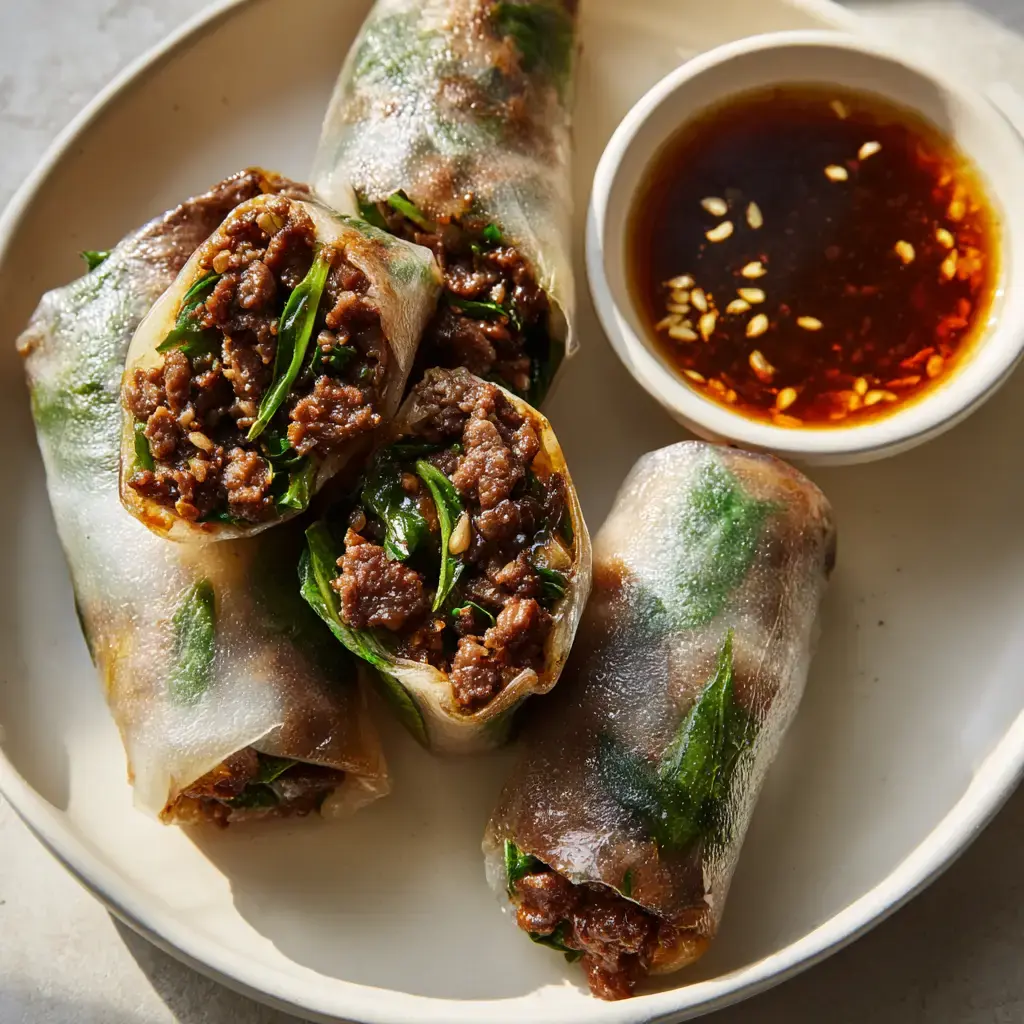
There’s something incredibly satisfying about creating a dish that looks as good as it tastes. These Thai Basil Beef Rolls are the perfect example—a beautiful mosaic of savory beef, fresh herbs, and vibrant flavors all visible through a delicate, translucent wrapper. Forget takeout; this recipe brings the artistry and fresh taste of a top-tier Thai restaurant right into your kitchen.
Imagine biting into a soft, slightly chewy roll. You first taste the savory, browned stir-fried beef, perfectly coated in a sticky, dark brown soy glaze. Then comes the unmistakable, slightly spicy aroma of whole Thai basil leaves, with tiny flecks of garlic adding another layer of complexity. It’s a handheld masterpiece, especially when dipped into its companion dark amber sauce, dotted with crunchy sesame seeds.
Why You Will Love This Recipe
- Visually Stunning: The translucent rice paper creates a window to the delicious fillings inside, making them a show-stopping appetizer for any occasion.
- A Symphony of Textures: From the tender, browned beef strips to the soft wrapper and the fresh, crisp basil, every bite is a delightful contrast.
- Incredibly Flavorful: The combination of a sweet and savory soy glaze on the beef and a perfectly balanced dipping sauce creates an unforgettable taste experience.
- Surprisingly Simple: While they look intricate, the process is straightforward. It’s all about having your ingredients prepped and ready to go for a smooth assembly line.
Ingredients You Need
Crafting these exquisite rolls begins with selecting the finest ingredients. Quality shines through in every bite, from the tender beef to the aromatic herbs. Using fresh, vibrant components ensures an authentic and delightful culinary experience that will impress your guests.
Thai Basil Beef Rolls
Create stunning Thai Basil Beef Rolls packed with savory, stir-fried beef in a sticky soy glaze and fresh basil. This easy-to-follow recipe guides you through making the perfect fresh appetizer and a delicious amber dipping sauce.
- 1 lb sirloin or flank steak, thinly sliced (450g)
- 0.25 cup low-sodium soy sauce (60ml), plus 2 tbsp for dipping sauce
- 2 tbsp brown sugar (30g)
- 3 cloves garlic, minced
- 1 tsp cornstarch (5g)
- 1 tbsp neutral oil (canola, avocado) (15ml)
- 1 large bunch fresh Thai basil (whole leaves)
- 12-15 sheets rice paper wrappers
- 2 tbsp rice vinegar (30ml)
- 1 tsp sesame oil (5ml)
- 1 tsp white sesame seeds (5g)
- 1Cook the Beef: In a small bowl, whisk together 1/4 cup (60ml) soy sauce, brown sugar, and minced garlic. In a separate bowl, mix cornstarch with 1 tbsp of water to make a slurry. Pat steak dry and ensure it's thinly sliced against the grain. Heat neutral oil in a large skillet over medium-high heat until shimmering. Add beef in a single layer (work in batches if needed) and sear for 1-2 minutes per side until a deep brown crust forms. Lower heat to medium, add the soy sauce mixture and stir to coat. After 30 seconds, stir in the cornstarch slurry. Cook until the sauce thickens into a sticky glaze. Remove from heat and let cool slightly.
- 2Assemble the Rolls: In a small bowl, combine 2 tbsp soy sauce, the rice vinegar, and sesame oil. Whisk well, then stir in the white sesame seeds. Set aside. Fill a shallow dish with warm water. Submerge one rice paper wrapper for 15-20 seconds until just pliable. Lay it flat on a clean, damp kitchen towel. On the lower third of the wrapper, place 3-4 whole Thai basil leaves, then top with a portion of the glazed beef. Fold the bottom edge over the filling snugly. Fold in the sides, then roll forward tightly until sealed. Repeat with remaining ingredients.
Keywords: Thai, Beef, Rolls, Appetizer, Fresh, Asian, Gluten-Free option
- sirloin or flank steak: thinly sliced against the grain for ultimate tenderness.
- low-sodium soy sauce: forms the savory base of our irresistible glaze.
- brown sugar: caramelizes beautifully with the soy sauce for that perfect sticky sheen.
- garlic: minced finely to infuse the beef with aromatic depth and subtle spice.
- cornstarch: the secret to a thick, glossy glaze that clings perfectly to the beef.
- neutral oil: like canola or avocado, for achieving that ideal golden-brown sear on the beef.
- fresh Thai basil: the star herb, offering a unique, slightly anise-like flavor.
- rice paper wrappers: the delicate, translucent skin that holds all the goodness together.
- rice vinegar: adds a bright, tangy counterpoint to the richness of the beef.
- sesame oil: a small amount lends a wonderfully nutty aroma to the dipping sauce.
- white sesame seeds: provide a delightful crunch and visual appeal to the sauce.
The exact quantities for these essential components are detailed within the recipe card for your convenience.
Variations
While the classic Thai Basil Beef Roll is exceptional, there are exciting avenues to explore for different dietary preferences or flavor profiles. These adaptations ensure everyone can enjoy this delightful dish.
For those seeking a plant-based option, consider a hearty mushroom and tofu filling. Sauté thinly sliced shiitake mushrooms with firm tofu cubes, seasoned with the same soy-sugar glaze but using vegetarian soy sauce or tamari. Add finely chopped water chestnuts for an extra crunch.
A low-carb version can be achieved by omitting the rice paper wrappers altogether. Instead, serve the glazed beef and basil mixture atop a bed of crisp lettuce leaves, perhaps with a side of cucumber ribbons. This transforms the dish into a fresh, vibrant salad bowl.
Experiment with other vibrant vegetables within the rolls. Thinly julienned carrots, bell peppers, or even blanched bean sprouts can add delightful color, texture, and a nutritional boost. Ensure they are prepped to be fine enough to roll without tearing the wrapper.
You might also explore infusing the dipping sauce with a hint of spice. A tiny pinch of red pepper flakes or a dash of sriracha stirred into the amber sauce can provide a pleasant kick, complementing the savory beef and fresh basil beautifully. This simple addition can elevate the entire flavor experience.
Consider different herbs if Thai basil is unavailable, though the authentic flavor will be missed. Mint or cilantro could offer freshness, but they bring distinct profiles. For the most authentic experience, seeking out Thai basil is highly recommended.
How to Prepare Thai Basil Beef Rolls
Step 1: Crafting the Savory Beef Filling
The foundation of an exceptional Thai Basil Beef Roll lies in a perfectly cooked, richly glazed beef filling. Begin by selecting a quality cut like sirloin or flank steak. The key to tenderness here is slicing the beef as thinly as possible against the grain. This simple preparation ensures that each bite will be melt-in-your-mouth delightful, rather than tough or chewy. Take your time with this step; it truly makes a significant difference in the final texture of your rolls.
Next, assemble the components for the irresistible soy glaze. In a small, clean bowl, whisk together the low-sodium soy sauce, the brown sugar, and the minced garlic. The brown sugar will help to create a lovely caramelized effect as it cooks, and the garlic provides an aromatic depth that is essential for authentic Thai flavor. Ensure the sugar is fully dissolved into the soy sauce for a smooth consistency.
In a separate, equally small bowl, prepare the cornstarch slurry. Mix the cornstarch with just one tablespoon of water. This slurry acts as a thickening agent, transforming the liquid soy sauce mixture into a rich, sticky glaze that will beautifully coat every piece of beef. It’s crucial to get this mixture right, as it prevents the filling from becoming too wet and potentially tearing the delicate rice paper wrappers.
Now, it’s time to cook the beef. Heat your neutral oil, such as canola or avocado oil, in a large skillet or wok over medium-high heat. You’ll know the oil is sufficiently hot when it begins to shimmer slightly. Carefully add your thinly sliced beef strips to the hot skillet. It’s important to cook the beef in a single layer, avoiding overcrowding the pan, as this can lead to steaming rather than searing. If necessary, cook the beef in batches to ensure each piece achieves a beautiful, deep golden-brown crust. This browning process is where much of the beef’s flavor develops, so don’t rush it.
Once the beef is beautifully browned on all sides, reduce the heat to medium. Pour the prepared soy sauce mixture over the beef in the skillet. Stir everything gently to coat the beef evenly with the sauce. Let this mixture bubble and cook for about 30 seconds, allowing the flavors to meld and the sugar to begin caramelizing. Now, carefully stir in the cornstarch slurry you prepared earlier.
The sauce will thicken almost instantly, transforming into a glossy, sticky dark brown glaze that clings perfectly to each strip of beef. Continue to stir for another 30 seconds to ensure the glaze is evenly distributed and cooked through. Once the beef is beautifully coated and the glaze is thick and luscious, remove the skillet from the heat. Allow the glazed beef to cool slightly before you begin assembling your rolls. This cooling period is important to prevent the heat from prematurely softening the rice paper.
Step 2: Preparing the Amber Dipping Sauce
While the beef filling cools, it’s the perfect time to whip up the complementary dipping sauce. This sauce provides a bright, tangy contrast to the rich, savory beef, elevating the entire eating experience. It’s incredibly simple to prepare, requiring just a few key ingredients that come together to create a balanced flavor profile.
In a small, dedicated bowl, combine the remaining two tablespoons of soy sauce. To this, add the rice vinegar, which brings a pleasant acidity to cut through the richness. Finally, incorporate the sesame oil, which adds a wonderful nutty aroma and depth of flavor. Whisk these ingredients together thoroughly until they are well combined and the mixture appears uniform.
Once the liquid base of the sauce is ready, stir in the white sesame seeds. These seeds not only add a subtle visual appeal to the sauce but also provide a delightful textural element with every dip. They offer a satisfying little crunch that complements the soft rolls beautifully. Set this perfectly balanced “dark amber dipping sauce” aside; it’s ready to be served alongside your freshly made Thai Basil Beef Rolls.
Step 3: Mastering the Art of the Rice Paper Wrap
This is where the magic truly happens, transforming individual components into the elegant, translucent rolls you envision. The process requires a bit of finesse, but with a few key techniques, you’ll be rolling like a pro in no time. First, fill your shallow dish or pie plate with warm water. The water should be warm to the touch, but not hot; this is crucial for properly hydrating the rice paper without making it disintegrate.
Prepare your work surface by laying out a clean, damp kitchen towel. This damp towel is a professional secret for preventing the delicate rice paper from sticking to your counter as you work. It creates a slightly grippy, moist surface that allows for easy maneuvering and folding.
Take one sheet of rice paper wrapper and carefully submerge it into the warm water. Hold it there for approximately 15 to 20 seconds. The wrapper will become pliable and soft, but it should still retain a slight firmness. Over-soaking is a common mistake, as the wrapper will continue to soften even after you’ve removed it from the water and placed it on the towel.
Gently lift the softened wrapper from the water and lay it flat on the damp kitchen towel. Ensure there are no major wrinkles or folds at this stage. Now, envision your roll. In the lower third of the wrapper, artfully arrange about three to four whole Thai basil leaves. The vibrant green of the basil will be a beautiful visual element peeking through the wrapper.
On top of the basil leaves, carefully place a small, neat pile of the cooled, glazed beef filling. Avoid overstuffing the wrapper, as this is the primary cause of tearing. You want a generous amount of filling, but one that can be comfortably enclosed without stretching the rice paper too thin.
Begin the rolling process by folding the bottom edge of the wrapper up and over the filling, pulling it snugly. Next, fold in the left and right sides of the wrapper, much like you would fold a burrito or an envelope. This creates a neat, contained package. Finally, roll the entire bundle forward tightly until the roll is completely sealed. The goal is a snugly encased filling with the vibrant basil leaves and flecks of garlic clearly visible through the translucent wrapper.
Repeat this process with the remaining rice paper wrappers and beef filling. Work methodically, and you’ll find your rhythm. Each roll should be a testament to your culinary skill, looking as beautiful as it is delicious. The final result should be a collection of delicate, jewel-like rolls, ready to be enjoyed with their accompanying dipping sauce.
Step 4: Assembling and Finalizing the Rolls
With the beef filling cooled and the dipping sauce prepared, the final stage is the assembly of the rolls themselves. This is a hands-on process that brings together all the elements into their final, elegant form. The translucent rice paper wrappers are the key to the visual appeal, showcasing the vibrant colors of the filling within.
Prepare your workspace with a clean, damp kitchen towel. This surface is essential for preventing the rice paper from sticking. Have a bowl of warm water readily accessible, as you will need to rehydrate the wrappers just before filling them.
Gently submerge one rice paper wrapper into the warm water for approximately 15-20 seconds. It should become pliable and soft, but not so soft that it loses its integrity. Carefully remove it from the water and lay it flat on the damp towel. The wrapper will continue to soften slightly as you work, so it’s important to work with it when it’s just pliable.
On the lower third of the softened wrapper, place a small cluster of the seasoned, glazed beef. Be mindful not to overfill; a generous but manageable amount is best. You can also add a few extra fresh Thai basil leaves on top of the beef at this stage for an intensified aroma and flavor, if desired. Ensure the basil leaves are positioned so they will be visible through the wrapper.
Now, begin the folding process. Fold the bottom edge of the rice paper wrapper up and over the filling, tucking it in snugly. Next, fold in the sides of the wrapper towards the center, creating neat edges. Finally, roll the entire package forward tightly, ensuring a secure seal. The goal is to create a compact, firm roll that holds its shape.
Repeat this entire process for each roll, using up your prepared filling and rice paper wrappers. It’s helpful to work in an assembly-line fashion, with your ingredients organized and ready to go. This ensures a smooth and efficient rolling experience.
Step 5: The Final Presentation
Once all the rolls are assembled, take a moment to admire your handiwork. The translucent wrappers reveal the savory beef and vibrant basil, creating a visually stunning appetizer. Arrange the finished rolls on a serving platter, ensuring they don’t touch each other to prevent sticking.
For an extra touch of elegance, you can slice a few of the rolls in half diagonally just before serving. Use a very sharp knife that has been dipped in water before each cut. This technique prevents the rice paper from tearing and creates a beautiful cross-section, showcasing the intricate layers within. The glistening beef and fresh green basil will be on full display, inviting guests to dig in.
Serve the Thai Basil Beef Rolls immediately with the prepared amber dipping sauce. The contrast of the cool, fresh rolls with the savory, slightly tangy sauce is what makes this dish so delightful. Encourage guests to dip generously.
If you’ve made extra rolls, consider how to best store them for later enjoyment. While they are best eaten fresh, proper storage can maintain their quality for a short period. The visual appeal and delightful texture are at their peak when the rolls are freshly made, so plan accordingly for your guests.
Step 6: Enhancing the Experience with Garnish and Texture
The beauty of these Thai Basil Beef Rolls lies not only in their flavor but also in their visual appeal. To further enhance their presentation and taste, consider a few strategic garnishes. A sprinkle of extra toasted sesame seeds over the top of the rolls or around the serving platter can add a delightful crunch and nutty aroma.
Thinly sliced green onions or chives can also add a pop of color and a mild, fresh oniony flavor. For a touch of heat and vibrant color, a few very thin slivers of red chili pepper can be strategically placed. These additions transform the rolls from delicious to truly spectacular, engaging all the senses.
The dipping sauce itself can also be embellished. A few extra sesame seeds floating on the surface, or a tiny swirl of chili oil for those who enjoy a bit more heat, can elevate the sauce from simple to sophisticated. Ensure any added garnishes are finely chopped or sliced to complement the delicate nature of the rolls themselves.
Remember that the key is balance; you want garnishes that enhance, not overpower, the primary flavors of the beef and basil. The goal is to create a harmonious blend of taste, texture, and aroma that makes each bite an experience. These small details can make a significant difference in creating a restaurant-quality presentation right in your own home.
Pro Tips for Thai Basil Beef Rolls
- Don’t Oversoak the Rice Paper: A common pitfall is leaving the rice paper wrappers in the water for too long. They continue to soften as you work with them, so remove them when they are just pliable and no longer stiff.
- Work Quickly and Confidently: Have all your ingredients prepped, measured, and within easy reach before you begin assembling the rolls. An efficient assembly line is the secret to smooth, stress-free rolling.
- Avoid Overstuffing: It’s tempting to pack your rolls full of filling, but this is the quickest way to cause the rice paper to tear. Be generous, but keep the amount of filling manageable for the size of the wrapper.
- Slice with a Sharp, Wet Knife: To achieve those clean, professional-looking diagonal cuts, use a very sharp knife. Dipping the blade in water before each cut will prevent the rice paper from sticking and ensure a smooth slice.
- Prep Your Workspace: A clean, damp kitchen towel is your best friend for rolling. It prevents the rice paper from sticking and allows you to maneuver the wrappers with ease.
- Mind the Temperature: Ensure your beef filling has cooled sufficiently before assembling. Hot filling can prematurely soften and damage the rice paper, leading to tears.
- Taste and Adjust: Don’t be afraid to taste your glaze and dipping sauce before assembling. Adjust seasonings as needed to ensure the perfect balance of sweet, savory, and tangy.
Serving Suggestions for Thai Basil Beef Rolls
Decoration
For a truly restaurant-worthy presentation, think about how to visually enhance your Thai Basil Beef Rolls. A light dusting of toasted sesame seeds over the finished rolls adds a subtle crunch and a nutty aroma. Thinly sliced scallions, particularly the green parts, can provide a fresh, vibrant garnish. A few delicate microgreens or small sprigs of fresh cilantro placed artfully on the platter can also add color and a hint of herbaceousness.
Consider arranging the rolls in a visually appealing pattern on your serving platter. A circular arrangement or neat rows can make them look even more inviting. If you’ve sliced some rolls in half to showcase the interior, arrange those pieces strategically to draw the eye. The translucent wrappers already offer a unique visual appeal, so subtle garnishes will further amplify their charm.
A small dish of thinly sliced red chilies or a drizzle of chili oil on the side can offer a visual cue to guests who enjoy a bit of heat. Remember, the goal is to enhance, not overwhelm, the natural beauty of the rolls themselves. The focus should remain on the vibrant fillings peeking through the delicate wrapper.
Side Dishes
These Thai Basil Beef Rolls are incredibly versatile and can be enjoyed as an appetizer or as part of a larger meal. For a light and refreshing meal, pair them with a vibrant noodle salad. A cold soba noodle salad with a sesame-ginger dressing, or a vermicelli noodle salad with shredded carrots, cucumber, and mint, would complement the flavors beautifully.
Consider serving them alongside a bowl of fragrant jasmine rice. This allows guests to enjoy the rolls and then savor the delicious beef filling with rice. A light, clear broth soup, such as a simple chicken or vegetable broth with a few enoki mushrooms, can also be a wonderful accompaniment, adding warmth and moisture without being too heavy.
For a more substantial meal, these rolls can be the starter for a variety of Asian-inspired dishes. They pair well with a stir-fried vegetable medley, a steamed fish dish, or even a mild green curry. The key is to select side dishes that won’t overpower the delicate flavors of the rolls but will instead create a harmonious dining experience.
If you’re looking for a more international flair, consider pairing them with a fresh, crisp green salad. A salad with a light vinaigrette, perhaps featuring some thinly sliced cucumber and bell peppers, would offer a refreshing contrast. The aim is to provide a range of flavors and textures that complement the main star of the dish.
Creative Serving Ideas
Beyond traditional platters, think outside the box for presenting these rolls. You could serve them in individual bento boxes, accompanied by a small portion of rice, some pickled vegetables, and a tiny dish of dipping sauce. This offers a complete and beautifully presented meal. For a more casual gathering, individual rolls can be placed in small paper cups or cones, making them easy to eat while standing and mingling.
Another creative idea is to deconstruct the elements. Present the glazed beef filling in a central bowl, with a platter of fresh basil leaves, the rice paper wrappers (perhaps softened just before serving), and the dipping sauce on the side. This allows guests to assemble their own rolls, making it an interactive and fun experience.
For a themed party, consider serving them on bamboo skewers, with a few rolls threaded onto each skewer. This adds a rustic, tropical feel to your presentation. You could also serve them alongside a small bowl of edible flowers for an exceptionally beautiful and elegant touch. The possibilities are endless when you approach serving with a creative mindset.
Preparation & Storage
Storing Leftovers
Thai Basil Beef Rolls are undoubtedly best enjoyed fresh, when the rice paper wrapper is soft and pliable, and the basil is at its most aromatic. However, if you find yourself with leftovers, proper storage can help maintain their quality for a short period.
To store leftover rolls, place them in a single layer in an airtight container. It is crucial to place a piece of plastic wrap or parchment paper between each layer of rolls to prevent them from sticking together. The moisture in the rolls can cause them to adhere, so this separation is key.
Once stored, keep the container in the refrigerator. It’s important to note that the rice paper will firm up and become slightly chewier when refrigerated. This is a natural change in its texture.
Freezing
Unfortunately, these delicate Thai Basil Beef Rolls do not freeze well. The rice paper wrapper’s texture is highly sensitive to the freezing and thawing process. Upon thawing, the wrapper tends to become gummy, excessively soft, or even tear easily, significantly compromising the overall quality and enjoyment of the dish.
For the best possible outcome, it is strongly recommended to prepare only the amount of rolls you anticipate consuming. If you are making them for an event, aim to make them as close to serving time as possible to ensure optimal freshness and texture. Freezing is simply not a viable option for maintaining the integrity of this particular recipe.
Reheating
Reheating Thai Basil Beef Rolls is not typically recommended, as the texture of the rice paper wrapper is best when fresh. If you do have leftovers that have been refrigerated, the best approach is to allow them to come to room temperature. Take the container out of the refrigerator about 20 to 30 minutes before you plan to serve them.
As they sit at room temperature, the rice paper will soften slightly and become more pliable again. While they may not regain their original fresh-from-the-kitchen softness, this method is the most effective way to make them palatable. Avoid any form of heating, such as microwaving or pan-frying, as this will almost certainly result in an unpleasant texture for the wrapper.
Focus on enjoying them as close to their original state as possible. The slight firmness from refrigeration is a trade-off for having made them ahead of time. Serve them with the dipping sauce to refresh the palate and enhance the overall enjoyment of the dish.
Frequently Asked Questions
-
Can I make these rolls ahead of time for a party?
Yes, you can prepare these rolls a few hours in advance for a party, but it’s important to note that they are best enjoyed fresh for optimal texture. To store them ahead of time, arrange them in a single layer in an airtight container, placing a piece of plastic wrap or parchment paper between each roll to prevent sticking. Keep them refrigerated. Before serving, allow the rolls to sit at room temperature for about 20 to 30 minutes to help the rice paper soften slightly. While they won’t be as perfectly supple as freshly made ones, this method allows for convenient party preparation.
-
Can I use regular Italian basil instead of Thai basil?
While you technically can use regular Italian basil, it will significantly alter the authentic flavor profile of this dish. Thai basil possesses a distinct, slightly spicy, anise-like flavor that is characteristic and essential to the traditional taste of these rolls. Italian basil, on the other hand, is much sweeter and milder, offering a different aromatic experience. For the most genuine and satisfying Thai Basil Beef Roll, we highly recommend seeking out and using Thai basil. If it’s absolutely unavailable, consider other fresh herbs like mint or cilantro for a refreshing twist, but be aware that this deviates from the authentic recipe.
-
How can I make this recipe gluten-free?
Making these Thai Basil Beef Rolls gluten-free is quite straightforward! The primary adjustment needed is to substitute the soy sauce with a gluten-free alternative. Use an equal amount of gluten-free tamari or coconut aminos in both the beef glaze mixture and the dipping sauce. It’s also important to ensure that the brand of rice paper wrappers you purchase is certified gluten-free, as some brands may have cross-contamination risks or added ingredients. By making these simple substitutions, you can enjoy this delicious recipe while adhering to a gluten-free diet.
-
How do I keep my rice paper from tearing when I roll?
Preventing rice paper from tearing is all about proper hydration and handling. The most crucial tip is to avoid oversoaking the rice paper. Dip it in warm water for only about 15-20 seconds, just until it becomes pliable and soft, but still retains a slight firmness. It will continue to soften as you add your fillings and begin rolling. Additionally, be very careful not to overstuff the rolls; too much filling will stretch the wrapper beyond its limit. Always work on a clean, damp surface or towel, as a dry surface can cause the wrapper to stick and tear.
-
What is the best cut of beef for Thai Basil Beef Rolls?
The best cut of beef for Thai Basil Beef Rolls is one that is naturally tender, ensuring that the rolls are easy to bite through and enjoyable to eat. We highly recommend using sirloin, flank steak, or even skirt steak. Regardless of the cut you choose, the most critical step is to slice the beef very thinly against the grain. This technique breaks down the muscle fibers, making even slightly tougher cuts remarkably tender and yielding the perfect texture for these delicate rolls.