Pineapple Upside-Down Bundt Cake
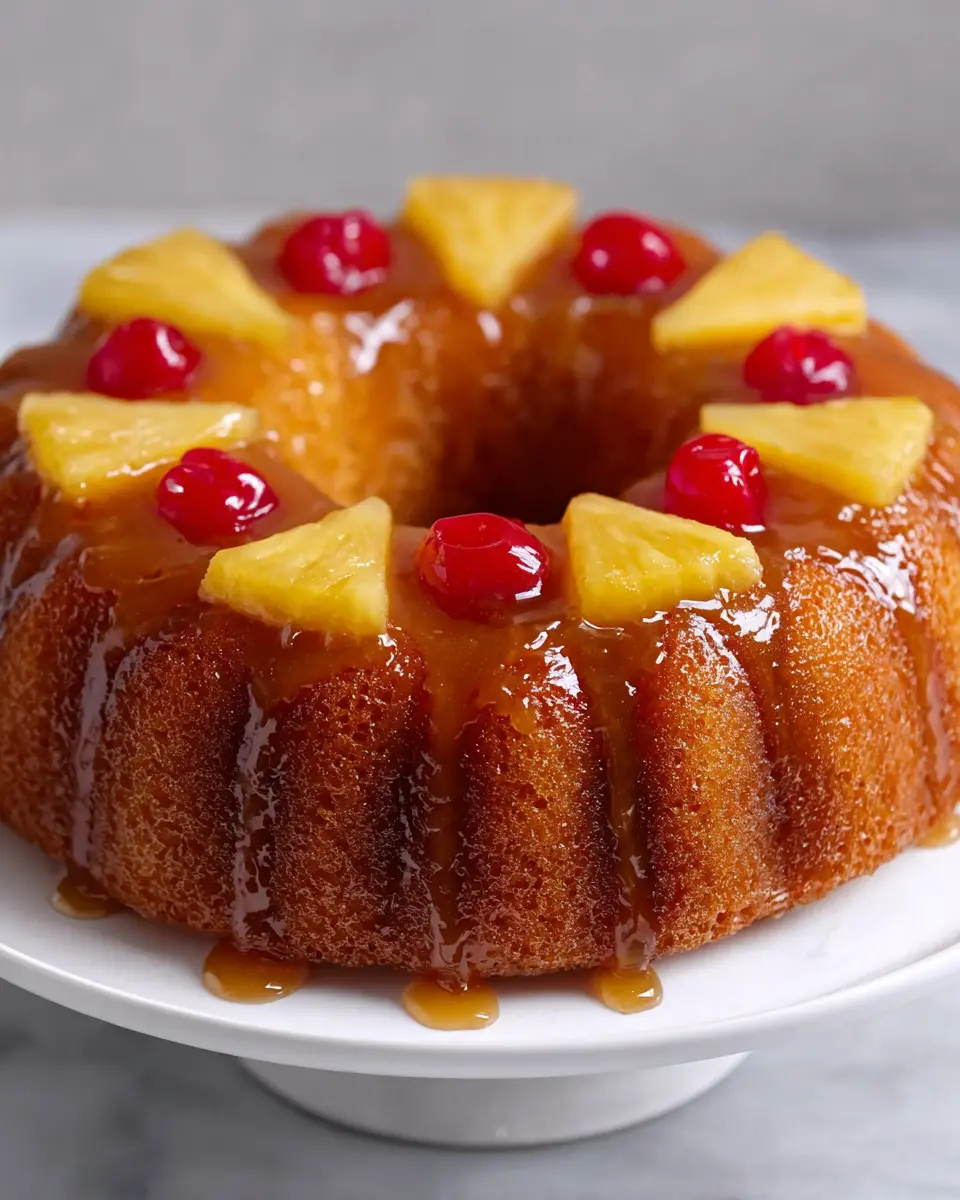
Pineapple Upside-Down Bundt Cake is a quick, crowd-pleasing dessert with buttery caramel notes, juicy fruit, a tender shortcut crumb, and a glossy finish that makes it perfect for potlucks, holidays, and simple weekend baking.
This is the kind of cake that looks far more impressive than the effort it takes; you get that classic pineapple-and-brown-sugar topping everyone recognizes, but the Bundt shape gives it a more polished, party-ready feel.
Why You Will Love This Recipe
- Effortless Elegance: This cake effortlessly combines the comforting flavors of a classic pineapple upside-down cake with the stunning presentation of a Bundt shape, making it a showstopper for any occasion.
- Quick Preparation: Utilizing a convenient cake mix as a base drastically reduces prep time, allowing you to create a delicious homemade-tasting dessert with minimal fuss.
- Irresistible Topping: The rich, caramel-like topping made from melted butter, brown sugar, and pineapple juice creates a moist, glossy glaze that perfectly complements the tender cake.
- Fruity Delight: Sweet, tender pineapple rings and bright maraschino cherries baked into the topping provide bursts of tropical flavor and beautiful pops of color in every slice.
- Make-Ahead Friendly: This Bundt cake stores beautifully, making it an ideal dessert to prepare in advance for parties or busy weeknights when you need a sweet treat ready to go.
Ingredients You Need
The beauty of this Pineapple Upside-Down Bundt Cake lies in its simple yet impactful ingredients, which combine to create a wonderfully balanced flavor and texture profile. We emphasize using high-quality components to ensure the best possible outcome, from the sweetness of the pineapple to the richness of the butter.
Pineapple Upside-Down Bundt Cake
A quick, crowd-pleasing dessert with buttery caramel notes, juicy fruit, a tender shortcut crumb, and a glossy finish that makes it perfect for potlucks, holidays, and simple weekend baking. This Bundt cake offers a classic pineapple and brown sugar topping in a more polished, party-ready shape.
- For the topping:
- 1 can sliced pineapple rings (20 ounces, juice drained and reserved for the batter)
- 8 to
- 24 maraschino cherries, stems removed
- 3/4 cup unsalted butter, melted and allowed to cool slightly, divided
- 1/2 teaspoon ground cinnamon
- 3/4 cup packed light brown sugar
- For the cake batter:
- 3 large eggs, at room temperature
- 1 package yellow cake mix (15 ounces)
- 3/4 cup reserved pineapple juice (or enough pineapple juice topped off with water or milk to equal 3/4 cup)
- 1/2 cup melted butter
- 1Preheat oven to 350°F (175°C). Thoroughly grease a 12-cup Bundt pan, coating every curve and crevice well. Dust lightly with flour and tap out any excess.
- 2Pour 1/4 cup of the melted butter into the bottom of the prepared Bundt pan. In a small bowl, stir together the brown sugar and cinnamon, then scatter this mixture evenly over the butter.
- 3Arrange the drained pineapple rings over the brown sugar mixture. Place the maraschino cherries decoratively among the fruit.
- 4In a mixing bowl, combine the yellow cake mix, 1/2 cup melted butter, 3/4 cup reserved pineapple juice, and the eggs. Mix until the batter is smooth and evenly blended. Add water or milk if needed to reach 3/4 cup.
- 5Carefully pour the batter over the arranged fruit in the Bundt pan, spreading it evenly.
- 6Bake on the center oven rack for 30 to 35 minutes, or until a toothpick inserted into the center comes out clean.
- 7Remove the cake from the oven and let it rest in the pan on the counter for 15 to 20 minutes.
- 8Place a serving plate or cake stand over the pan, then carefully invert the cake. Lift the pan away slowly, allowing any remaining glaze to run down over the cake.
Keywords: Pineapple Upside-Down, Bundt Cake, Caramel, Fruity, Easy Dessert, Shortcut Cake, Potluck, Holiday Dessert
The specific quantities for each ingredient are detailed in the recipe card, ensuring you have precisely what you need for this delightful dessert.
Variations
For a delightful vegan adaptation, simply substitute the butter with a plant-based margarine and use a flax egg or a commercial egg replacer in the cake batter. The brown sugar and pineapple topping will naturally remain vegan, offering a rich, sticky glaze without any animal products. Consider adding a hint of coconut extract to the batter for an extra tropical twist that pairs beautifully with the pineapple.
If you are seeking a lower-carbohydrate option, explore using a sugar substitute in the topping and a gluten-free, low-carb cake mix for the batter. Almond flour or coconut flour can be used to create a denser, nuttier crumb. While the pineapple itself contains natural sugars, a smaller amount can be used, or you could experiment with other low-carb fruits like berries or thinly sliced peaches for a different flavor profile.
To elevate this cake into a truly decadent dessert, consider adding a swirl of cream cheese frosting or a light drizzle of coconut whipped cream. A sprinkle of toasted shredded coconut over the top before serving can also enhance the tropical notes. For an adults-only variation, a tablespoon of rum or pineapple liqueur can be incorporated into the cake batter for a subtle, sophisticated kick.
How to Prepare Pineapple Upside-Down Bundt Cake
Step 1: Prepare the Bundt Pan and Preheat the Oven
Begin by preheating your oven to the specified temperature, typically around 350 degrees Fahrenheit (175 degrees Celsius). This ensures that the oven is at the correct, consistent heat for even baking from the moment the cake enters. Properly preheating the oven is a fundamental step for successful baking, preventing the cake from becoming dense or undercooked.
Next, focus on meticulously preparing your Bundt pan. A well-greased and floured Bundt pan is absolutely crucial for preventing the delicate caramel topping and the cake itself from sticking. Use a generous amount of softened butter or baking spray to coat every single nook and cranny of the pan, paying special attention to intricate details and the center tube. Once greased, lightly dust the inside of the pan with flour, tilting and tapping to ensure an even coating. Discard any excess flour; this creates a non-stick barrier that will allow the cake to release cleanly.
The preparation of the pan is not merely a suggestion but a critical component of achieving that iconic, beautiful presentation of a Pineapple Upside-Down Bundt Cake. A cake that sticks to the pan can be a disheartening experience, often resulting in a messy, broken dessert that loses its visual appeal. Therefore, investing a little extra time in this initial step will pay significant dividends when it’s time to unmold your masterpiece.
Step 2: Create the Luscious Topping Layer
In the bottom of your prepared Bundt pan, begin by pouring a portion of the melted unsalted butter. This forms the initial base for your sweet, syrupy topping. The butter will help the brown sugar and cinnamon mixture adhere and caramelize beautifully during the baking process. Ensure the butter is spread evenly to cover the base of the pan where the fruit will sit.
In a separate small bowl, combine the packed light brown sugar with the ground cinnamon. Stir these two ingredients together until they are thoroughly mixed, ensuring an even distribution of cinnamon throughout the sugar. This blend creates the signature sweet and warmly spiced flavor that defines the upside-down cake topping. Scatter this brown sugar and cinnamon mixture evenly over the layer of melted butter in the Bundt pan.
This step is where the magic begins to form, as the butter and brown sugar will meld together in the heat of the oven to create a rich, glossy caramel glaze. This topping will not only add incredible flavor but also provide a moist, tender base for the cake batter that sits above it. The aroma that fills your kitchen as this layer begins to bake is an enticing preview of the deliciousness to come.
Step 3: Arrange the Fruit and Cherries
Now it’s time to artfully arrange the drained pineapple rings over the brown sugar and butter topping. Place the pineapple rings in a single layer, trying to cover as much of the brown sugar mixture as possible. You can keep the rings whole for a classic, eye-catching look, or if your pan has particularly intricate details, you might find it beneficial to cut some rings in half or into smaller pieces to ensure they fit neatly into the curves of the pan. The pineapple’s natural sweetness will intensify as it bakes, becoming incredibly tender and infused with the caramel glaze.
Next, strategically place the maraschino cherries among and on top of the pineapple rings. These bright red cherries not only add a vibrant pop of color but also offer a delightful burst of sweetness. They are a quintessential part of the classic pineapple upside-down cake presentation, adding a nostalgic touch. Ensure the cherries are nestled into the pineapple and sugar mixture so they don’t shift too much during baking.
The careful placement of the fruit is essential for the visual appeal of the finished cake. When the cake is inverted, the fruit and cherry arrangement will be revealed as the stunning crown of the Bundt. Taking a few extra moments here to ensure an attractive layout will make your cake truly stand out and impress your guests. This visual appeal is just as important as the delicious taste.
Step 4: Prepare the Cake Batter
In a medium-sized mixing bowl, combine the contents of one package of yellow cake mix. To this dry mix, add the melted butter. It is important that the butter has cooled slightly so it does not cook the eggs prematurely. The combination of cake mix and butter starts to build the tender crumb of the cake.
Next, incorporate the eggs into the mixture. Add them one at a time, mixing gently after each addition until just combined. Overmixing at this stage can develop the gluten in the flour, leading to a tougher cake, so aim for a smooth, but not overly worked, batter. Finally, add the reserved pineapple juice. This liquid not only contributes moisture but also infuses the cake with that wonderful fruity flavor from the pineapple itself. If you did not have quite enough juice from the can, you can top it off with water or milk to reach the required amount. Stir everything together until the batter is smooth and has a consistent texture.
The key to a light and fluffy cake is to mix the batter just until the ingredients are incorporated. You want to avoid developing the gluten too much, which can make the cake tough. A few small lumps are perfectly acceptable and often preferable to an overmixed batter. This simple process ensures a tender, moist cake that will rise beautifully around the fruit topping.
Step 5: Assemble and Bake the Cake
Carefully and gently pour the prepared cake batter over the arranged fruit and cherry layer in the Bundt pan. Use a spatula or the back of a spoon to spread the batter evenly, ensuring it covers the fruit completely without disturbing the decorative fruit arrangement underneath. Try to create a smooth, level surface for the batter; this will promote even baking and prevent any one part of the cake from becoming overcooked while another remains underdone.
Place the filled Bundt pan on the center rack of your preheated oven. This central positioning ensures that heat circulates around the cake evenly, promoting consistent baking and a beautiful rise. Bake for the duration specified in the recipe, typically between 30 to 35 minutes, or until a wooden skewer or toothpick inserted into the thickest part of the cake (avoiding the fruit topping) comes out clean. The cake should be golden brown, and the edges should begin to pull away slightly from the sides of the pan.
The aroma that fills your kitchen during this baking time is heavenly; a sweet, buttery, and fruity fragrance that signals the creation of a truly special dessert. Patience during the baking process is key to achieving a perfectly cooked cake that is moist and tender throughout. Resist the urge to open the oven door too frequently, as this can cause the cake to sink.
Step 6: Cool and Invert the Cake
Once the cake is baked to perfection, carefully remove the Bundt pan from the oven. Place the hot pan on a wire cooling rack. It is crucial to let the cake cool in the pan for a specific period, usually about 10 to 20 minutes. This resting period allows the cake to firm up slightly, and the caramel topping to set just enough so that it clings to the cake rather than sticking to the pan.
After the initial cooling period, it’s time for the exciting part: inverting the cake. Select a large serving plate or cake stand that is slightly larger than the Bundt pan. Place this plate upside down over the top of the Bundt pan. With a confident and steady motion, grasp the pan and the plate together and carefully flip them over. The weight of the cake and the gravitational pull should help the cake release onto the plate.
Slowly and carefully lift the Bundt pan away. If any caramel topping or fruit bits stick to the pan, gently scrape them out with a spatula and place them back onto the cake where they belong. Allow any excess syrupy topping to drizzle down the sides of the cake, creating a beautiful, glossy finish. Serve the cake warm for a truly indulgent experience, or let it cool completely to room temperature.
Pro Tips for Pineapple Upside-Down Bundt Cake
Pan Preparation is Paramount: The single most important step to ensure a successful release is thorough pan preparation. Don’t skimp on greasing and flouring your Bundt pan, ensuring every crevice is coated. A good quality baking spray with added flour can be a helpful alternative.
Don’t Overmix the Batter: When combining the cake mix ingredients, stir only until the batter is smooth and no dry streaks remain. Overmixing can lead to a tough, dense cake, whereas a gently mixed batter will yield a light and airy crumb.
Proper Cooling Before Inverting: Allowing the cake to cool in the pan for the recommended time (usually 10-20 minutes) is crucial. This brief rest allows the caramel topping to set slightly, ensuring it adheres to the cake when inverted rather than remaining stuck in the pan.
Use High-Quality Pineapple: Opt for canned pineapple rings that are packed in juice rather than syrup. The juice is a key ingredient for the cake’s moisture and flavor, and good quality pineapple rings will hold their shape better during baking.
Even Baking is Key: Place the Bundt pan on the center rack of your oven. This promotes even heat distribution, ensuring that the cake bakes uniformly from all sides without the edges overcooking before the center is done.
Embrace the Warm Serving: While delicious at room temperature, this cake truly shines when served warm. The heat gently softens the caramel topping, making it extra gooey and enhancing the overall flavor experience.
Serving Suggestions for Pineapple Upside-Down Bundt Cake
Decoration
The inherent beauty of a Pineapple Upside-Down Bundt Cake lies in its stunning natural decoration from the baked-on fruit topping. The glossy, caramelized pineapple rings and vibrant maraschino cherries create a visually appealing mosaic. For an extra touch, you can strategically place a few extra maraschino cherries on top after inverting the cake. A light dusting of powdered sugar over the entire cake can add a delicate contrast and a hint of sweetness, especially if serving at room temperature.
Side Dishes
To complement the rich sweetness of this cake, consider serving it with a dollop of freshly whipped cream. The light, airy texture and subtle sweetness of the cream provide a perfect contrast to the dense, moist cake and gooey topping. Vanilla bean ice cream is another classic pairing; the cold creaminess of the ice cream against the warm cake is a delightful sensory experience. For a slightly lighter accompaniment, a small scoop of lemon or coconut sorbet can offer a refreshing counterpoint to the caramel flavors.
Creative Serving Ideas
For a more refined presentation, consider serving individual slices with a drizzle of crème anglaise or a light caramel sauce. You can also get creative with garnishes; a sprig of fresh mint can add a vibrant green element and a hint of freshness. For a truly tropical flair, a sprinkle of toasted shredded coconut over the top of each slice can enhance the island vibe. This cake also makes for an excellent base for more elaborate desserts, perhaps topped with a scoop of rum-raisin ice cream or a light dusting of nutmeg.
Preparation & Storage
Storing Leftovers
Once the cake has completely cooled, it is best to store any leftovers properly to maintain its delightful texture and flavor. Cover the cake tightly with plastic wrap or transfer it to an airtight container. Due to the fruit and caramel topping, it is recommended to store the cake in the refrigerator. This helps to prevent the topping from becoming too sticky or the cake from spoiling, especially in warmer climates.
In the refrigerator, the Pineapple Upside-Down Bundt Cake should remain fresh and delicious for up to 4 days. The flavors often meld and deepen over time, so it can be just as enjoyable, if not more so, on the second or third day. Ensure the container is well-sealed to prevent the cake from absorbing any unwanted odors from other foods.
If you are planning to keep it for longer, consider freezing individual slices. This is a great way to have a single serving ready whenever a sweet craving strikes. Freezing is an excellent option for preserving the quality of the cake for an extended period. Make sure to wrap each slice very securely to prevent freezer burn.
Freezing
To freeze individual slices, first, ensure the cake is completely cooled. Wrap each slice generously in plastic wrap, making sure to seal all edges to prevent air from getting in. Once individually wrapped, place the slices into a heavy-duty freezer bag or an airtight freezer-safe container. This double layer of protection is key to maintaining the cake’s quality and preventing freezer burn.
Label the container or bag with the date to keep track of how long the cake has been stored. Properly frozen, individual slices of Pineapple Upside-Down Bundt Cake can maintain their best quality for up to 2 months. When you are ready to enjoy a slice, it’s best to thaw it slowly in the refrigerator overnight. This gradual thawing helps the caramel topping to re-soften without becoming watery or losing its delicious texture.
Freezing the entire cake is also an option, though individual slices are generally easier to manage. If freezing whole, ensure it’s in a freezer-safe container with a tight-fitting lid. Allow extra time for thawing when freezing the whole cake; it might take 24-48 hours in the refrigerator depending on its size and your refrigerator’s temperature.
Reheating
When you are ready to enjoy your stored or frozen Pineapple Upside-Down Bundt Cake, reheating can bring back its delightful warmth and gooey topping. If you have thawed a slice in the refrigerator, you can choose to serve it chilled or gently warm it. For a warm serving, place a slice on a microwave-safe plate and heat it in short intervals, about 15-20 seconds at a time. This allows you to warm the cake through without overcooking it or making the topping too hot.
Alternatively, you can reheat a slice in a low-temperature oven (around 250-300°F or 120-150°C) for about 5-10 minutes, or until warmed through. This method can help to re-crisp the edges slightly and ensure the caramel topping becomes wonderfully gooey again. Be watchful to prevent over-baking or drying out the cake during this process.
If reheating from frozen, it is still best to thaw overnight in the refrigerator first. Then, you can proceed with the gentle reheating methods described above. The goal is to warm the cake and soften the topping to its delightful consistency without compromising the cake’s structure or moisture. Serving warm with a dollop of ice cream or whipped cream truly enhances the experience.
Frequently Asked Questions
-
Can I use fresh pineapple instead of canned for this Bundt cake?
Yes, you can certainly use fresh pineapple, but there are a few considerations to ensure the best results. Fresh pineapple rings need to be sliced uniformly and patted thoroughly dry before being placed in the pan. This is crucial because excess moisture from fresh fruit can make the caramel topping watery rather than rich and syrupy. While fresh pineapple offers a wonderfully vibrant flavor, canned pineapple rings are often preferred for this recipe due to their consistent thickness and the availability of their juice, which is used directly in the cake batter. If using fresh pineapple, you’ll need to measure out 3/4 cup of reserved pineapple juice from your can for the batter, or substitute with water or milk if fresh pineapple doesn’t yield enough juice.
-
My pineapple topping stuck to the pan after inverting. What could I have done differently?
The most common reason for a sticky topping is insufficient preparation of the Bundt pan. It is absolutely essential to grease and flour the pan meticulously, ensuring every nook and cranny is coated. Use a pastry brush or non-stick cooking spray to get into all the detailed areas. Additionally, letting the cake rest in the pan for the recommended 10-20 minutes after baking is critical. This short cooling period allows the caramel topping to set slightly, which helps it cling to the cake rather than remaining adhered to the pan. Ensure you are also using a good quality non-stick Bundt pan if possible, as this can greatly aid in the release process. A hesitant inversion can sometimes cause the topping to break; a confident, swift flip onto the serving plate is often more successful.
-
What can I do if I don’t have yellow cake mix for this recipe? Can I use another type of cake mix?
While yellow cake mix is ideal for its classic flavor and texture, you can often substitute it with a white cake mix or even a vanilla cake mix. These mixes will yield a similar tender crumb and a neutral base that allows the pineapple and caramel flavors to shine through. If you’re using a spice cake mix, the resulting cake will have a different flavor profile but can still be quite delicious, offering a warm, spiced undertone to the fruit. Be aware that some cake mixes have different liquid requirements, so always check the package instructions and adjust the amount of pineapple juice (or substitute liquid) accordingly to achieve the correct batter consistency. Avoid using chocolate or devil’s food cake mixes, as their strong flavors can overpower the delicate pineapple and caramel notes of this traditional dessert.