Irresistible Gorgonzola Cheesecake: A Savory Delight
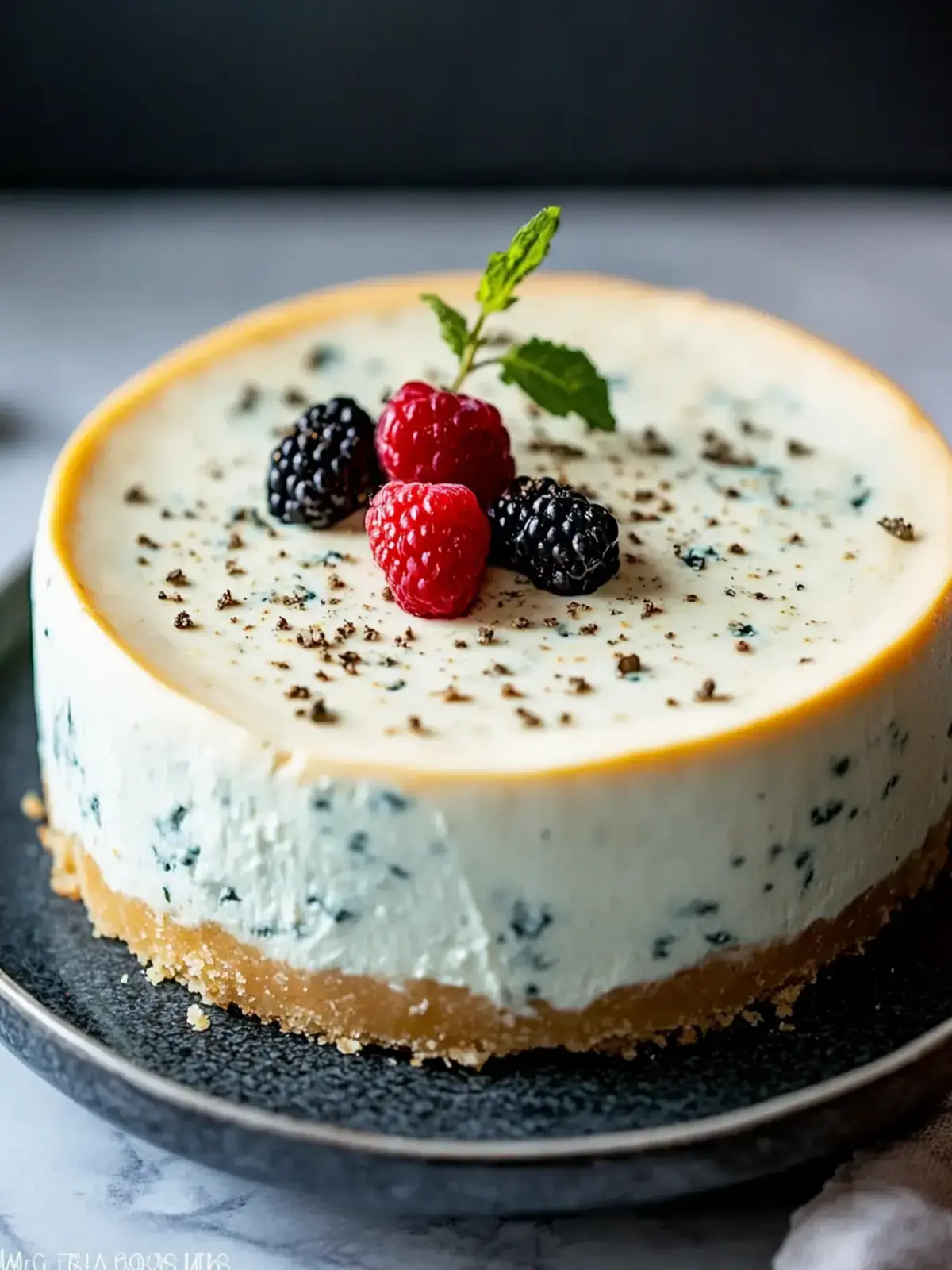
If you’re searching for a dessert that breaks the mold and captivates every palate, look no further than this Gorgonzola cheesecake. I first encountered this culinary delight while dining at a quaint little bistro, and the moment I took my first bite, my taste buds were transported on an unexpected journey of savory and sweet.
The creamy texture paired with the bold tang of Gorgonzola creates a flavor profile that dances across the senses, making it the perfect highlight for dinner parties or cozy gatherings. There’s something incredibly satisfying about merging traditional flavors with a twist, and this cheesecake does just that. Even if you’re typically drawn to the sugary sweetness of classic cheesecakes, this savory version will surprise you, sparking delightful conversations around the table. Get ready to impress your friends and family with a dessert that’s not just a treat for the taste buds but also a stunning centerpiece for any occasion. Let’s dive into turning simple ingredients into a savory masterpiece!
Why You Will Love This Recipe
- Unique Flavor Profile: The bold combination of Gorgonzola cheese and traditional cheesecake elements creates a dessert that is both savory and sweet, sure to delight.
- Creamy Texture: Its rich and smooth consistency makes every bite a luxurious experience.
- Conversation Starter: Serve this intriguing dessert and watch as it sparks discussions about flavor and culinary creativity.
- Perfect for Gatherings: Ideal for dinner parties, this cheesecake impresses guests with its gourmet appeal.
- Versatile Serving Options: Pair with honey or fruit compote for sweetness, enhancing its already complex flavors.
Ingredients You Need
Crafting this Gorgonzola cheesecake requires attention to ingredient quality to ensure the best possible flavor and texture. Using fresh, high-quality cream cheese and a good Gorgonzola will make a significant difference. Don’t shy away from exploring different types of blue cheese if you’re feeling adventurous, as each offers a unique nuance. The digestive biscuits should be finely crushed to create a uniform crust that holds its shape beautifully.
Savory Gorgonzola Cheesecake
A unique and impressive dessert that breaks the mold with its savory and sweet flavor profile. The creamy texture paired with the bold tang of Gorgonzola creates a taste sensation perfect for dinner parties or special gatherings.
- For the Crust:
- 200 g Digestive Biscuits (Graham crackers can work as a substitute)
- 100 g Melted Butter (Coconut oil can be used for a dairy-free option)
- For the Cheesecake Filling:
- 400 g Cream Cheese (Neufchâtel cheese offers a lighter alternative)
- 200 g Gorgonzola Cheese (Different blue cheeses can be explored for variations)
- 100 g Sugar (Brown sugar can give it a rich depth)
- 3 Eggs (Flaxseed meal also serves as a vegan alternative)
- 200 g Sour Cream (Greek yogurt may be used for a healthier twist)
- 1 tsp Vanilla Extract (Almond extract can add a slight nuttiness)
- Optional Serving Enhancements:
- 2 tbsp Honey (Drizzle on top for added sweetness)
- 200 g Fruit Compote (Pairs well for a fresh fruit contrast)
- 1Preheat your oven to 180°C (356°F) and lightly grease a springform pan.
- 2Crush the digestive biscuits until they resemble fine crumbs. Mix them with melted butter and press firmly into the bottom of the pan to create a solid crust.
- 3Bake the crust for about 10 minutes until slightly golden, then allow it to cool completely.
- 4Blend together the Gorgonzola, cream cheese, and sour cream in a large bowl until the mixture is smooth and creamy with no lumps.
- 5Add the sugar, eggs, and a pinch of salt to the mixture, mixing until fully integrated and silky.
- 6Pour the cheesecake filling over the cooled crust, smoothing it out evenly.
- 7Reduce the oven temperature to 160°C (320°F) and bake for 40-50 minutes. The edges should be set while the center remains slightly jiggly.
- 8Cool the cheesecake by turning off the oven and leaving the door ajar for 1 hour.
- 9Refrigerate the cheesecake for at least 4 hours, preferably overnight, before serving.
- 10Optional: Top with a drizzle of honey or a sprinkle of nuts for added flavor and allure.
Keywords: Gorgonzola cheesecake, savory cheesecake, blue cheese dessert, unique dessert, dinner party dessert, German cuisine, baking, vegetarian
- digestive biscuits: these form the sturdy base of our cheesecake, offering a slightly sweet and crumbly foundation. graham crackers can also be used for a similar textural effect.
- melted butter: this essential ingredient binds the biscuit crumbs together, creating a cohesive and bakeable crust. for a dairy-free alternative, melted coconut oil is an excellent choice.
- cream cheese: the heart of any cheesecake, providing a luxuriously smooth and creamy texture. choose full-fat for the richest result, or consider Neufchâtel for a slightly lighter option.
- gorgonzola cheese: this is the star ingredient, lending its characteristic sharp, tangy, and savory flavor to the filling. ensure it’s well-crumbled for even distribution.
- sugar: a touch of sweetness balances the intensity of the gorgonzola, creating a harmonious flavor profile. brown sugar can add a delightful caramel undertone.
- eggs: these act as a binder, helping the cheesecake filling to set properly and achieve its signature dense yet tender consistency. for a vegan twist, flaxseed meal can be employed as an egg replacer.
- sour cream: this adds moisture and a subtle tanginess to the filling, contributing to its velvety smoothness. greek yogurt offers a healthier and equally effective substitute.
- vanilla extract: a classic enhancer that rounds out the flavors and adds a pleasant aroma. almond extract can provide a sophisticated, subtle nuttiness.
- honey: a beautiful complement to the savory cheese, a drizzle of honey on top adds a touch of sweetness that elevates the entire dessert.
- fruit compote: consider a berry or fig compote for a burst of fresh, fruity flavor that cuts through the richness of the cheesecake.
The precise quantities for these ingredients are detailed in the recipe card.
Variations
This Gorgonzola cheesecake is a fantastic canvas for culinary creativity, allowing you to adapt its flavors to suit various preferences and occasions. One exciting variation involves incorporating different types of herbs directly into the crust or the filling. Imagine finely chopped rosemary or thyme blended into the biscuit base for an earthy aroma, or a touch of fresh chives mixed into the filling for a subtle allium note.
Another delightful twist is to experiment with different types of blue cheese beyond Gorgonzola. A sharp Stilton or a creamy Roquefort could offer distinct flavor profiles, each bringing its own character to the cheesecake. You might also consider adding a hint of spice. A pinch of red pepper flakes in the filling can provide a gentle warmth that beautifully contrasts the cheese’s tang, making it an intriguing option for those who enjoy a little heat.
For a truly decadent experience, consider a chocolate and Gorgonzola pairing. A small amount of high-quality dark chocolate, melted and swirled into the cheesecake filling, creates a surprising and sophisticated sweet-savory fusion. This combination, while unconventional, can be incredibly rewarding and is sure to be a memorable talking point at any gathering.
How to Prepare Gorgonzola cheesecake
Step 1: Preparing the Crust
The foundation of any great cheesecake lies in its crust, and for this savory Gorgonzola cheesecake, we’ll be using a simple yet effective digestive biscuit base. Begin by preheating your oven to a moderate 180°C (356°F). Simultaneously, prepare your springform pan; a light greasing will ensure the cheesecake releases cleanly after baking, preserving its beautiful form. This initial step is crucial for a professional finish.
Next, take your digestive biscuits and crush them until they achieve a fine crumb consistency. This can be done using a food processor for speed and uniformity, or by placing the biscuits in a sturdy plastic bag and crushing them with a rolling pin. The goal is to have small, consistent pieces that will pack together well. Once crushed, transfer the biscuit crumbs to a mixing bowl.
To the biscuit crumbs, add the melted butter. Stir thoroughly until all the crumbs are evenly coated with butter, resembling wet sand. This mixture will now be pressed firmly into the bottom of your prepared springform pan. Use the back of a spoon or the flat bottom of a glass to compact the crumbs tightly, creating a solid, even layer that will hold its structure throughout the baking process.
Once the crust is pressed into place, it’s time for a brief pre-bake. Place the pan in the preheated oven and bake for approximately 10 minutes, or until the edges appear slightly golden and fragrant. This step helps to set the crust, preventing it from becoming soggy when the filling is added. After baking, remove the crust from the oven and set it aside to cool completely. Allowing it to cool prevents the filling from cooking prematurely and ensures the crust remains firm.
Step 2: Crafting the Creamy Filling
With the crust cooling, we now turn our attention to the heart of the cheesecake: the rich and flavorful filling. In a large mixing bowl, combine your softened cream cheese and crumbled Gorgonzola cheese. Ensure both cheeses are at room temperature; this is paramount for achieving a supremely smooth and lump-free mixture. Cold cheeses will resist blending, leading to a less desirable texture in your final dessert.
Using an electric mixer, either a stand mixer with a paddle attachment or a hand mixer, begin to blend the Gorgonzola and cream cheese together. Start on a low speed to avoid splattering, gradually increasing the speed as the cheeses begin to soften and combine. Continue mixing until the mixture is completely smooth, creamy, and homogenous, with no visible streaks or lumps of cheese remaining. This thorough blending is key to the cheesecake’s luxurious mouthfeel.
Next, incorporate the sour cream into the cheese mixture. Blend again until it is fully incorporated, adding another layer of creamy richness and a subtle tang that balances the Gorgonzola’s intensity. Scrape down the sides of the bowl as needed to ensure everything is evenly mixed. The consistency should be smooth and velvety at this stage.
Now, it’s time to introduce the sweetness and richness. Add the sugar and vanilla extract to the bowl. Beat the mixture until these ingredients are fully integrated. Don’t overmix at this point, as we want to avoid incorporating too much air, which can lead to cracking during baking. The goal is a beautifully combined, silky smooth filling.
Step 3: Incorporating the Eggs
The final key components to bind and enrich our cheesecake filling are the eggs. It’s important to add the eggs one at a time, ensuring each egg is just incorporated before adding the next. This gradual addition helps maintain the smooth texture of the filling and prevents it from becoming over-aerated. Over-aeration can lead to undesirable cracks on the surface of the cheesecake.
Begin by cracking one egg into the mixture. Mix on a low speed until it is just combined. You should still see a little bit of the egg yolk, but it should be mostly integrated into the creamy base. Resist the urge to whip the mixture vigorously at this stage; a gentle incorporation is what we are aiming for.
Add the second egg and repeat the process. Mix on a low speed until it is just incorporated. Again, avoid overmixing, as this can introduce too much air, which is the enemy of a perfectly smooth cheesecake. The batter should remain thick and creamy, with the eggs acting as a binder rather than a leavening agent.
Finally, add the third egg and mix gently until it is just combined. At this point, the filling should be smooth, thick, and have a beautiful sheen. You can give the bowl a final scrape down with a spatula to ensure all ingredients are well-blended, but remember to do so gently. The result should be a luscious, homogenous batter ready to be poured over the prepared crust.
Step 4: Baking to Perfection
Now that the filling is ready, it’s time to bring it all together and bake this culinary creation. Carefully pour the smooth cheesecake filling over the completely cooled biscuit crust in the springform pan. Use a spatula to gently spread the filling evenly, ensuring it reaches all the edges and creates a level surface. This even distribution is key for uniform baking and a professional presentation.
Before placing the cheesecake into the oven, it’s often recommended to use a water bath. To do this, wrap the bottom of your springform pan tightly in several layers of heavy-duty aluminum foil to prevent any water from seeping in. Then, place the wrapped pan into a larger roasting pan. Carefully pour hot water into the roasting pan, ensuring it comes about halfway up the sides of the springform pan. This water bath creates a moist, even-heating environment, crucial for preventing cracks and ensuring a creamy texture.
Carefully transfer the roasting pan with the cheesecake and water bath into the oven. Reduce the oven temperature to 160°C (320°F). Bake for approximately 40 to 50 minutes. You’ll know the cheesecake is nearly ready when the edges are set and appear slightly puffed, while the center still has a slight jiggle. This delicate wobble is a sign of a perfectly creamy interior that will continue to set as it cools. Overbaking can lead to a dry texture and significant cracking.
Once the baking time is complete, resist the urge to remove the cheesecake immediately. Instead, turn off the oven, but leave the cheesecake inside with the oven door slightly ajar. Allow it to cool gradually within the oven for at least one hour. This slow cooling process is one of the most important steps in preventing unsightly cracks from forming due to sudden temperature changes. The gentle temperature transition allows the cheesecake to firm up without stress.
Step 5: The All-Important Cooling and Chilling Process
The gradual cooling in the oven is just the first part of ensuring your Gorgonzola cheesecake achieves its ideal texture and flavor. After the hour spent in the slightly ajar oven, carefully remove the roasting pan from the oven. Then, lift the springform pan out of the water bath. It’s important to remove the foil wrapping from the springform pan as well.
Allow the cheesecake to cool further on a wire rack at room temperature for another hour or so. You’ll notice that as it cools, the slight jiggle in the center will become less pronounced, and the cheesecake will firm up considerably. This staged cooling process is vital for the cheesecake’s structural integrity and creamy consistency. Rushing this step can lead to a compromised final product.
Once the cheesecake has reached room temperature, it’s time for the final, and perhaps most critical, stage: chilling. Cover the cheesecake loosely with plastic wrap, ensuring it doesn’t touch the surface if possible, or place it in a cake carrier. Refrigerate the cheesecake for a minimum of 4 hours. For the absolute best flavor development and a perfectly firm texture, it is highly recommended to chill it overnight. During this extended chilling period, the flavors meld beautifully, and the cheesecake becomes wonderfully dense and sliceable.
The patience required for this chilling phase is well worth the reward. A properly chilled Gorgonzola cheesecake will have a sublime texture that is both rich and melt-in-your-mouth. When it’s time to serve, carefully run a thin knife around the edge of the pan before releasing the springform side. This ensures a clean release and a beautiful presentation. Optional garnishes, such as a drizzle of honey or a sprinkle of toasted nuts, can be added just before serving.
Step 6: Garnishing and Serving
The final flourish for your Gorgonzola cheesecake is the garnishing and presentation, transforming it from a delicious dessert into a truly show-stopping centerpiece. While the cheesecake is delightful on its own, a few thoughtful additions can elevate its visual appeal and flavor profile even further. Consider the overall aesthetic you wish to achieve; perhaps something rustic and natural, or elegantly simple.
A classic and highly recommended garnish is a delicate drizzle of honey. The sweetness of the honey beautifully contrasts and complements the savory, tangy notes of the Gorgonzola, creating a perfectly balanced bite. Use a good quality, mild honey, such as acacia or clover, to avoid overpowering the cheese. You can use a spoon or a squeeze bottle to create an appealing pattern across the surface of the cheesecake.
Alternatively, a fruit compote offers a burst of fresh, vibrant flavor and color. A homemade berry compote, fig jam, or even a tart cherry relish can provide a wonderful counterpoint to the richness of the cheesecake. Spoon a small dollop onto each slice or serve it in a small pitcher on the side for guests to add as they please. The jewel-like tones of the fruit will add a stunning visual element to the plate.
For a touch of texture and a hint of earthiness, consider a light sprinkling of toasted nuts. Walnuts, pecans, or even pistachios, lightly toasted to bring out their aroma, can add a satisfying crunch. Ensure they are finely chopped so they don’t overwhelm the delicate texture of the cheesecake. A few fresh herbs, such as small sprigs of thyme or rosemary, can also add an aromatic and visual accent, reinforcing the savory nature of the dessert.
Pro Tips for Gorgonzola cheesecake
Room Temperature is Key: Always ensure your cream cheese and Gorgonzola are at room temperature before you begin mixing the filling. This is non-negotiable for achieving a smooth, lump-free texture, as cold cheeses are difficult to blend evenly and can result in pockets of unmixed cheese, impacting the overall quality of your cheesecake. Softened cheeses will emulsify beautifully, creating that signature silky consistency.
The Gentle Bake: Avoid the temptation to bake your cheesecake at a high temperature. A moderate oven temperature, around 160°C (320°F), is ideal. This slow, gentle baking process allows the cheesecake to cook through evenly without drying out the edges or causing the center to puff up excessively and then crack as it cools. Patience during baking is crucial for a successful outcome.
Embrace the Water Bath: For the ultimate creamy texture and to prevent cracks, baking your Gorgonzola cheesecake in a water bath is highly recommended. Wrapping the springform pan securely in foil and placing it in a larger pan filled with hot water creates a humid, stable baking environment. This ensures the cheesecake cooks gently and evenly, minimizing stress on the delicate batter and resulting in a flawless surface.
Cooling Down Gradually: The cooling process is just as important as the baking. Never remove a hot cheesecake directly from the oven to room temperature. Instead, turn off the oven, crack the door open, and let the cheesecake cool inside for at least an hour. This slow transition helps prevent sudden temperature fluctuations, which are the primary cause of cracking. After this, allow it to cool on a wire rack before refrigerating.
The Power of Chilling: While the temptation to dive into your cheesecake might be strong, do not skip the chilling time. Refrigerating the cheesecake for at least 4 hours, and ideally overnight, is essential for it to fully set and for the flavors to develop and meld. This extended chilling period transforms a merely good cheesecake into an exceptional one, yielding a firm, sliceable texture and a rich, complex taste.
Serving Suggestions for Gorgonzola cheesecake
Decoration
The visual appeal of your Gorgonzola cheesecake can be significantly enhanced with thoughtful decoration. A simple yet elegant drizzle of honey offers a beautiful glistening finish that hints at the sweet-savory balance within. Alternatively, a swirl of balsamic glaze provides a rich, dark contrast and an extra layer of tangy depth. For a touch of color, consider scattering a few fresh thyme sprigs or small edible flowers across the top, adding a subtle aroma and a sophisticated look.
Side Dishes
Complementing your Gorgonzola cheesecake with the right side dishes can create a truly memorable culinary experience. A crisp, lightly dressed arugula salad offers a peppery counterpoint to the cheesecake’s richness, cleansing the palate with each bite. Thinly sliced pears or figs, perhaps lightly grilled or caramelized, provide a natural sweetness and a soft texture that harmonizes with the cheese. For a more substantial accompaniment, consider serving it alongside a small charcuterie board featuring cured meats and other complementary cheeses.
Creative Serving Ideas
Think outside the traditional dessert plate for truly creative serving ideas. Present individual mini cheesecakes baked in muffin tins for a charming, portion-controlled treat. Another idea is to serve slices of the cheesecake atop toasted baguette rounds, transforming it into an elegant appetizer or an upscale canapé. For a festive touch, consider pairing it with a glass of sparkling wine or a robust red wine that can stand up to the cheese’s bold flavor. Offering a small selection of contrasting accompaniments, such as a spicy fig jam and some candied walnuts, allows guests to customize their experience.
Preparation & Storage
Storing Leftovers
If you happen to have any Gorgonzola cheesecake leftover, proper storage is key to maintaining its delicious quality. Ensure the cheesecake has completely cooled before attempting to store it. Once cooled, cover it tightly with plastic wrap or transfer it to an airtight container. This prevents the cheesecake from drying out and absorbing any unwanted odors from other items in your refrigerator. Stored correctly, leftovers can be enjoyed for up to 4 to 5 days.
Freezing
Gorgonzola cheesecake freezes remarkably well, making it an excellent candidate for make-ahead preparations or for enjoying at a later date. For the best results, it’s advisable to freeze the cheesecake before slicing, though individual slices can also be frozen. Wrap the entire cheesecake, or individual slices, tightly in a layer of plastic wrap, followed by a protective layer of aluminum foil. This double-wrapping provides an extra barrier against freezer burn. Frozen cheesecake can be stored for up to 3 months.
Reheating
Unlike many desserts, Gorgonzola cheesecake is best served chilled or at room temperature, so reheating is generally not necessary. If you have frozen your cheesecake, the most effective way to prepare it for serving is to allow it to thaw completely in the refrigerator overnight. This gradual thawing process helps the cheesecake retain its intended texture and consistency. Avoid thawing it at room temperature, as this can lead to condensation and a less desirable texture. Once thawed, it’s ready to be enjoyed.
Frequently Asked Questions
-
How do I select ripe Gorgonzola cheese?
When choosing Gorgonzola cheese, look for one that has a creamy texture and a well-defined aroma. The cheese should have a mix of white, creamy areas with vibrant blue-green veins. Avoid any cheese with excessive dark spots, as this indicates spoilage. A good Gorgonzola should feel slightly yielding to the touch rather than being overly hard or crumbly, which can suggest it’s past its prime or a different variety.
-
What’s the best way to store leftover Gorgonzola cheesecake?
After enjoying your Gorgonzola cheesecake, store it in an airtight container in the refrigerator for up to 5 days. To maintain its freshness, ensure it’s well-wrapped to prevent any absorption of odors from other foods in the fridge. Placing a piece of parchment paper directly on the surface of the cheesecake before covering can further protect it from drying out and helps maintain its creamy texture.
-
Can I freeze Gorgonzola cheesecake, and how?
Yes, you can freeze Gorgonzola cheesecake! To freeze, allow it to cool completely. Then, wrap it tightly in plastic wrap, followed by a layer of aluminum foil to keep it airtight. It can be stored in the freezer for up to 3 months. When you’re ready to enjoy it, simply thaw it in the refrigerator overnight for the best texture. Freezing individual slices also allows for convenient portion control.
-
Why did my Gorgonzola cheesecake crack?
The most common reason for cracking in cheesecakes is sudden temperature changes. To prevent this, remember to cool your cheesecake gradually. After baking, turn off the oven and leave the door slightly ajar for about an hour. This cooling method minimizes the risk of cracks. If cracks do happen, don’t worry! A drizzle of honey or fruit compote can beautifully mask any imperfections and still make for a delicious dessert.
-
Are there any dietary considerations with Gorgonzola cheesecake?
Absolutely! If you have lactose intolerance or a dairy allergy, you can substitute cream cheese with dairy-free alternatives, like cashew cream or coconut cream. You can also make it vegan by using silken tofu instead of cream cheese and coconut yogurt in place of sour cream for the filling, and flaxseed meal instead of eggs. Always double-check the labels of your ingredients for potential allergens, especially when serving to guests.