German Creamy Goulash (Authentic Rahmgulasch Recipe)
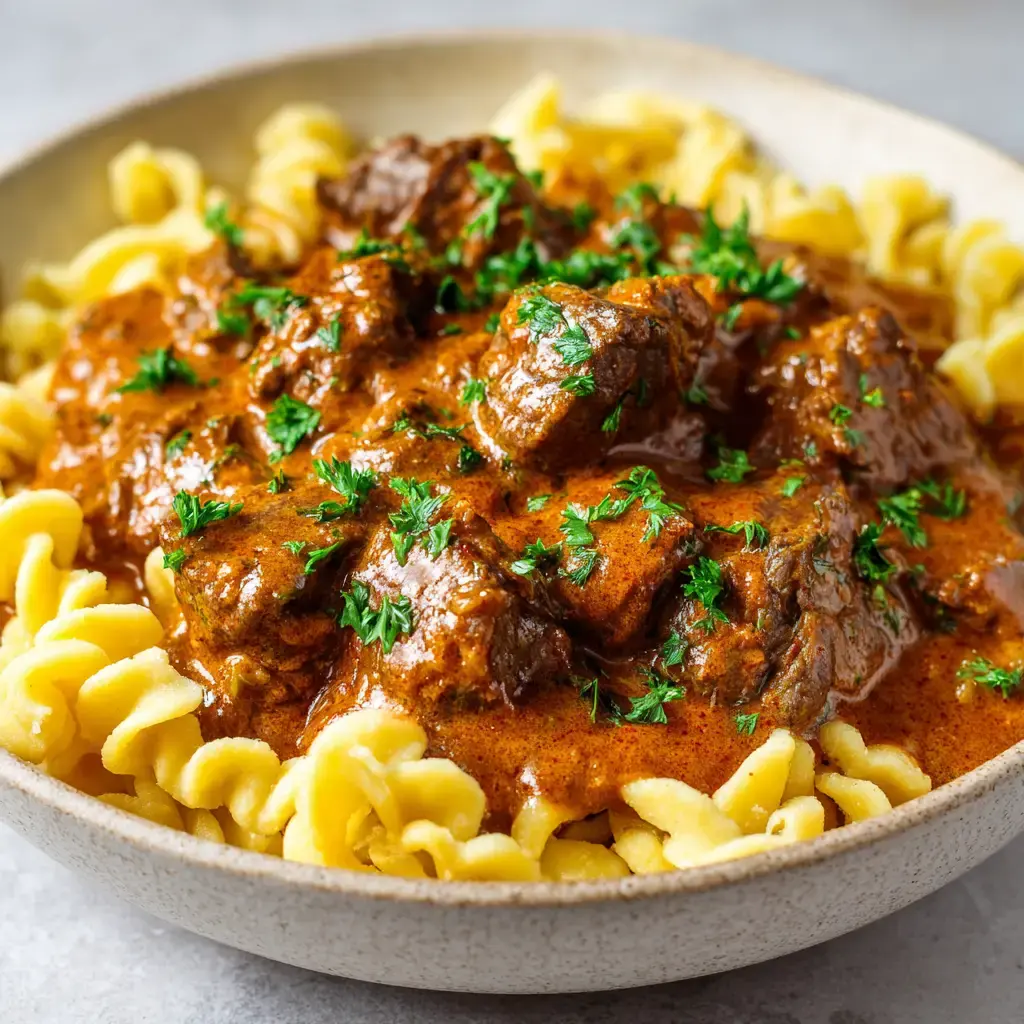
There are few dishes as deeply comforting as a perfectly executed German Creamy Goulash. Imagine tender, slow-braised chunks of beef so soft they melt in your mouth, all enveloped in a rich, velvety, reddish-brown paprika cream sauce. This authentic Rahmgulasch isn’t just a meal; it’s a warm hug in a bowl, especially when ladled over a generous pile of wavy, yellow Spätzle egg noodles that catch every last drop of the luscious gravy.
This recipe transforms simple ingredients into a symphony of flavor and texture. The secret lies in the slow braise, allowing the beef to become impossibly tender while the sauce develops a deep, complex character. Garnished with a sprinkle of fresh, vibrant parsley, it’s a rustic, elegant dish that looks just like a treasured, unedited photo from a German grandmother’s kitchen.
Why You Will Love This Recipe
- Melt-in-Your-Mouth Tenderness: We use a specific cut of beef and a low-and-slow cooking method that breaks it down into succulent, fork-tender morsels. This ensures every bite is an absolute delight, a testament to patient cooking.
- Rich and Velvety Sauce: The combination of sweet paprika, aromatics, and a final touch of cream creates a luxuriously thick and flavorful sauce that’s simply unforgettable. It coats the palate with pure comfort and deliciousness.
- Authentic German Flavor: This recipe stays true to the spirit of Rahmgulasch (“Cream Goulash”), balancing savory, sweet, and tangy notes for a genuinely comforting meal. It captures the essence of traditional German home cooking.
- Visually Stunning Presentation: The deep reddish-brown sauce, vibrant green parsley, and golden Spätzle create a beautiful presentation, making it perfect for both family dinners and special occasions. It’s a feast for the eyes before it even becomes a feast for the stomach.
Ingredients You Need
Achieving the perfect flavor and texture starts with the right components, and selecting high-quality ingredients is paramount to this dish’s success. Each ingredient plays a crucial role in building the final, deeply satisfying goulash. We’ll focus on sourcing the best possible beef, the freshest aromatics, and of course, a superior quality sweet paprika, as it is the heart of this traditional German delicacy. Using the finest ingredients ensures that the final result is nothing short of spectacular, a true representation of comfort food at its finest.
German Creamy Goulash (Authentic Rahmgulasch Recipe)
A rich, comforting German Creamy Goulash (Rahmgulasch) recipe featuring fall-apart tender beef chunks slow-braised in a velvety, reddish-brown paprika cream sauce. The perfect authentic German dinner, best served over pillowy Spätzle noodles for a true taste of Bavaria.
- 2.5 lbs beef chuck, cut into 1.5-inch cubes (1.1 kg)
- 2 large yellow onions, finely chopped
- 4 cloves garlic, minced
- 3 tbsp sweet paprika (24 g)
- 2 tbsp tomato paste (30 g)
- 2 tbsp all-purpose flour (16 g)
- 3 cups low-sodium beef broth (720 ml)
- 1 cup full-fat sour cream, room temperature (240 g)
- 2 tbsp vegetable oil (30 ml)
- 1.5 tsp salt
- 1 tsp black pepper
- 1 lb cooked Spätzle (450 g)
- 2 tbsp finely minced fresh curly parsley
- 1Pat beef cubes dry with paper towels. In a large bowl, toss the beef with flour, salt, and pepper until evenly coated.
- 2Heat vegetable oil in a Dutch oven over medium-high heat. Working in two batches, sear the beef for 2-3 minutes per side, until a deep golden-brown crust forms. Remove beef to a plate.
- 3Reduce heat to medium. Add the chopped onions to the pot and sauté for 5-7 minutes until soft and translucent. Add minced garlic and cook for 1 more minute.
- 4Turn heat to low. Stir in the tomato paste and paprika and cook for 60 seconds, stirring constantly. Pour in the beef broth to deglaze the pan.
- 5Return the seared beef and any juices to the pot. Bring to a simmer, then reduce heat to the lowest setting. Cover and braise for 2.5 to 3 hours, or until the beef is fall-apart tender.
- 6Turn off the heat. In a separate bowl, whisk a ladleful of the hot goulash liquid into the room-temperature sour cream to temper it. Pour the tempered sour cream back into the pot and stir until smooth.
- 7Taste and adjust seasoning if needed. Serve immediately over warm Spätzle, garnished with finely minced fresh parsley.
Use Room Temperature Sour Cream: Letting it sit out for 30 minutes and tempering it first ensures a smooth, velvety sauce.
Choose Quality Paprika: Since paprika is the star spice, using a fresh, high-quality sweet Hungarian paprika will make a noticeable difference.
Low and Slow is the Way to Go: A low, gentle simmer is what makes the beef incredibly tender.
Keywords: German Goulash, Rahmgulasch, Creamy Goulash, Beef Stew, Paprika Beef, German Dinner, Comfort Food, Authentic Recipe
The specific quantities for each ingredient are meticulously detailed within the recipe card, ensuring you have all the precise measurements needed for a perfect outcome. Following these quantities closely will guide you towards replicating the authentic taste and texture.
Variations
While the classic German Creamy Goulash is undeniably delicious, there’s always room for culinary creativity. Experimenting with variations can cater to different dietary needs or simply offer a new twist on a beloved dish.
Vegan Goulash: For a plant-based rendition, substitute the beef chuck with hearty mushrooms like portobellos or creminis, and consider adding chunks of firm or extra-firm tofu that have been pressed and seared. Use vegetable broth instead of beef broth and opt for a dairy-free sour cream alternative made from cashews or soy for that essential creamy finish. The paprika and onion base will still provide a rich, savory foundation.
Low-Carb Goulash: To make this dish keto-friendly or low in carbohydrates, omit the flour used for thickening the sauce and skip the Spätzle altogether. Instead, serve the goulash over cauliflower mash, zucchini noodles, or even a bed of sautéed spinach. The rich, creamy sauce will still be incredibly satisfying without the added carbs from traditional noodles.
Spicy Goulash: If you enjoy a bit of heat, ramp up the spice factor by incorporating a pinch of cayenne pepper along with the sweet paprika. You can also add a finely diced jalapeño or a teaspoon of hot paprika for an extra kick. Adjust the heat level to your personal preference, making it a more robust and fiery dish.
How to Prepare German Creamy Goulash
Step 1: Building the Flavor Foundation: Searing the Beef
The initial step in creating a truly exceptional German Creamy Goulash is the proper searing of the beef. This process is not merely about browning the meat; it’s about developing a deep, rich flavor base through the Maillard reaction. Ensure the beef cubes are patted completely dry with paper towels; moisture is the enemy of a good sear, leading to steaming rather than browning. This thorough drying allows for the creation of a beautiful, flavorful crust.
In a large bowl, toss the dried beef cubes with all-purpose flour, 1.5 teaspoons of salt, and 1 teaspoon of black pepper until each piece is evenly coated. This flour coating will not only contribute to a lovely crust but also serve as a preliminary thickener for the goulash sauce. The seasoning is crucial at this stage, laying the groundwork for the entire dish’s flavor profile, making sure each bite of beef is seasoned throughout.
Heat 2 tablespoons of vegetable oil in your heavy-bottomed Dutch oven over medium-high heat. You’ll know the oil is sufficiently hot when it shimmers. Working in batches of about half the beef at a time to avoid overcrowding the pan, carefully place the beef cubes in a single layer. Sear for 2-3 minutes per side, allowing a deep golden-brown crust to form. This crust is where a significant amount of the goulash’s foundational flavor resides.
Once seared, remove the browned beef to a clean plate and set it aside. Repeat this process with the remaining beef, adding a little more oil if necessary to prevent sticking. The fond, or browned bits left in the bottom of the pot, are pure gold and will be incorporated into the sauce in the next steps, amplifying the overall taste. Patience here is key; don’t rush this searing process as it directly impacts the final depth of flavor.
Step 2: Creating the Velvety Paprika Sauce
With the beef seared and set aside, the next crucial stage involves building the aromatic and flavorful sauce that will envelop the tender meat. Reduce the heat of your Dutch oven to medium. Add the finely chopped yellow onions to the pot, using your wooden spoon to scrape up any delicious browned bits (fond) left from searing the beef. This step is vital for infusing the sauce with concentrated meaty flavors.
Sauté the onions for 5-7 minutes, stirring frequently, until they become soft, translucent, and begin to release a sweet, inviting aroma. This slow caramelization of the onions adds a fundamental sweetness and depth to the goulash. Once the onions are beautifully softened, add the minced garlic and cook for another minute until it becomes fragrant. Be careful not to burn the garlic, as this can impart a bitter taste.
Now, significantly reduce the heat to low. This is a critical point to prevent burning the delicate spices. Add the tomato paste and the star ingredient, sweet paprika, to the pot. Stir these ingredients constantly for about 60 seconds. This process, often referred to as “blooming” the spices, toasts them gently, intensifying their color and unlocking their full flavor potential. It’s important to keep stirring to ensure the paprika doesn’t scorch, which would make the entire goulash bitter.
Immediately after blooming the spices, pour in the low-sodium beef broth to deglaze the pan. Use your wooden spoon to vigorously scrape up any remaining flavorful bits from the bottom of the pot, ensuring every last bit of flavor is incorporated into the liquid. This liquid forms the base of our rich sauce, ready to embrace the beef and simmer to perfection.
Step 3: The Magic of Slow Braising
With the sauce base established and the aromatics softened, it’s time to return the seared beef to the pot. Carefully transfer the browned beef cubes, along with any accumulated juices from the plate, back into the Dutch oven. Stir everything together gently, ensuring the beef is mostly submerged in the savory liquid. The aroma at this stage is already incredibly promising, hinting at the delicious meal to come.
Bring the liquid to a gentle simmer over medium heat. Once you see small bubbles breaking the surface, it’s time to significantly reduce the heat to the absolute lowest possible setting your stovetop allows. This low and slow cooking method is the secret to achieving exceptionally tender beef. Cover the Dutch oven tightly with its lid to trap moisture and heat, creating the perfect braising environment.
Let the goulash braise for 2.5 to 3 hours, or even longer if needed. During this time, the connective tissues in the beef chuck will slowly break down, rendering the meat incredibly soft and succulent. Your kitchen will be filled with an irresistible, comforting aroma that signals a true culinary masterpiece is in the making. Resist the urge to lift the lid too often, as this can release precious steam and prolong the cooking time.
The goulash is ready when the beef is unequivocally fall-apart tender. You should be able to easily shred it with a fork, and it should offer almost no resistance. This level of tenderness is the hallmark of a well-executed braised dish like this authentic German Creamy Goulash. The sauce should have thickened naturally through the slow simmering process, creating a rich, unctuous consistency.
Step 4: The Final Touch: The Creamy Finish
Once the beef has achieved that perfect, melt-in-your-mouth tenderness and the sauce has reached its ideal consistency, the final transformation into creamy goulash can begin. Turn off the heat completely before proceeding to the next step. This is crucial for incorporating the sour cream smoothly and preventing it from curdling, which can mar the texture of your sauce.
To ensure the sour cream blends seamlessly and doesn’t curdle when added to the hot liquid, you need to temper it. Ladle about one cup of the hot goulash liquid into a separate medium-sized bowl. Add the full-fat sour cream to this bowl. Whisk them together vigorously until the mixture is smooth, fully combined, and no lumps of sour cream remain. This gradual warming of the sour cream prevents a sudden temperature shock.
Pour the tempered sour cream mixture back into the Dutch oven with the rest of the goulash. Stir gently and slowly until the sauce is completely smooth, creamy, and has achieved its signature uniform, rich reddish-brown color. The addition of sour cream lends a subtle tanginess and an unparalleled velvety texture that defines this particular style of goulash.
Taste the goulash at this stage and adjust the seasoning with additional salt and freshly ground black pepper as needed. The flavors should be well-balanced, rich, and deeply satisfying. To serve, ladle a generous portion of the German Creamy Goulash over a warm bed of cooked Spätzle noodles. Garnish generously with the finely minced fresh curly parsley for a burst of color and a hint of freshness. This final presentation makes the dish as visually appealing as it is delicious.
Step 5: Serving and Garnishing
The final presentation of your German Creamy Goulash is as important as its preparation. The visual appeal can significantly enhance the dining experience, making the dish look as inviting and comforting as it tastes. The traditional pairing of Spätzle provides a perfect base, its nooks and crannies ideal for capturing the luscious sauce.
A generous scattering of finely minced fresh curly parsley adds a vibrant pop of green, a beautiful contrast to the deep reddish-brown of the goulash. This fresh herb not only brightens the dish visually but also offers a subtle herbaceous note that cuts through the richness of the sauce. It’s a simple yet effective garnish that elevates the overall presentation.
Ensure the Spätzle is served warm, as it provides the ideal temperature contrast and texture to the hot, creamy goulash. The combination of soft noodles and tender beef in a velvety sauce is the epitome of comfort food, a culinary experience that warms you from the inside out. This dish truly shines when presented with care and attention to detail, showcasing the heartiness of German cuisine.
Pro Tips for German Creamy Goulash
Don’t Rush the Sear: A deep, rich brown crust on the beef is the absolute cornerstone of flavor for your goulash. Dedicate adequate time to this step, ensuring each piece of beef has ample space in the pan to develop that beautiful exterior without steaming. Overcrowding or impatience here will result in less flavorful meat and a less robust sauce base.
Use Room Temperature Sour Cream: This is a non-negotiable tip for achieving a perfectly smooth and velvety sauce. Adding cold sour cream directly to the hot liquid can cause it to curdle, resulting in an undesirable texture. Letting it sit out for at least 30 minutes and tempering it gently before adding it to the goulash ensures a silky-smooth finish every time. This small step makes a significant difference in the final presentation and mouthfeel.
Choose Quality Paprika: Given that paprika is the defining spice of this dish, its quality is paramount. Opt for a fresh, high-quality sweet Hungarian paprika if possible. The flavor and color nuances of premium paprika will significantly elevate your goulash, making it taste more authentic and vibrant. Look for paprika that smells fragrant and has a deep, rich red hue.
Low and Slow is the Way to Go: Resist any temptation to speed up the cooking process by increasing the heat. A low, gentle simmer over a prolonged period is precisely what breaks down the tough connective tissues in the beef chuck, rendering it incredibly tender and succulent. This slow braising allows the flavors to meld and deepen beautifully, creating that signature melt-in-your-mouth texture that makes this goulash so beloved.
Deglaze Thoroughly: After sautéing the onions and blooming the spices, don’t skimp on the deglazing process with beef broth. Scrape up every last bit of the browned fond from the bottom of the Dutch oven. This fond is concentrated flavor that will add immense depth and complexity to your goulash sauce, contributing significantly to its rich, savory profile and making it taste like it’s been simmering for days.
Serving Suggestions for German Creamy Goulash
Decoration
The finishing touches can elevate your German Creamy Goulash from a hearty meal to a visually stunning culinary creation. A generous sprinkle of finely minced fresh curly parsley is the classic and most effective garnish. Its bright green color provides a beautiful contrast to the rich, reddish-brown hue of the goulash, making the dish pop on the plate. The fresh parsley also adds a subtle, refreshing herbal note that complements the savory depth of the sauce.
For a slightly more decadent touch, you could add a small dollop of extra sour cream right before serving, swirling it gently into the goulash. Alternatively, a sprinkle of chives can offer a similar fresh, oniony flavor profile to parsley, providing a slightly different visual and taste dimension. Ultimately, the goal is to add a touch of color and freshness that balances the richness of the dish.
Side Dishes
The quintessential accompaniment to German Creamy Goulash is, of course, Spätzle. These small, soft egg noodles, with their irregular shapes, are perfect for trapping the luscious, creamy sauce. Their slightly chewy texture also provides a delightful contrast to the tender beef and smooth sauce. If Spätzle are unavailable, traditional wide egg noodles are an excellent substitute, offering a similar comforting feel.
Beyond noodles, creamy mashed potatoes are another fantastic option, providing a smooth, comforting base for the goulash. For those seeking a lighter alternative, serving the goulash over a bed of fluffy rice or even a simple cauliflower mash can work well. On the side, a simple green salad with a light vinaigrette can offer a refreshing counterpoint to the richness of the goulash, cleansing the palate between bites.
Creative Serving Ideas
For a more elegant presentation, consider serving the goulash in individual small casseroles or ramekins, topped with a swirl of sour cream and parsley, then baked briefly until bubbly. This makes for a more refined, restaurant-style presentation, perfect for guests. Another creative idea is to serve the goulash as a filling for a savory crepe or a large baked potato, transforming it into a whole new meal concept.
You could also deconstruct the dish slightly by serving the tender braised beef and its rich sauce separately from the Spätzle, allowing diners to assemble their own perfect bite. For a hearty appetizer, serve smaller portions of the goulash with crusty bread for dipping. This versatile dish can truly adapt to various dining occasions and preferences, always delivering on comfort and flavor.
Preparation & Storage
Storing Leftovers
This German Creamy Goulash is famously even more delicious the next day, as the flavors have more time to meld and deepen. To store leftovers, allow the goulash to cool down to room temperature completely. This is an important step to prevent condensation from forming inside the storage container, which can affect the quality and safety of the food. Once cooled, transfer the goulash into an airtight container.
Store the container in the refrigerator. Properly stored, your German Creamy Goulash should remain fresh and flavorful for up to 4 days. When you’re ready to enjoy it again, simply proceed to reheating.
Freezing
Freezing this goulash is a fantastic option for meal prepping and ensuring you always have a comforting meal on hand. For the best results and to maintain the integrity of the creamy sauce, it’s recommended to freeze the goulash *before* adding the sour cream. Allow the cooked goulash base (without the sour cream) to cool completely. Transfer it into a freezer-safe container or heavy-duty freezer bag.
Ensure the container is well-sealed to prevent freezer burn. Properly frozen, this base can be stored for up to 3 months. When you’re ready to use it, thaw it overnight in the refrigerator. Then, reheat it on the stovetop and stir in the tempered sour cream just before serving to achieve that characteristic creamy finish.
Reheating
Reheating your delicious German Creamy Goulash is a straightforward process designed to bring it back to its former glory without compromising its texture or flavor. The best method is to gently reheat the goulash in a saucepan over low to medium-low heat. Stir occasionally to ensure even heating and to prevent the sauce from sticking to the bottom of the pan.
Avoid bringing the goulash to a rolling boil, especially after the sour cream has been added, as this can cause the sauce to separate and become grainy. If the sauce seems too thick during reheating, you can add a splash more beef broth or even a little water to thin it out to your desired consistency. Once it’s heated through to your liking, it’s ready to be served, often with fresh Spätzle.
Frequently Asked Questions
-
Can I make this goulash in a slow cooker?
Absolutely, a slow cooker is an excellent tool for making this German Creamy Goulash, and it often yields incredibly tender beef. Begin by completing the initial searing of the beef and sautéing the onions and garlic on the stovetop in a pan, as these steps are crucial for building flavor. Once these steps are done, transfer the contents of the pan, including the seared beef, onions, garlic, spices, and beef broth, to your slow cooker. Ensure you omit the sour cream and parsley at this stage. Cook on the low setting for 6-8 hours, or until the beef is fork-tender. Just before serving, stir in the tempered sour cream and fresh parsley for that signature creamy finish and fresh garnish.
-
My paprika sauce tastes bitter. What went wrong?
The bitterness often arises from burnt paprika. Paprika, particularly when subjected to high heat, can scorch very easily, which imparts an unpleasant, bitter flavor to the entire dish. To prevent this, it is absolutely critical to add the paprika to the pan when the heat is on low. Stir it constantly for a short duration, typically 30-60 seconds, to ‘bloom’ its flavor and release its aroma without allowing it to burn before you add the liquid (beef broth) to stop the cooking process. This careful handling ensures the paprika contributes its intended rich, sweet, and slightly smoky notes without any bitterness.
-
What is Spätzle and can I use something else?
Spätzle are small, soft, irregularly shaped German egg noodles, often described as “little sparrows.” Their unique, bumpy texture and shape are perfect for clinging to and soaking up thick, rich sauces like this goulash, making them the ideal traditional accompaniment. If you cannot find Spätzle in your local grocery store, don’t worry! Many excellent alternatives exist that will still provide a satisfying goulash experience. Wide egg noodles, like those used in many Eastern European dishes, are a fantastic substitute. Alternatively, you could serve the goulash over creamy mashed potatoes, which provide a similar comforting foundation, or even with a side of crusty bread for dipping. Some adventurous cooks even enjoy it with gnocchi.