Authentic Thai Basil Beef Rolls With Hoisin-Peanut Sauce
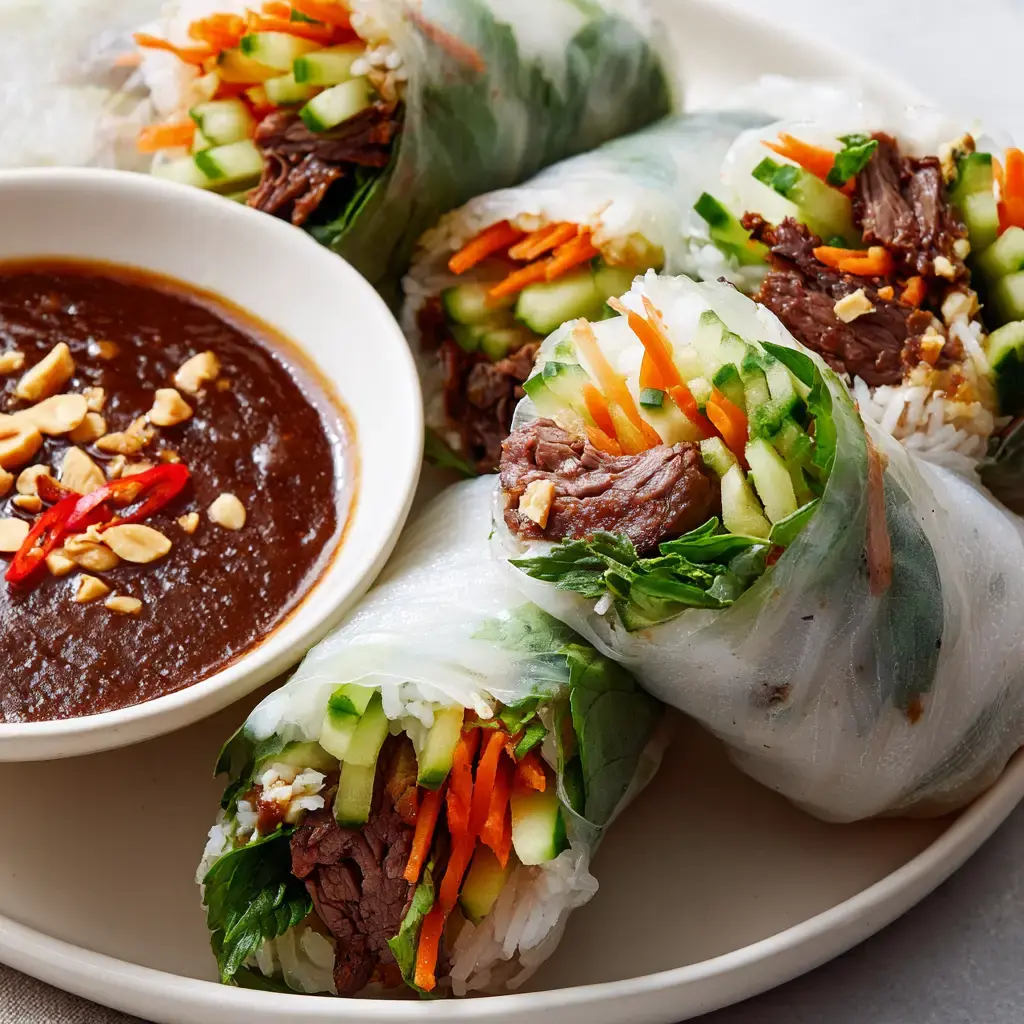
There’s something uniquely satisfying about creating a dish that’s as beautiful as it is delicious. These Thai Basil Beef Rolls are exactly that—a perfect harmony of flavor, texture, and vibrant color, all visible through a delicate, translucent rice paper wrapper.
Inspired by a crystal-clear image of perfectly seared flank steak with caramelized edges, crisp vegetables, and that unmistakable pop of green from fresh Thai basil, this recipe is engineered to replicate that mouthwatering vision in your own kitchen. Forget takeout; we’re diving deep into the techniques that make these rolls a showstopper.
Why You Will Love This Recipe
- Visually Stunning: Each roll is a miniature work of art, showcasing the vibrant colors of fresh ingredients like bright orange carrots and deep green basil, all beautifully encased in a delicate, translucent wrapper.
- Textural Delight: Experience a fascinating interplay of textures, from the slightly chewy rice paper and tender, seared beef to the crisp snap of julienned vegetables, creating a truly engaging bite.
- Explosion of Flavor: The peppery, anise-like notes of Thai basil provide a refreshing counterpoint to the rich, savory, and slightly sweet caramelized flank steak, creating a balanced and addictive flavor profile.
- Irresistible Dipping Sauce: The accompanying hoisin-peanut sauce is a masterclass in indulgence, boasting a thick, luscious consistency and a deeply savory, nutty, and perfectly balanced taste that enhances every element of the roll.
- Customizable Freshness: While this recipe offers a fantastic base, the simplicity of the rolls allows for easy customization with your favorite crisp vegetables or herbs, making each batch uniquely yours.
Ingredients You Need
The foundation of truly exceptional Thai Basil Beef Rolls lies in the quality and freshness of the ingredients. Selecting vibrant vegetables and a good cut of beef will elevate this dish from delicious to absolutely unforgettable. Each component plays a crucial role in achieving the desired balance of flavors and textures that define this authentic experience.
Thai Basil Beef Rolls with Hoisin-Peanut Sauce
Discover the secret to making restaurant-quality Thai Basil Beef Rolls at home! Perfect for a light lunch or a stunning appetizer, these rolls feature perfectly seared flank steak, crisp vegetables, and a rich, creamy hoisin-peanut dipping sauce. They are a visually stunning and delicious appetizer or light meal.
- 1 lb Flank Steak, thinly sliced against the grain (450g)
- 2 tbsp Soy Sauce (30ml)
- 1 tbsp Brown Sugar (15g)
- 2 cloves Garlic, minced
- 1 tsp Sesame Oil (5ml)
- 1 tbsp Vegetable Oil (15ml)
- 12-15 sheets Rice Paper (8.5-inch / 22cm)
- 1 cup Fresh Thai Basil Leaves (50g)
- 1 large Orange Carrot, julienned
- 1/2 English Cucumber, julienned
- 1/2 cup Hoisin Sauce (120ml)
- 1/4 cup Creamy Peanut Butter (65g)
- 2-3 tbsp Hot Water (30-45ml)
- 1 tbsp Rice Vinegar (15ml)
- 1 tbsp Crushed Roasted Peanuts (15g), for garnish
- 1 pinch Red Chili Flakes, for garnish
- 1Phase 1: Crafting the Caramelized Sear on Your BeefIn a medium bowl, whisk together the soy sauce, brown sugar, minced garlic, and sesame oil. Add the thinly sliced steak strips and toss to coat completely. Let it marinate for at least 15 minutes.Heat the vegetable oil in a large cast-iron skillet over high heat until it shimmers. Working in batches, add the steak in a single layer and sear for 60-90 seconds per side until dark brown, caramelized edges form. Remove from skillet and set aside.
- 2Phase 2: The Secret to a Rich and Creamy Hoisin-Peanut ElixirIn a small bowl, whisk together the hoisin sauce and creamy peanut butter until combined.Whisk in the hot water and rice vinegar until the sauce is smooth, glossy, and has a thick but pourable consistency. Transfer to a serving bowl and garnish with crushed peanuts and a pinch of red chili flakes.
- 3Phase 3: Assembling Your Thai Basil Beef RollsFill a shallow dish with warm water. Submerge one sheet of rice paper for 15-20 seconds until pliable. Lay it flat on a work surface.In the bottom third of the wrapper, layer a few Thai basil leaves, a small amount of julienned carrots, cucumber, and several strips of seared beef.Fold the bottom edge up tightly over the filling. Fold in the left and right sides, then roll forward into a tight cylinder. Repeat with remaining ingredients.
Keywords: Thai, Vietnamese, Beef Rolls, Hoisin-Peanut Sauce, Appetizer, Lunch, Dinner, Healthy, Fresh, Rolls, Basil, Steak, Rice Paper
- flank steak: about 1 pound (450g), essential for its lean texture and ability to absorb marinades beautifully.
- soy sauce: 2 tablespoons (30ml), providing the savory umami backbone and aiding in caramelization.
- brown sugar: 1 tablespoon (15g), the key to achieving those deep, dark, and sweet caramelized edges on the beef.
- garlic: 2 cloves, minced, adding a foundational layer of aromatic depth.
- sesame oil: 1 teaspoon (5ml), contributing a subtle, nutty fragrance that harmonizes with other Asian flavors.
- vegetable oil: 1 tablespoon (15ml), a high smoke point oil crucial for achieving a perfect sear without burning.
- rice paper wrappers: 12-15 sheets, approximately 8.5 inches (22cm) in diameter, forming the delicate, translucent outer layer.
- fresh thai basil leaves: 1 cup (50g), vital for their unique, slightly spicy, anise-like flavor that cannot be replicated by Italian basil.
- orange carrot: 1 large, julienned into fine matchsticks for vibrant color and a crisp texture.
- english cucumber: 1/2, cut into pale green matchsticks, offering a cool, refreshing crunch.
- hoisin sauce: 1/2 cup (120ml), serving as the rich, sweet, and savory base for the dipping sauce.
- creamy peanut butter: 1/4 cup (65g), adding essential thickness, creaminess, and a nutty depth to the sauce.
- hot water: 2-3 tablespoons (30-45ml), used to achieve the perfect drizzly consistency for the sauce.
- rice vinegar: 1 tablespoon (15ml), providing a subtle tang to balance the richness of the sauce.
- crushed roasted peanuts: 1 tablespoon (15g), for garnishing the sauce, adding texture and enhancing the peanut flavor.
- red chili flakes: 1 pinch, for a touch of heat and visual appeal as a garnish.
The precise quantities for each ingredient can be found within the accompanying recipe card, ensuring perfect replication of this delightful dish.
Variations
While the classic Thai Basil Beef Rolls are a triumph, the beauty of fresh rolls lies in their adaptability. These variations offer exciting new dimensions to explore without straying too far from the core appeal of vibrant, fresh ingredients encased in delicate rice paper. Experimenting with these ideas can lead to new favorite combinations.
For a delightful dinner option that caters to plant-based preferences, consider transforming these rolls into a vegan sensation. Swap the flank steak for firm tofu that has been pressed and then pan-fried or baked until golden and slightly crispy. Marinate the tofu in a mixture of soy sauce, a touch of maple syrup for sweetness, minced garlic, and a hint of ginger for an extra aromatic kick.
Another exciting path is the low-carb adaptation, perfect for those mindful of their carbohydrate intake. While rice paper is inherently carby, the filling can be made more robust with fewer of the starchy elements. Focus on a generous amount of thinly sliced grilled chicken breast or shrimp, alongside an abundance of crisp, low-carbohydrate vegetables such as bell peppers of various colors, jicama, and snap peas. For the dipping sauce, reduce or omit the brown sugar in the beef marinade and ensure your hoisin sauce is a lower-sugar variety, or experiment with a savory almond butter-based sauce instead.
You can also infuse an entirely different flavor profile by incorporating elements inspired by other cuisines. Imagine adding a few slivers of avocado for an extra layer of creaminess, or perhaps some finely shredded purple cabbage for a striking color contrast and satisfying crunch. A sprinkle of toasted sesame seeds inside the roll before wrapping can also add a delightful nutty undertone, reminiscent of flavors found in many lunch recipes.
How to Prepare Thai Basil Beef Rolls
Step 1: Crafting the Caramelized Sear on Your Beef
Begin by meticulously preparing the flank steak, a cut renowned for its rich flavor and ability to achieve a superb sear. To ensure maximum tenderness, it is paramount to slice the steak thinly against the grain. Aim for slices approximately 1/8-inch (3mm) thick. This technique breaks down the tough muscle fibers, resulting in melt-in-your-mouth beef.
In a medium-sized bowl, create the marinade that will infuse the beef with essential savory notes and the building blocks for that desirable caramelization. Whisk together the soy sauce, which provides a deep umami foundation, and the brown sugar, the crucial element for achieving those signature dark brown, sticky edges. Add the finely minced garlic for its pungent aroma and the subtle nutty essence of sesame oil. Once well combined, add the thinly sliced steak strips to this flavorful mixture. Toss them gently but thoroughly to ensure every piece is evenly coated.
Allow the beef to marinate for a minimum of 15 minutes at room temperature. This resting period is vital for the flavors to penetrate the meat, enhancing its overall taste and tenderness. While the beef is marinating, you can begin preparing your vegetables, ensuring everything is ready for the assembly phase.
Next, prepare your cooking vessel for the high-heat sear. Heat one tablespoon of vegetable oil in a large cast-iron skillet or a wok over high heat. You will know the oil is adequately heated when it begins to shimmer subtly. This indicates it has reached the optimal temperature for searing. It is essential to work in batches to avoid overcrowding the skillet. Overcrowding will steam the meat rather than sear it, preventing the development of those coveted caramelized edges.
Carefully add the marinated steak strips to the hot skillet in a single layer. Listen for that immediate, satisfying sizzle—this is the sound of flavor development. Sear the beef for approximately 60 to 90 seconds per side. The intense heat will quickly cook the thin strips and create a beautiful dark brown crust. Avoid the urge to stir or move the beef too frequently during this brief searing time; allow it to develop that crust undisturbed.
Once perfectly seared and caramelized on both sides, remove the steak from the skillet immediately. Place the seared beef onto a clean plate or cutting board to rest. This resting period allows the juices to redistribute throughout the meat, ensuring it remains tender and moist. Set aside the beautifully seared flank steak while you proceed to the next crucial element of the recipe.
Step 2: The Secret to a Rich and Creamy Hoisin-Peanut Elixir
The dipping sauce is truly the soulmate to these fresh rolls, providing a rich, savory, and slightly sweet counterpoint that brings all the flavors together. To begin crafting this irresistible elixir, take a small bowl and combine the foundational ingredients. Start with the hoisin sauce, a thick, dark, and complex condiment that forms the base of the sauce, offering its signature sweet and savory notes.
Next, add the creamy peanut butter to the hoisin sauce. The peanut butter is key to achieving that luxurious, thick consistency and a delightful nutty undertone that makes this sauce so addictive. Whisk these two ingredients together vigorously. At this initial stage, the mixture will be quite thick and may appear stiff, but don’t worry; this is perfectly normal and will be rectified in the following steps.
Now, it’s time to achieve the perfect sauce consistency. Gradually whisk in the hot water, one tablespoon at a time. The hot water helps to loosen the peanut butter and hoisin mixture, transforming it into a smooth, glossy, and beautifully drizzly sauce. Continue whisking until the sauce reaches a consistency that coats the back of a spoon nicely but is still fluid enough to be easily dipped. You may need to add a third tablespoon of water, depending on the thickness of your peanut butter and hoisin.
Finally, add the rice vinegar. This small but mighty addition provides a crucial touch of acidity. The vinegar cuts through the richness of the hoisin and peanut butter, balancing the overall flavor profile and preventing the sauce from being overly heavy or cloying. Whisk it in until fully incorporated. Taste the sauce and adjust if necessary; you might want a touch more vinegar for brightness or a tiny pinch of sugar if your hoisin is less sweet.
Transfer the finished sauce to a small, shallow serving bowl. This presentation makes dipping effortless and visually appealing. To complete the sauce and add both texture and visual appeal, garnish the surface generously. Sprinkle the finely crushed roasted golden peanuts over the sauce. These provide a delightful crunch and reinforce the peanut flavor. For a pop of color and a hint of heat, add a single, dramatic red chili flake right in the center or scattered sparingly.
This hoisin-peanut sauce is best made just before assembly to maintain its optimal texture and flavor. Its rich, complex taste is the perfect complement to the fresh, vibrant ingredients within the rolls, elevating the entire dining experience. This sauce alone is reason enough to make these Thai Basil Beef Rolls from scratch.
Step 3: Assembling Your Thai Basil Beef Rolls
This is where the magic happens – the assembly of your beautiful Thai Basil Beef Rolls, transforming individual ingredients into a cohesive and visually stunning dish. First, prepare your workspace and gathering station. Fill a large, shallow dish, such as a pie plate or a wide, shallow bowl, with warm water. This is where you will gently hydrate your rice paper wrappers.
Arrange all your prepped filling ingredients in an organized “assembly line” around the shallow dish. This includes your marinated and seared flank steak, vibrant fresh Thai basil leaves, crisp julienned orange carrots, and refreshing pale green cucumber matchsticks. Having everything within easy reach will ensure a smooth and efficient rolling process. The visual appeal of these ingredients laid out side-by-side is already a promise of the deliciousness to come.
Now, it’s time to hydrate your first rice paper wrapper. Carefully submerge one sheet of rice paper in the warm water for approximately 15 to 20 seconds. The goal is to make it pliable and flexible, but not overly soft or sticky. You should be able to lift it out and have it feel slightly firm; it will continue to soften as you add the ingredients and roll.
Gently lay the hydrated rice paper wrapper flat on your clean work surface. It might feel a little sticky, which is normal. Position yourself so the wrapper is oriented like a diamond in front of you. In the bottom third of the wrapper, begin layering your fillings. Start with a few fresh Thai basil leaves, placing them directly onto the wrapper. This ensures their flavor is prominent and they are nicely showcased.
Follow the basil with a small, neat pile of your julienned carrots and cucumber matchsticks. Distribute them evenly across the width of the wrapper in the lower third. Finally, arrange a few strips of the perfectly seared and caramelized flank steak on top of the vegetables. Be mindful not to overstuff the wrapper at this stage; a modest amount of filling is key to achieving a tight, clean roll that won’t tear.
To begin the rolling process, carefully fold the bottom edge of the rice paper wrapper up and over the filling. Tuck it in snugly to encase the ingredients. Next, fold in the two sides of the wrapper, much like you would when making a burrito or spring roll. This creates a neat packet. Finally, roll the entire package forward, starting from the bottom, into a tight, compact cylinder. The translucent wrapper should allow you to see the beautiful, vibrant ingredients nestled inside, creating an attractive presentation.
Repeat this entire hydration, filling, and rolling process with the remaining rice paper wrappers and filling ingredients. Work steadily, as the rice paper can become more prone to sticking if left too long between steps. Aim for uniformity in size and tightness of the rolls for the most appealing platter.
Once all rolls are assembled, arrange them artfully on a serving platter. They are best served immediately, allowing guests to experience the full spectrum of textures and flavors at their peak freshness. The visual appeal alone will captivate your diners, and the first bite will confirm that these homemade rolls are a culinary triumph.
Step 4: Preparing and Presenting the Dipping Sauce
While the rolls are being assembled, or just before serving, ensure your hoisin-peanut dipping sauce is ready. This rich, savory, and slightly sweet sauce is the perfect accompaniment to the fresh, vibrant Thai Basil Beef Rolls. It provides a creamy, umami-rich counterpoint that enhances every element of the roll, from the tender beef to the crisp vegetables and the subtle anise notes of the Thai basil.
The sauce, as described in Step 2, should already be prepared and in a serving bowl. The key here is the garnish, which adds both textural interest and visual flair. Take your finely crushed roasted peanuts and sprinkle them evenly over the surface of the sauce. The crunchy texture of the peanuts provides a delightful contrast to the smooth, creamy sauce, adding another layer of sensory experience.
For a final touch of visual appeal and a subtle hint of heat, carefully place a pinch of red chili flakes on top of the sauce. These bright red flecks offer a beautiful contrast against the darker hues of the sauce and peanuts, making the entire presentation more enticing. A few strategically placed flakes can make a significant difference in the visual impact of the dish.
Ensure the sauce is readily accessible for dipping as soon as the rolls are served. The combination of the perfectly rolled fresh ingredients and this luscious dipping sauce is what makes these Thai Basil Beef Rolls an unforgettable appetizer or light meal. The aroma alone will entice your guests to dive in.
Step 5: Serving Your Masterpiece
The moment of truth has arrived: presenting your beautifully crafted Thai Basil Beef Rolls to your eager guests. Arrange the rolls on a clean, attractive serving platter. You can lay them in a single layer, or gently nestle them together, ensuring they don’t stick to one another, which can happen with the rice paper.
Place the prepared hoisin-peanut dipping sauce in the center of the platter or alongside it, ensuring it’s easily accessible for dipping. The vibrant colors of the rolls, showcasing the fresh basil, orange carrots, and pale cucumber against the translucent wrapper, will make a stunning visual statement. The rich, glossy sauce with its garnish of peanuts and chili flakes completes the picture.
These rolls are best enjoyed immediately after assembly. This is when the rice paper is at its most tender and chewy, the vegetables are at their freshest and crispiest, and the beef is at its most succulent. The interplay of temperatures and textures is at its absolute peak, offering a delightful culinary experience.
If you happen to have any leftover sauce, it can be stored in an airtight container in the refrigerator for a few days and is fantastic with other dinner dishes or as a dip for spring rolls. However, the rolls themselves are best consumed fresh for optimal texture and flavor.
Consider serving these as an appetizer to a larger meal or as a light and refreshing main course, perhaps accompanied by a simple side salad or a bowl of rice. Their inherent freshness makes them a perfect choice for warmer weather or when you desire a lighter yet satisfying option.
Pro Tips for Thai Basil Beef Rolls
Mastering the art of the fresh roll involves a few key techniques that ensure a perfect outcome every time. Paying attention to these details can elevate your experience from good to truly exceptional, making these rolls a staple in your culinary repertoire. The subtle nuances can make a significant difference in the final presentation and taste.
Don’t Oversoak the Rice Paper: This is perhaps the most critical tip for success. Rice paper becomes incredibly sticky and difficult to handle if left in the water for too long. A quick 15-20 second dip is usually sufficient. It should feel slightly firm and pliable when you remove it; it will continue to soften and become more flexible as you add the fillings and start rolling.
Work Quickly and Confidently: Once the rice paper is hydrated, it begins to absorb moisture from the air and your fillings, becoming progressively stickier. Have all your ingredients prepped and within easy reach before you start dipping. This allows you to fill and roll each wrapper swiftly and efficiently, minimizing the risk of tearing or sticking.
Less is More with Fillings: It can be tempting to pack as many delicious ingredients as possible into each roll. However, overstuffing is the number one cause of torn wrappers and messy rolls. A modest amount of filling ensures that you can fold and roll the wrapper tightly and neatly, resulting in a compact and aesthetically pleasing roll.
Slice Beef Against the Grain: For the flank steak, this step is non-negotiable for achieving tender, succulent meat. Identify the direction of the muscle fibers (the grain) and slice perpendicular to them. This cuts through the tough connective tissues, making the beef incredibly tender and easy to chew. Incorrect slicing can result in a chewy and unpleasant texture.
Use Fresh, High-Quality Thai Basil: The distinct flavor of Thai basil is central to this dish’s identity. Italian basil, while delicious, has a different flavor profile. Ensure you use genuine Thai basil for that characteristic peppery, anise-like taste. The freshness of the basil leaves will also contribute significantly to the overall vibrant flavor.
Prepare Ingredients Ahead of Time: Julienne your carrots and cucumbers, mince your garlic, and sear your beef well in advance. This organization ensures that when it’s time to assemble, everything is ready to go. This efficiency is key to a smooth and enjoyable rolling process, especially if you are making a large batch.
Keep a Damp Cloth Handy: A slightly damp cloth can be useful for wiping your fingers or the edge of the work surface if they become too sticky from the rice paper. This small measure can prevent frustration and help maintain clean lines as you work.
Serving Suggestions for Thai Basil Beef Rolls
Decoration
The inherent beauty of these Thai Basil Beef Rolls lies in the ingredients peeking through the translucent wrapper. To enhance this visual appeal, consider a few simple decorative touches. A few extra fresh Thai basil leaves artfully placed on the serving platter can echo the flavors within. The vibrant green offers a striking contrast to the pale wrapper and colorful fillings.
The accompanying hoisin-peanut sauce provides its own decorative element, especially with the garnishes of crushed peanuts and red chili flakes. Ensure these are applied evenly to create an attractive focal point. A small, delicate sprig of cilantro placed on top of the sauce can also add a touch of freshness and visual interest.
Side Dishes
These rolls are fantastic on their own, but can be elevated with complementary side dishes that don’t overpower their delicate flavors. For a light and refreshing meal, consider a simple Asian-inspired salad. A shredded cabbage salad with a light ginger-sesame dressing or a cucumber salad with rice vinegar would be excellent choices, echoing the crispness of the rolls.
If you desire a more substantial meal, pairing these rolls with a small portion of steamed jasmine rice or sticky rice can provide a satisfying base. Alternatively, a light broth-based soup, such as a clear vegetable broth or a simple chicken noodle soup, can complement the freshness of the rolls without adding too much heaviness. For those who enjoy a spicy kick, a small side of kimchi or pickled daikon radish can offer a pleasing contrast.
Creative Serving Ideas
Move beyond a standard platter for a truly memorable presentation. Consider arranging the rolls in a circular pattern on a large platter, with the dipping sauce in the center, creating a beautiful floral effect. For individual servings, you can place one or two rolls alongside a small portion of rice or a side salad in a shallow bowl.
Another creative idea is to serve them as part of a tasting menu, offering smaller portions alongside other appetizers. This allows guests to sample a variety of flavors and textures. For a more casual gathering, you could even set up a “roll-your-own” station, providing all the prepped ingredients and wrappers for guests to assemble their own custom rolls, making it an interactive and fun experience.
For a visually striking presentation, place each roll on individual small plates, perhaps garnished with a tiny curl of carrot or a single basil leaf. This adds an element of elegance and makes each guest feel specially catered to. The key is to highlight the beautiful colors and textures that are visible through the rice paper, making them as appealing to the eye as they are to the palate.
Preparation & Storage
Storing Leftovers
Thai Basil Beef Rolls are undeniably best when enjoyed fresh, as the rice paper wrapper and crisp vegetables are at their optimal texture. However, if you do find yourself with leftovers, proper storage is key to maintaining their quality. Place the rolls in a single layer on a plate or in a shallow airtight container, ensuring that they do not touch each other.
The rice paper can become sticky and adhere to itself or other surfaces if left in contact for extended periods. Cover the container tightly with plastic wrap or the container lid. Refrigerate the rolls for up to 24 hours. It’s important to note that the vegetables may lose some of their crispness and the wrapper might become slightly firmer upon refrigeration.
Freezing
Due to the delicate nature of the rice paper wrapper and the fresh, uncooked vegetables, these Thai Basil Beef Rolls are not recommended for freezing. Freezing and thawing can significantly alter the texture of the rice paper, making it gummy or tough, and can also cause the vegetables to become mushy. It is best to prepare only the amount you intend to consume to ensure the best possible eating experience.
If you wish to prepare elements ahead of time, consider making the hoisin-peanut sauce and searing the beef. The sauce can be stored in an airtight container in the refrigerator for up to 3 days. The seared beef can also be refrigerated for a day or two and then gently reheated before rolling. However, the final assembly and consumption should ideally happen shortly after preparation.
Reheating
Reheating these rolls is generally not advised as it can negatively impact the texture of the rice paper and the freshness of the vegetables. If you must consume chilled rolls that have been refrigerated, it is best to do so directly from the refrigerator. Avoid any methods that involve heat, such as baking or microwaving, as this will likely result in a gummy or tough wrapper and will cook the fresh ingredients within.
The hoisin-peanut sauce, however, can be gently reheated if it has been refrigerated and has become too stiff. Warm it slightly in a small saucepan over low heat or in the microwave in short bursts, stirring frequently, until it reaches a dippable consistency again. Ensure it is not overheated, which could cause it to separate or scorch.
Frequently Asked Questions
-
Can I make these Thai Basil Beef Rolls ahead of time for a party?
While these rolls are at their absolute best when enjoyed immediately after assembly, you can prepare certain components in advance to save time. The hoisin-peanut sauce can be made up to 3 days ahead and stored in an airtight container in the refrigerator; simply whisk it well before serving. The flank steak can also be marinated and seared a day in advance, then refrigerated. However, the actual rolling process, involving hydrating the rice paper and filling, is best done shortly before serving to maintain the integrity of the wrapper and the crispness of the vegetables. If you must assemble them a few hours ahead, store them in a single layer, not touching, in a covered container in the refrigerator.
-
What are the best substitutes for flank steak, and how should I prepare them?
If flank steak is unavailable or you prefer an alternative, several other cuts of beef can work well, provided they are sliced very thinly against the grain. Sirloin steak or skirt steak are excellent choices due to their tenderness and flavor. For a leaner option, tenderloin can be used, though it may not develop as rich a caramelized crust. When using a different cut, the marinating time and searing process remain largely the same. The most critical factor is ensuring the meat is sliced extremely thin, perpendicular to the muscle fibers, to prevent a tough or chewy texture in the final roll. This preparation is essential for achieving the desired melt-in-your-mouth quality, regardless of the specific cut.
-
Is there a way to make the dipping sauce gluten-free and nut-free?
Absolutely! To make the dipping sauce gluten-free, ensure your hoisin sauce is certified gluten-free, as some brands contain wheat. For a nut-free alternative to peanut butter, creamy sunflower seed butter (sunbutter) or tahini (sesame seed paste) are excellent substitutes. While tahini has a distinct flavor, it provides a creamy texture and can be quite delicious. If using tahini, you might want to add a touch more sweetener to balance its slightly more robust taste. For a nut-free garnish, consider using toasted sesame seeds or finely chopped crispy fried onions for texture.
-
What is the key to preventing the rice paper from tearing during assembly?
The primary reason rice paper tears is either over-hydration or overstuffing. Always dip the rice paper wrapper in warm water for only about 15-20 seconds; it should still feel slightly firm. It will continue to soften as you add the fillings and begin rolling. Furthermore, avoid the temptation to overfill the wrapper. A modest amount of filling allows you to fold and roll it tightly without stressing the delicate paper. If the wrapper feels too sticky, you can gently moisten your fingers with water, but be sparing.
-
Can I use Italian basil instead of Thai basil?
While Italian basil is a wonderful herb, it is not a suitable substitute for Thai basil in this recipe. Thai basil has a distinct flavor profile with notes of anise and licorice and a slightly spicier, more robust taste compared to the sweet, delicate flavor of Italian basil. The unique peppery and anise-like aroma of Thai basil is a signature component of authentic Thai cuisine, and it is crucial for achieving the intended flavor of these beef rolls. If you cannot find Thai basil, it’s best to seek out an Asian market or a well-stocked grocery store that carries it, as the flavor difference is significant.